Engineered Low-Voltage Protection & Switchgear Showcase
Explore our certified DIN-rail and industrial electrical components manufactured under strict ISO9001 and IEC standards.
White Paper: Heavy-Duty Type 1 Surge Protective Devices (SPD) in High-Keraunic Environments
Medan, as the commercial and industrial epicenter of North Sumatra (Sumatera Utara), presents one of the most punishing electromagnetic operating environments for low-voltage electrical distribution networks in Southeast Asia. Situated near the equator within a tropical rainforest climate (Köppen Af), Medan experiences an exceptionally high keraunic level, averaging between 180 to 220 thunderstorm days per year. Atmospheric discharges in this region generate severe, high-amplitude direct lightning strikes and induced transient overvoltages that repeatedly compromise unshielded or inadequately protected industrial switchgear, commercial power networks, and utility infrastructure.
For electrical design engineers, panel builders, EPC contractors, and procurement directors operating in Medan—including key industrial hubs such as Kawasan Industri Medan (KIM I through KIM IV) and maritime distribution terminals along Belawan Port—standard Class II (Type 2) surge arresters are fundamentally insufficient for main service entrance protection. Protecting facilities from cataclysmic insulation breakdown, arc flashes, and equipment destruction requires engineered Type 1 / Class I Surge Protective Devices (SPDs) capable of diverting direct lightning currents defined by the brutal 10/350 µs impulse current waveform ($I_{imp}$).
As an established original equipment manufacturer and global exporter specializing in low-voltage circuit protection, power switching, and energy management assemblies, our manufacturing base delivers factory-direct Type 1 SPDs tailored explicitly to the environmental, regulatory, and electrical grid dynamics of North Sumatra. This technical white paper provides a comprehensive analysis of Type 1 SPD physics, system architecture, localized field application scenarios in Medan, and engineering selection parameters for heavy industrial reliability.
1. The Physics of Lightning Protection: Type 1 ($10/350\,\mu s$) vs. Type 2 ($8/20\,\mu s$) Waveforms
To specify transient protection accurately for primary distribution boards (Main Distribution Boards - MDB) situated at the service entrance of a building or industrial complex in Medan, engineers must distinguish between direct atmospheric lightning strikes and indirect, induced surges.
Key Technical Distinction: The Energy Content Dilemma
A common mistake in Indonesian industrial power design is specifying high-nominal-discharge-current ($I_n = 60\,\text{kA}$ or $100\,\text{kA}$) Type 2 SPDs at the main service entrance. Type 2 SPDs are tested strictly against the 8/20 µs waveform, which simulates indirect lightning or grid switching surges. In contrast, Type 1 SPDs are tested with the 10/350 µs waveform, representing the true physical behavior of a direct lightning strike carrying massive charge ($Q$) and specific energy ($W/R$).
10/350 µs Waveform (Type 1 / Class I)
Characterized by a rapid rise time to peak in 10 microseconds, followed by an extremely slow decay to half-peak value over 350 microseconds. The prolonged tail of this surge forces immense kinetic thermal energy through the protective component. A Type 1 SPD rated at $I_{imp} = 25\,\text{kA}$ per pole transfers roughly 18 times more charge than a Type 2 SPD rated at $I_{n} = 25\,\text{kA}$.
- Application: Primary Service Entrance / LPZ 0A to LPZ 1 boundary.
- Primary Parameter: Impulse Discharge Current ($I_{imp}$).
- Target Stress: Direct lightning strike discharge to external conductors or lightning rods.
8/20 µs Waveform (Type 2 / Class II)
Features an 8-microsecond rise time and a 20-microsecond decay time. While peak current values can appear high, the total energy integral (action integral $W/R$) is significantly lower due to the brief pulse duration. Type 2 devices clear fast transients created by remote switching, grid load shedding, or secondary electromagnetic coupling.
- Application: Sub-Distribution Boards (SDB) / LPZ 1 to LPZ 2 boundary.
- Primary Parameter: Nominal Discharge Current ($I_n$) and Max Discharge Current ($I_{max}$).
- Target Stress: Induced magnetic surges and grid switching transients.
Under international standards IEC 61643-11 and EN 61643-11, alongside the equivalent Indonesian National Standard (SNI IEC 61643-11), a installation equipped with an External Lightning Protection System (LPS / Faraday cage or air terminals) must utilize a certified Type 1 SPD at the primary incoming main panel to safely clamp high-energy direct lightning impulses down to acceptable voltage protection levels ($U_p$).
2. Internal Component Architecture: Hermetic Spark-Gaps vs. Heavy-Duty MOV Hybrids
Our OEM factory manufactures Type 1 SPDs utilizing two primary technical architectures, each optimized for specific network topologies and short-circuit current ratings ($I_{cc}$) encountered across Medan's industrial power distribution grids:
Triggered Encapsulated Spark-Gap
Utilizes multi-chamber carbon arc-gaps engineered to ionize precise air gaps upon transient arrival. When a high-voltage surge strikes, the air gap breaks down, diverting vast currents ($I_{imp}$ up to $50\,\text{kA}$ 10/350µs per module) while maintaining virtually zero continuous leakage current.
Advantage: Exceptional energy handling; total immunity to thermal degradation during standby; zero leakage current.
High-Energy Metal Oxide Varistors (MOV)
Constructed with ceramic zinc-oxide grains that transition from high resistance to ultra-low resistance when threshold clamping voltage ($U_c$) is exceeded. Fitted with specialized heavy-duty internal thermal disconnects to prevent thermal runaway under sustained grid overvoltages.
Advantage: Extremely low voltage protection level ($U_p \le 1.5\,\text{kV}$); ultra-fast response time ($t_A < 25\,\text{ns}$).
Combined Spark-Gap + MOV Hybrid
Integrates a spark-gap in parallel or series with an MOV, controlled by an internal triggering circuit. This hybrid approach combines the massive current-handling capacity of the spark gap with the non-follow-current, ultra-low residual voltage profile of the MOV.
Advantage: Eliminates mains follow current ($I_{fi}$); optimal protection for sensitive microprocessor-driven equipment.
3. Localized Field Application Scenarios in Medan and North Sumatra
Deploying industrial surge protection in North Sumatra requires careful consideration of local grid quality, geographic terrain, humidity, and operational demands. Below are four primary deployment scenarios where our factory-engineered Type 1 SPDs deliver mission-critical resilience:
Scenario A: Industrial Manufacturing Complexes (KIM I, II, III & IV - Medan)
The Kawasan Industri Medan complex houses heavy manufacturing, chemical processing, metal fabrication, and food production facilities. Industrial plants in KIM routinely experience dual electrical hazards: direct tropical lightning strikes during afternoon storm cells and severe voltage surges caused by heavy inductive load switching within the industrial grid.
Recommended Configuration: 3P+N Type 1+2 Hybrid SPD ($I_{imp} = 25\,\text{kA}$ 10/350µs per phase, $U_p \le 1.5\,\text{kV}$) installed at the main switchboard directly downstream of the transformer breaker. Integrated with potential-free remote signaling contacts connected to the plant SCADA/PLC system to notify maintenance managers immediately upon surge module degradation.
Scenario B: Crude Palm Oil (CPO) Mills & Processing Refineries (Riau & North Sumatra Corridor)
Palm oil extraction mills located in surrounding regions such as Deli Serdang, Serdang Bedagai, and Asahan rely heavily on uninterrupted automated processing. Mills are typically situated in open, isolated rural areas surrounded by tall palm plantations, making boiler structures, extraction machinery, and outdoor power distribution lines prime targets for direct atmospheric strikes.
Recommended Configuration: Heavy-duty NEMA 4X / IP66 enclosure housed Type 1 SPDs ($I_{imp} = 50\,\text{kA}$ 10/350µs) with tropicalized, conformal-coated internal PCBs to resist extreme ambient humidity (85-98% RH) and airborne chemical contaminants (sulfur dioxide from boiler exhausts).
Scenario C: Port Logistics, Container Terminals & Marine Switchgear (Belawan Port)
Belawan Port operates heavy shore-to-ship cranes, automated logistics centers, and large-scale cold-storage warehousing. Coastal electrical installations face aggressive atmospheric salt spray, high ambient temperatures, and lightning strikes originating over the Malacca Strait.
Recommended Configuration: Type 1 SPDs featuring anti-corrosive tin-plated copper busbars, flame-retardant UL94 V-0 housing materials, and salt-spray-tested internal terminals. Installed inside main distribution switchboards powering reefer container docks and crane power substations.
Scenario D: Remote Telecommunication Towers & BTS Stations Across North Sumatra
Cellular towers erected on high-altitude topographies around Lake Toba, Karo Highlands, and rural Deli Serdang act as elevated lightning rods. A single direct strike can destroy sensitive base station transceivers, DC power rectifiers, and remote monitoring units, causing prolonged network outages.
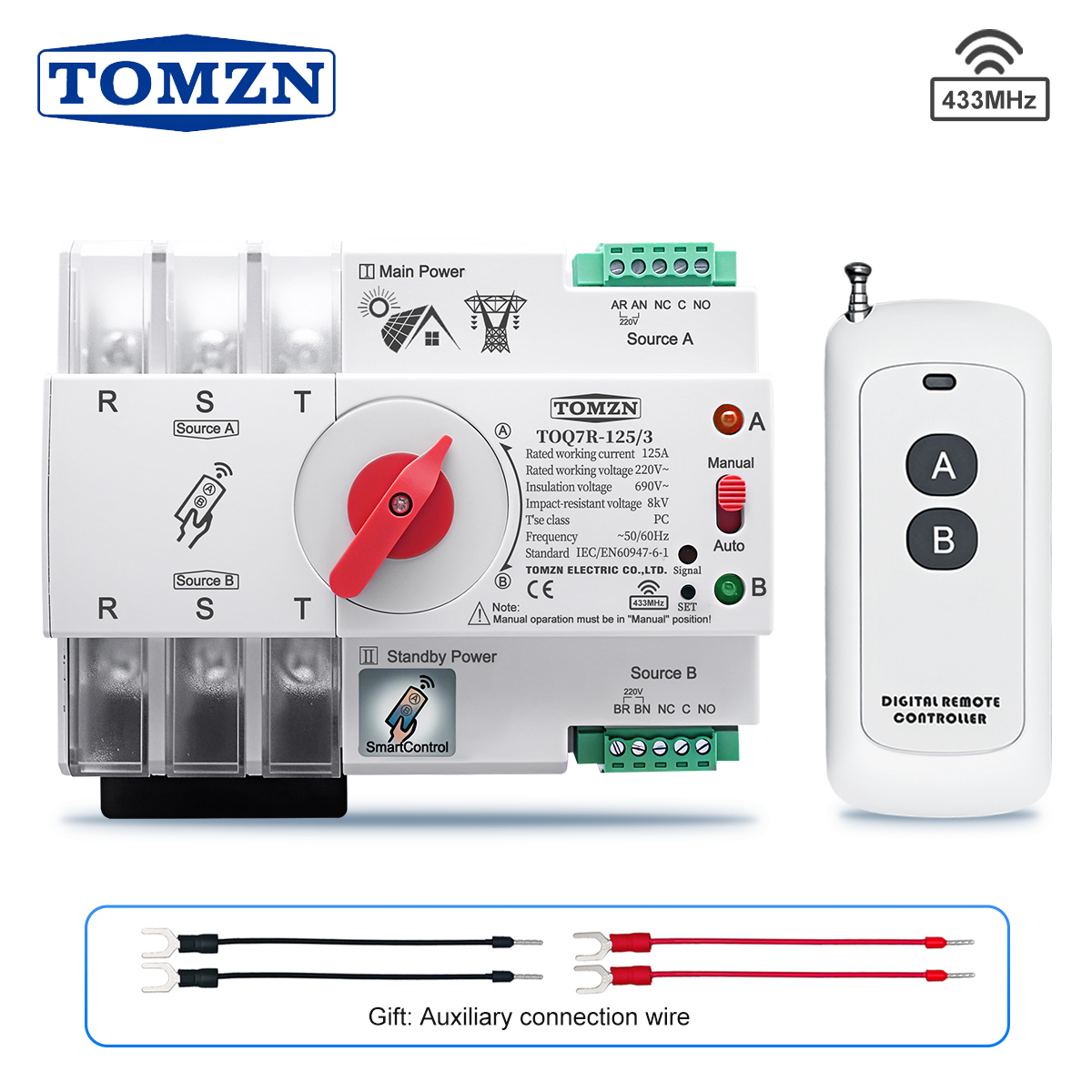
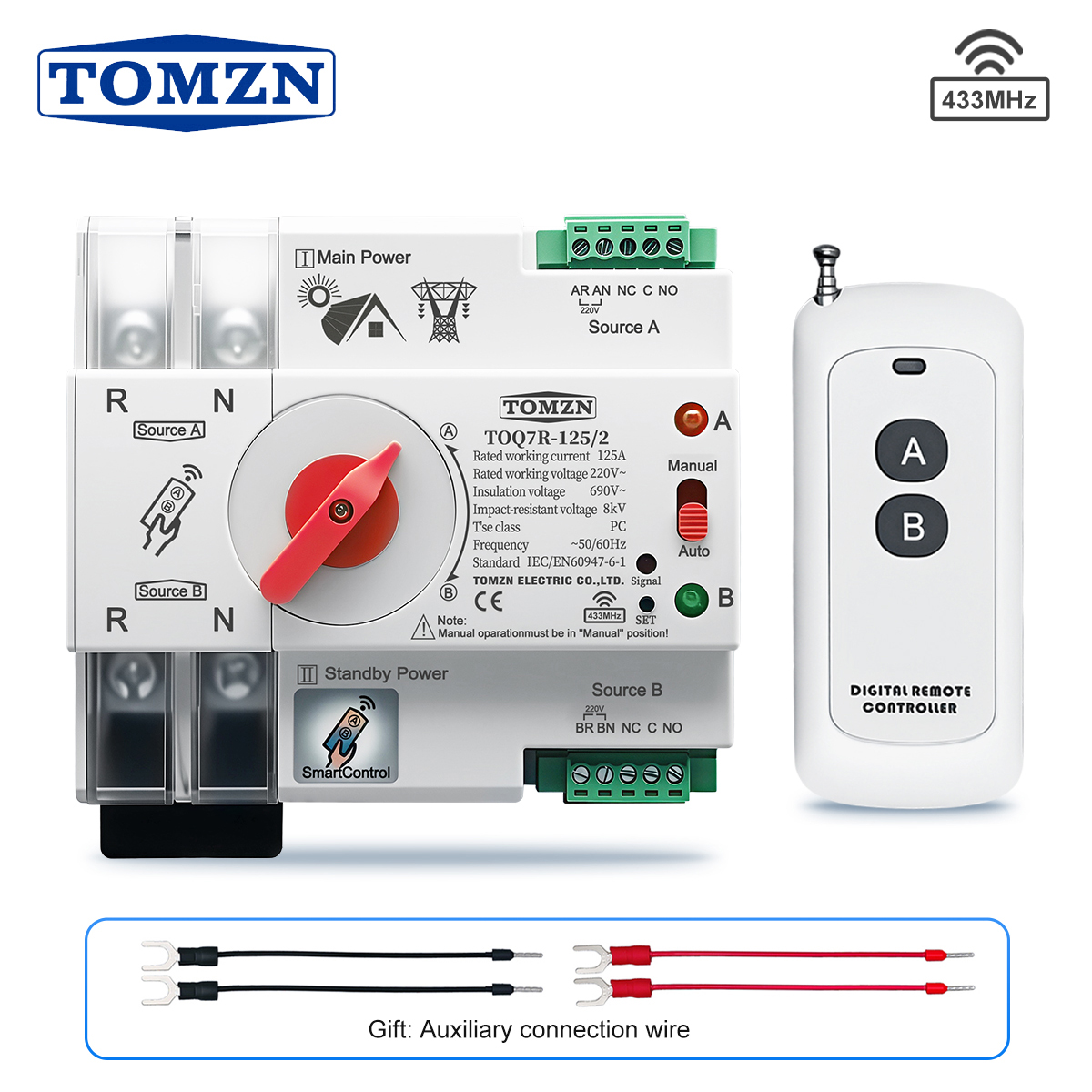
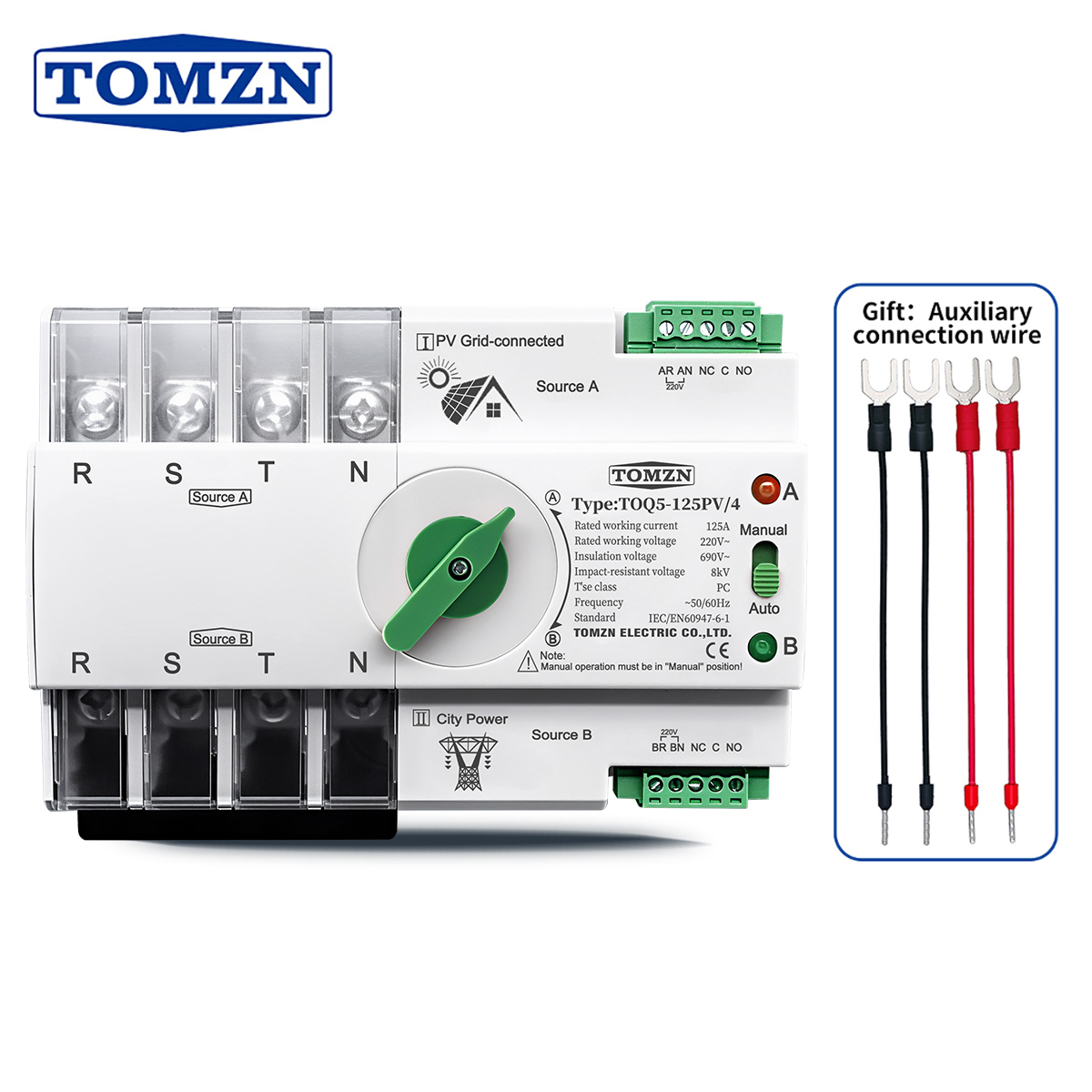
Recommended Configuration: Compact DIN-rail Type 1+2 DC SPDs ($1000\,\text{V DC}, I_{imp} = 12.5\,\text{kA}$) protecting DC power distribution units (PDU), combined with 230V AC Type 1 SPDs installed at the primary grid/diesel generator Automatic Transfer Switch (ATS) cabinet.
4. Medan Regional Grid Dynamics & Tropical Climate Trends
Selecting appropriate surge protection for Medan requires an understanding of the regional utility grid operated by state utility PT PLN (Persero) Wilayah Sumatera Utara. The localized grid environment presents specific engineering challenges:
- High-Frequency Grid Switching Surges: Load balancing between hydro generation plants (e.g., Asahan river complex), coal-fired thermal plants, and peak-load diesel generators causes frequent step-voltage transients and momentary power interruptions across North Sumatra.
- Transient Neutral-to-Earth Potential Rises: Due to soil composition variation (ranging from volcanic ash near Berastagi to coastal alluvial clay near Belawan), earthing ground resistance values ($R_g$) often fluctuate seasonally. Elevated earthing impedance during dry spells causes massive neutral-to-earth potential rises during lightning strikes, requiring robust 3P+N (N-PE spark gap) Type 1 protection modes.
- Tropical Humidity & Thermal Stress: Continuous ambient temperatures between 28°C to 34°C with high relative humidity accelerate MOV aging through thermal runaway if varistors lack proper heat-sinking and thermal cut-off mechanisms.
| Electrical Parameter | Type 1 Spark Gap SPD | Type 1+2 MOV Hybrid SPD | Standard Type 2 SPD |
|---|---|---|---|
| Tested Waveform | 10/350 µs ($I_{imp}$) | 10/350 µs ($I_{imp}$) & 8/20 µs ($I_n$) | 8/20 µs ($I_n / I_{max}$) |
| Impulse Current ($I_{imp}$) | 25 kA – 50 kA per pole | 12.5 kA – 25 kA per pole | N/A (Not Rated) |
| Voltage Protection Level ($U_p$) | ≤ 2.5 kV | ≤ 1.5 kV – 1.8 kV | ≤ 1.2 kV – 1.5 kV |
| Response Time ($t_A$) | < 100 ns | < 25 ns | < 25 ns |
| Mains Follow Current Extinguishing ($I_{fi}$) | 50 kArms (High) | Self-Extinguishing (No Follow Current) | No Follow Current |
| Ideal Installation Location | Main Service Entrance (MDB) | MDB & SDB (Combined Protection) | Sub-Panels / Final Equipment |
5. Enterprise Strengths: Why Partner with Our Manufacturing Base
As a specialized factory and international exporter with 24 years of low-voltage experience, we provide Medan distributors, panel builders, and engineering procurement teams direct access to factory-grade circuit protection solutions. Our 5,700 m² state-of-the-art facility in Wenzhou, China—the world's hub for low-voltage electrical production—operates under rigorous quality management frameworks.
Fully Integrated Factory Direct
We eliminate intermediary trading markups, supplying directly from our assembly lines. This ensures consistent batch quality, competitive pricing structures, and full control over raw material sourcing.
In-House Impulse Testing Lab
Every product line undergoes rigorous validation in our high-voltage laboratory equipped with 10/350µs and 8/20µs impulse current generators, thermal instability chambers, and synthetic grid simulation rigs.
International Compliance
Our Type 1 SPDs, automatic transfer switches (ATS), DC MCBs, and combiner boxes carry full CE certification, third-party QMS verification, and comply with IEC 61643-11 standards.
Custom OEM / ODM Solutions for Indonesian Importers
We support private-label branding, customized enclosure printing, regional voltage adjustment (e.g., tailored 230V/400V 50Hz networks), and bespoke terminal designs. Our experienced export logisticians handle end-to-end maritime and air shipping directly to Belawan Port (Medan), Jakarta (Tanjung Priok), or Surabaya (Tanjung Perak), complete with formal Certificate of Origin (Form E) documents for preferential tariff customs clearance under the ACFTA agreement.
6. B2B Selection Matrix & Engineering Installation Rules
To guarantee optimal performance and prevent nuisance tripping or device damage during severe atmospheric strikes in Medan, electrical contractors must adhere to specific installation practices mandated by IEC 60364-5-534:
- The "50 cm Rule" (Connecting Lead Length): The total length of the connecting conductors from the phase lines, through the Type 1 SPD, to the main protective earth (PE) busbar must not exceed 0.5 meters (50 cm). Excess lead length introduces parasitic inductive reactance ($L \cdot \frac{di}{dt}$), adding thousands of volts to the residual clamping voltage during high-frequency lightning surges.
- Dedicated Backup Overcurrent Protection: Type 1 SPDs must be installed with coordinated backup fuses or circuit breakers (MCB/MCCB) rated to match the SPD's short-circuit withstand rating ($I_{SCCR}$). If the main incoming breaker exceeds 125A, a dedicated backup fuse/MCB branch must be installed to prevent supply interruption in the rare event of varistor end-of-life short-circuiting.
- Equipotential Earth Bonding: The earthing terminal of the Type 1 SPD must bond directly to the main earthing terminal (MET) of the switchboard using low-impedance stranded copper conductors (minimum $16\,\text{mm}^2$ for Type 1 $I_{imp}$ applications).
System Earthing Configuration Guide for Medan Installations
TN-S System: Requires a 4-pole SPD (4P) or 3P+N configuration where neutral and earth are strictly separated after the main transformer.
TT System: Requires a "3+1" circuit configuration featuring three phase-to-neutral varistor modules and one high-capacity neutral-to-earth (N-PE) spark-gap module to ensure complete galvanical isolation between neutral and earth during grid normal state.
7. Frequently Asked Questions (FAQ) for Medan B2B Procurement
Standard Type 2 SPDs are engineered to handle induced energy from remote strikes ($8/20\,\mu s$ waveform). Because Medan experiences an exceptionally high keraunic level (>180 thunderstorm days/year), industrial sites regularly take direct lightning strikes or near-field strikes carrying high energy ($10/350\,\mu s$ waveform). When a Type 2 SPD encounters a direct lightning discharge, its internal MOV discs experience extreme thermal shock, causing thermal breakdown or physical rupture. Installing a certified Class I / Type 1 SPD at the primary main distribution board (MDB) is mandatory to absorb this energy safely.
Yes. We routinely export low-voltage electrical equipment to Indonesian importers and engineering firms. We provide China-Indonesia Free Trade Area Certificate of Origin (Form E), which allows qualified Indonesian importers to claim preferential or zero-rate import duty tariffs through Customs at Belawan Port, significantly lowering landed procurement costs.
According to IEC 62305-1 lightning protection risk assessment standards, for facilities equipped with an external lightning protection system (LPS Class I or II) or incoming overhead power lines in high-strike zones, a minimum impulse current rating of $I_{imp} = 12.5\,\text{kA}$ to $25\,\text{kA}$ per pole (10/350 µs) is required. For critical infrastructure, remote telecom towers, or isolated palm oil mills, specifying $I_{imp} = 25\,\text{kA}$ to $50\,\text{kA}$ per pole provides long-term operational margin and extended component service life.
Continuous relative humidity above 85% combined with ambient heat (30°C–35°C) can cause moisture ingress in inferior varistor housings, accelerating degradation and leakage currents. Our factory utilizes hermetically sealed spark-gap chambers and conformal-coated MOVs housed in flame-retardant, UV-stabilized UL94 V-0 thermoplastic enclosures. This protects internal components from tropical corrosion, mold growth, and premature thermal runaway.
Yes. We specialize in OEM and ODM manufacturing for regional brand owners, panel builders, and electrical wholesalers. We provide custom laser-printed logos, private-label box packaging, customized user manual printing (in Bahasa Indonesia or English), and specific shell color configurations subject to standard minimum order quantities (MOQ).
Nominal grid voltage in Indonesia is $U_n = 230\,\text{V AC}$ (Single Phase) / $400\,\text{V AC}$ (Three Phase). However, due to voltage fluctuations in the local grid network, supply voltage can swell significantly. The SPD's Maximum Continuous Operating Voltage ($U_c$) must be chosen higher than nominal voltage—typically $U_c = 275\,\text{V}$, $320\,\text{V}$, or $385\,\text{V AC}$—to prevent the varistor from entering continuous conduction during routine utility voltage swells.
Request a Factory-Direct Quotation & Technical Datasheet
Partner directly with a 24-year low-voltage electrical protection manufacturer. Our technical sales engineers are ready to support your project specifications, OEM requirements, and direct bulk export orders to Medan and across Indonesia.
