Featured Direct-from-Factory Power Protection & Switching Series
Engineered for extreme grid stability, high DC arc interrupting capacity, and seamless integration into residential, commercial, and utility-scale renewable installations across Brazil's Federal District.
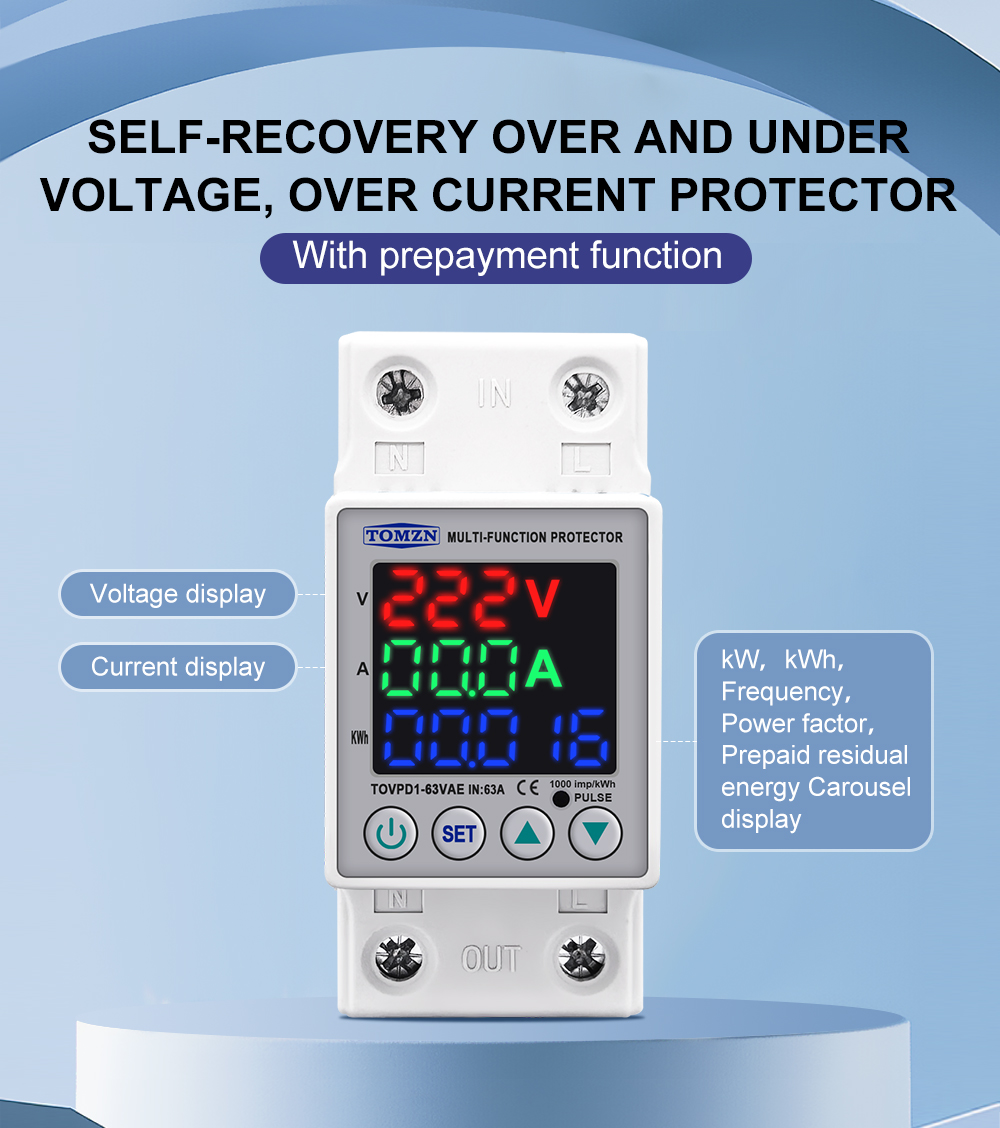
63A 230V 3IN1 Display Din Rail Adjustable Over & Under Voltage Protector Relay
View Product Details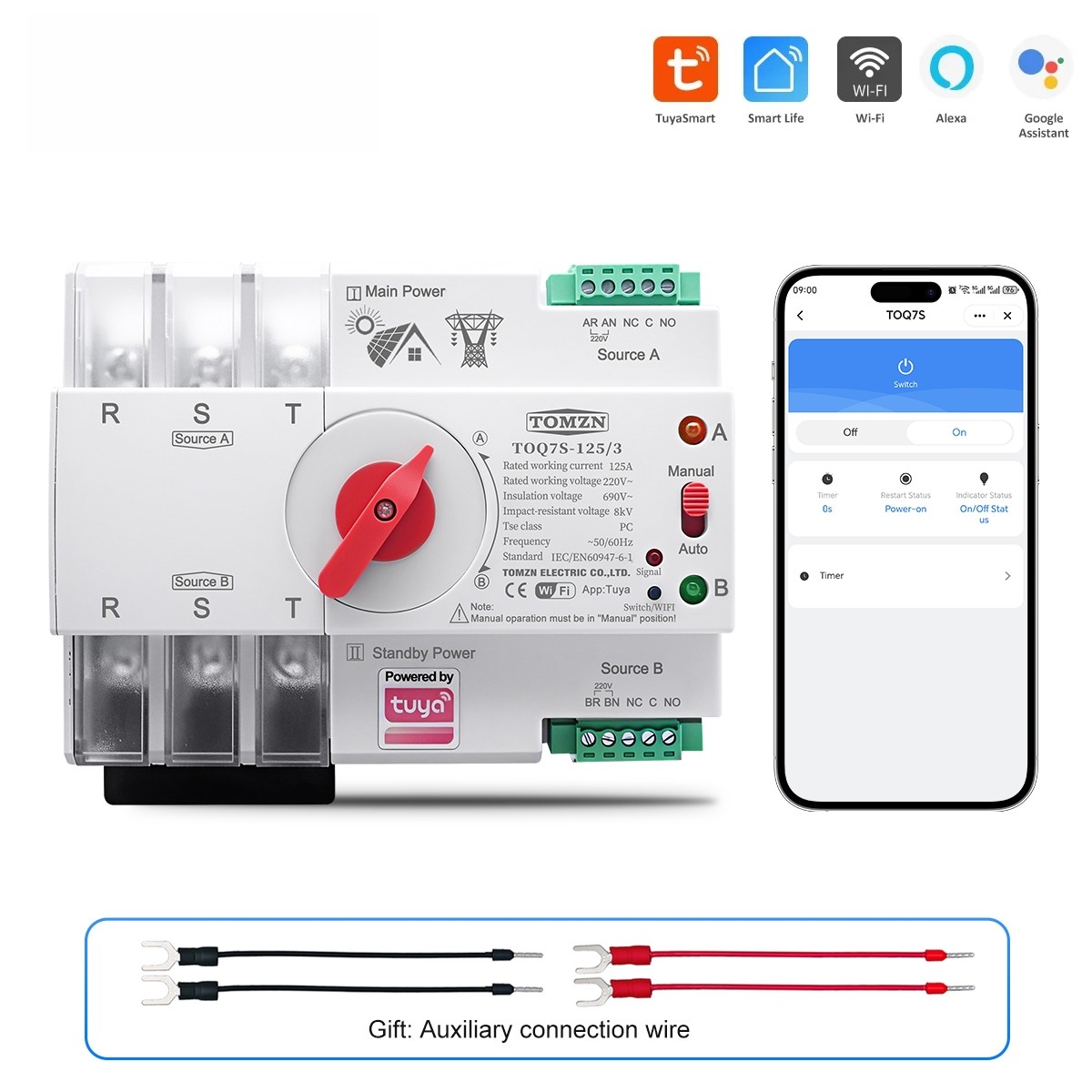
TOMZN TOQ7S 3P AC380V WiFi Smart Dual Power Automatic Transfer Switch (50ms)
View Product Details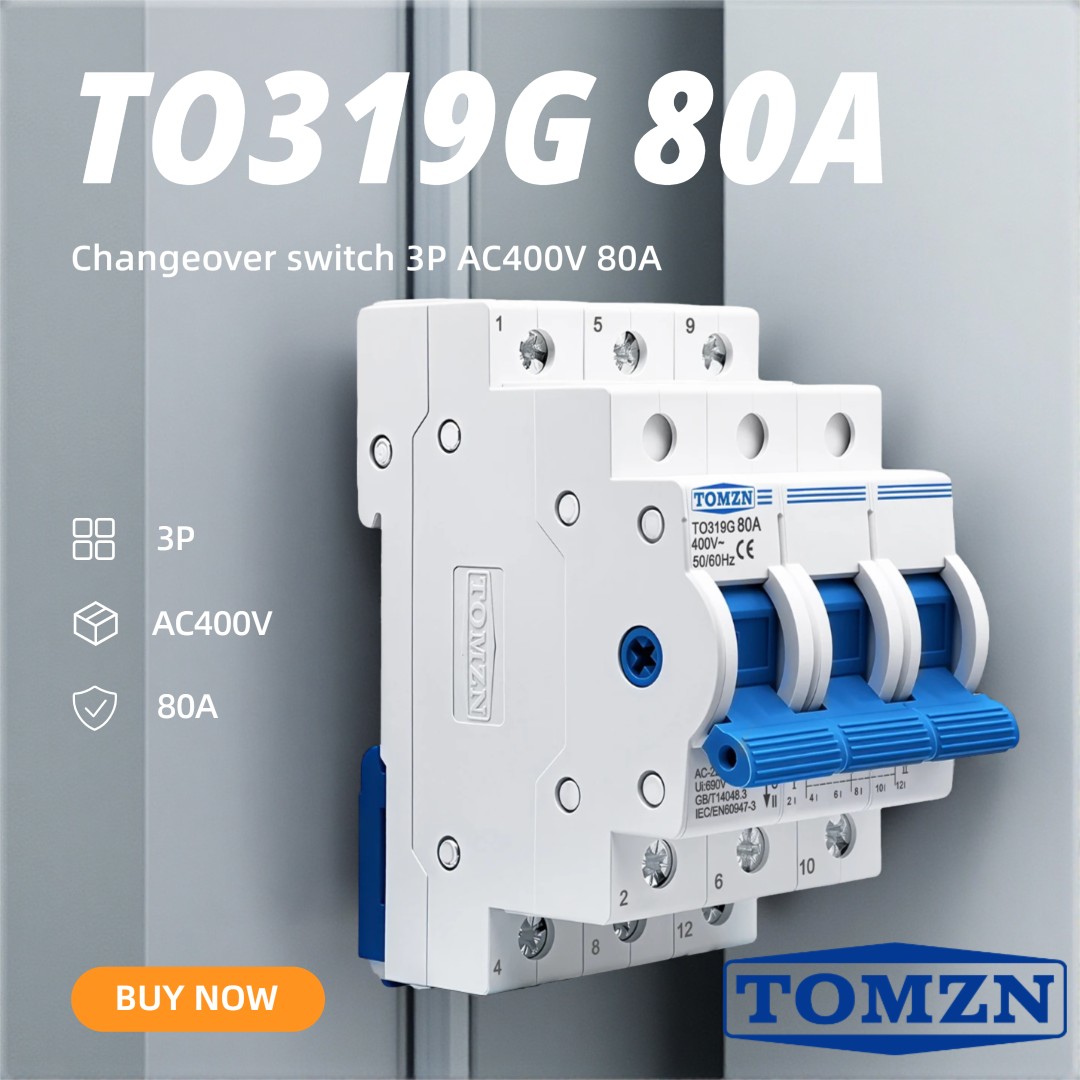
TOMZN TO319G 3 Phase 3P AC400V 80A Manual Transfer Switch Disconnectable MTS
View Product Details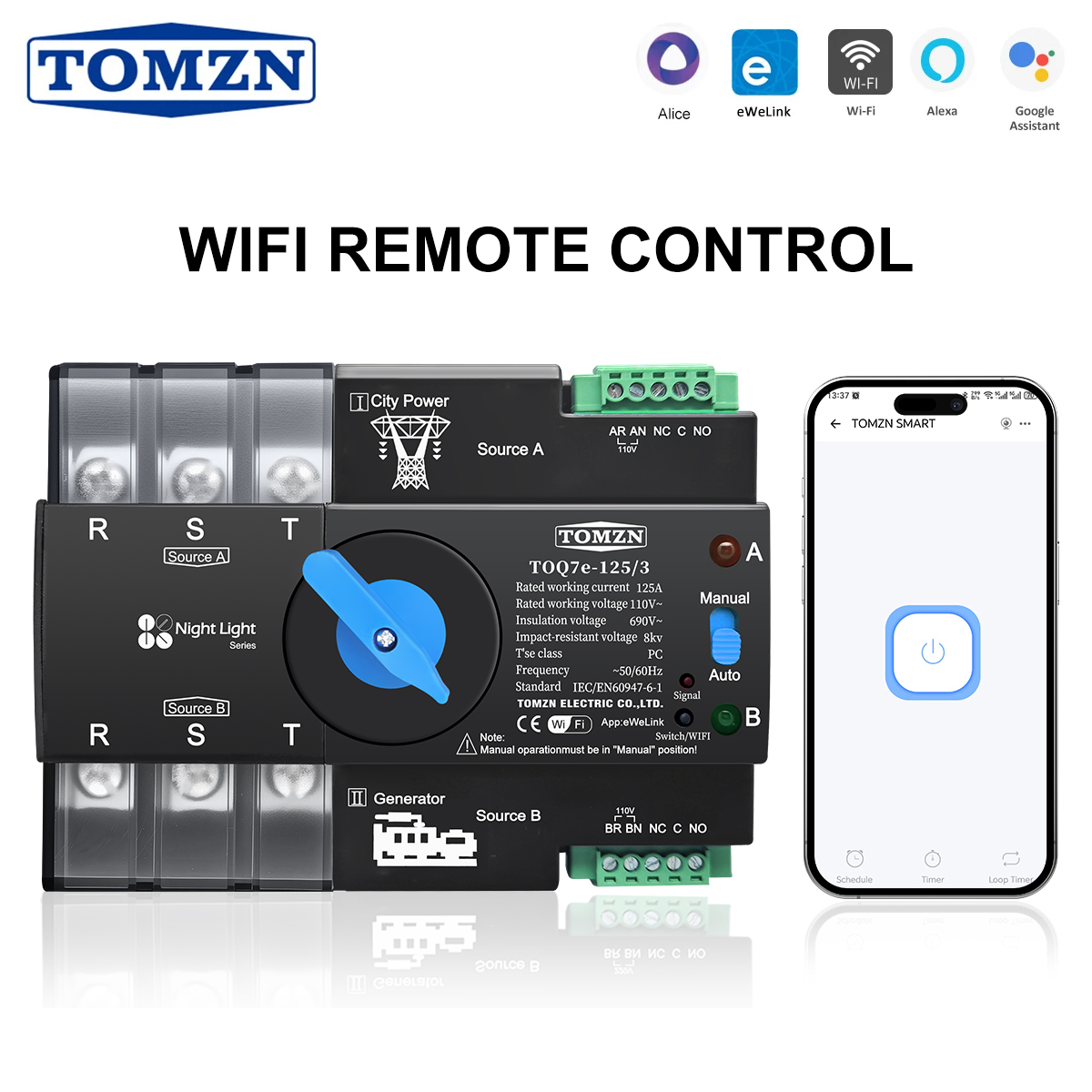
TOMZN 110V/120V Three Phase Smart ATS Dual Power Automatic Transfer Switch 125A
View Product Details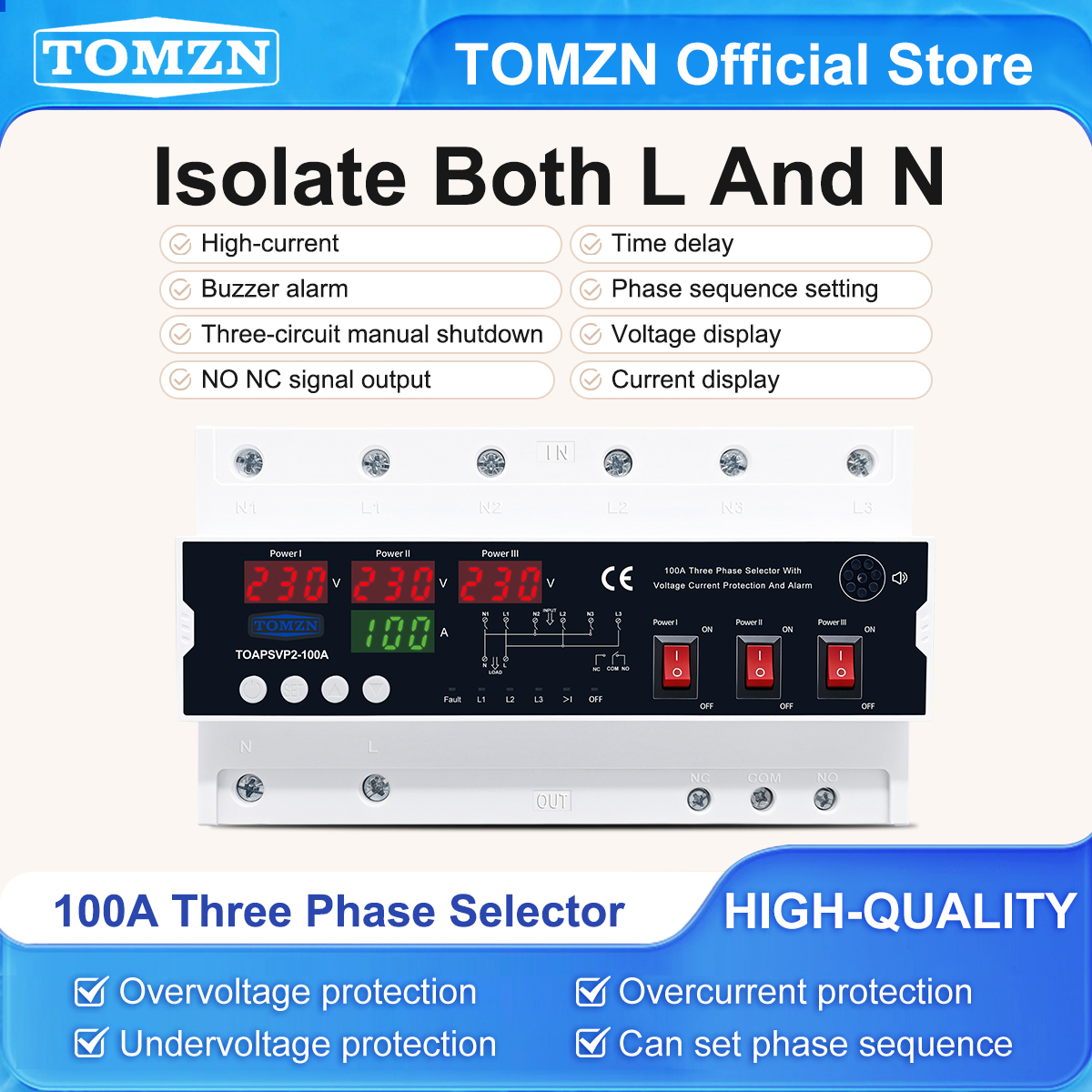
Relay-Type Automatic Phase Selector ATS Dual Power Switch 2P 230V 63A (OVP/UVP)
View Product Details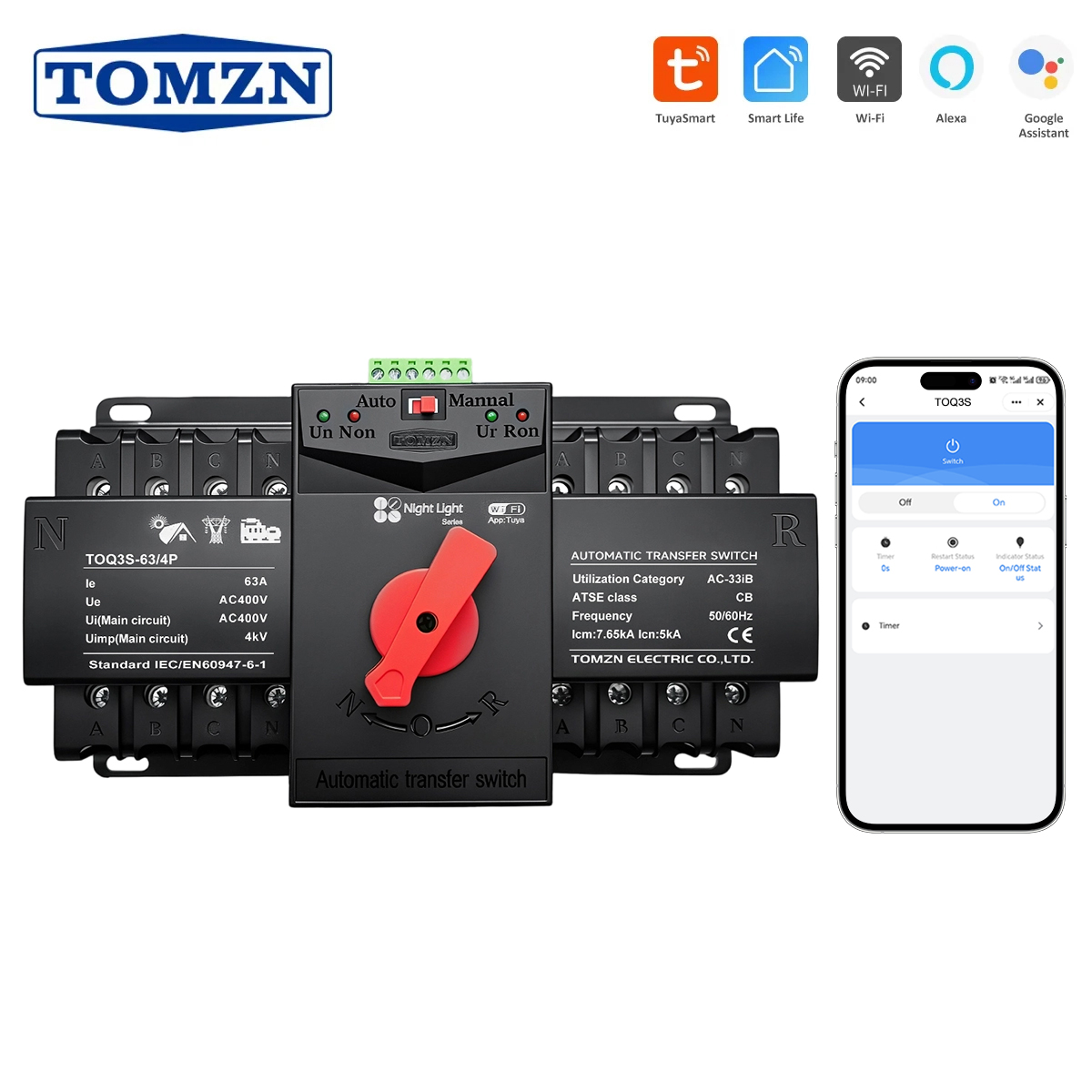
TOMZN Tuya WiFi Smart ATS 4P 63A Dual Power Automatic Transfer Switch Generator MCB
View Product Details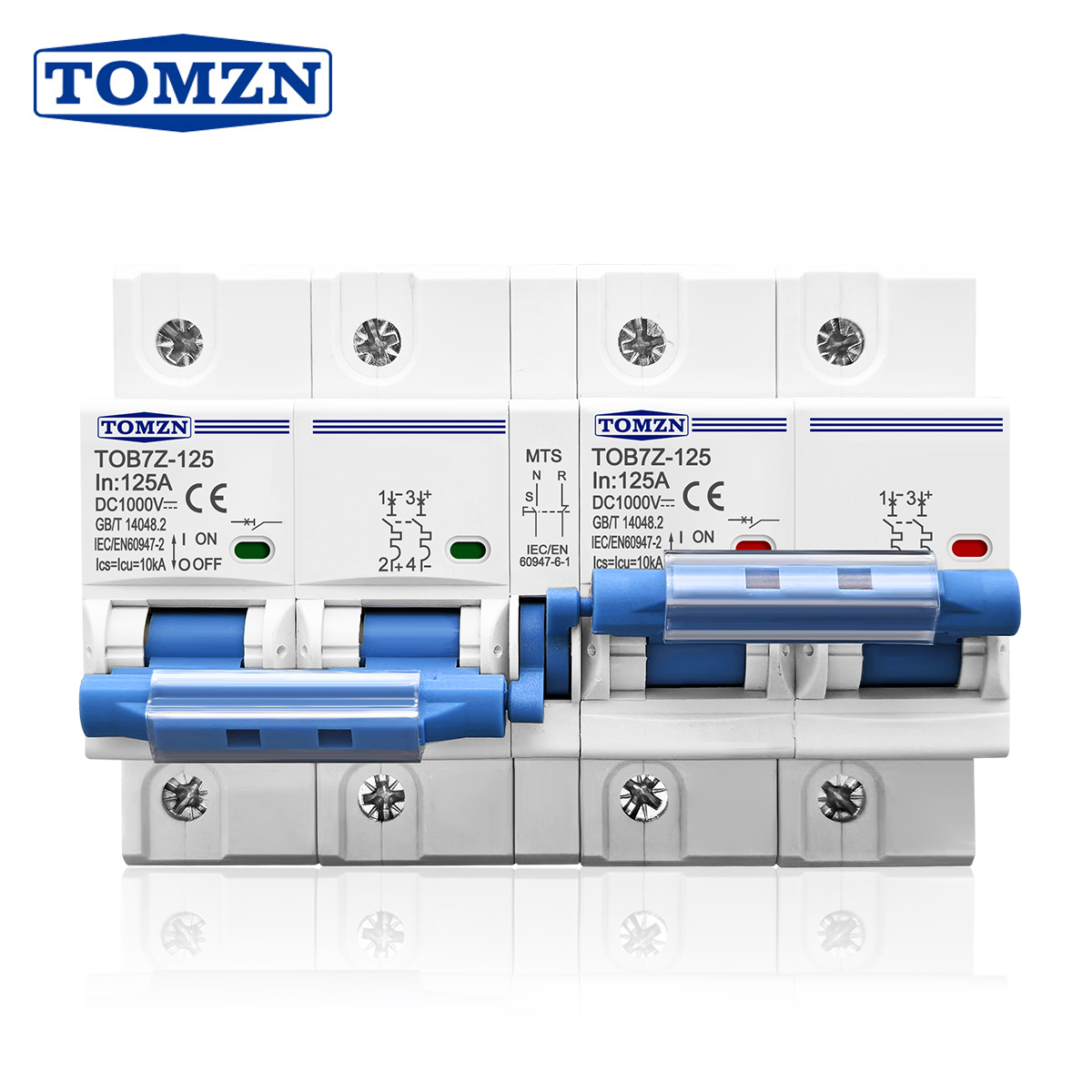
TOMZN 125A 2P+2P DC MTS Dual Power Manual Transfer Switch Circuit Breaker for PV
View Product Details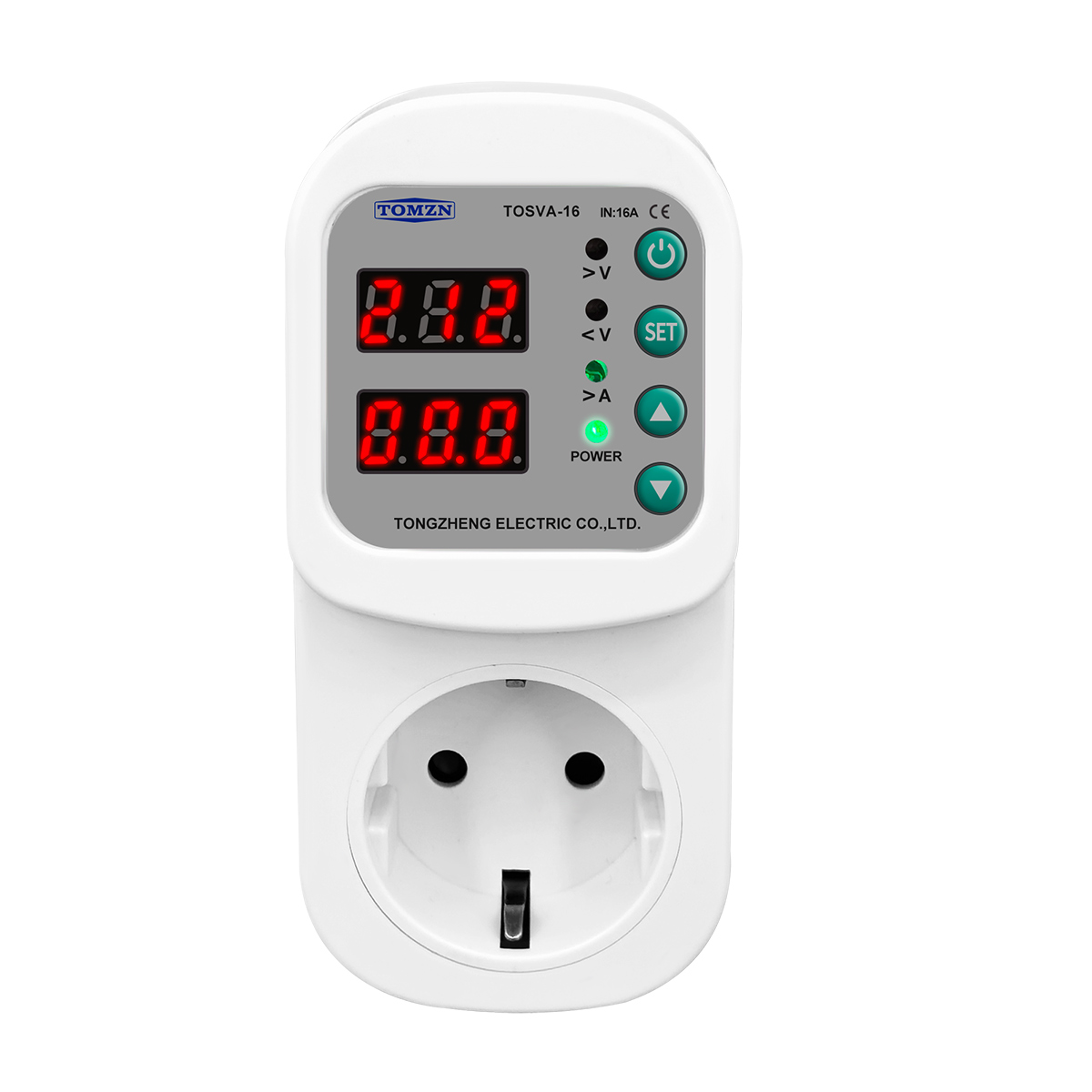
TOMZN TOSVA-16 Automatic Voltage Current Protector Socket 16A Adjustable Plug
View Product DetailsTechnical Whitepaper: DC Protection Engineering in Central Brazil’s High-Irradiance Grid
The Federal District of Brazil, anchored by its capital Brasília (15.7975° S, 47.8919° W), presents a unique electrical microclimate characterized by extraordinary solar irradiance, elevated altitude, and rapid expansion of distributed microgeneration under ANEEL (Agência Nacional de Energia Elétrica) Normative Resolution REN 1059/2023. As solar photovoltaic (PV) adoption accelerates across commercial roofscapes in Asa Sul and Asa Norte, industrial parks in the Setor de Indústria e Abastecimento (SIA), and massive agribusiness installations in the surrounding Cerrado corridor, the thermal and dielectric stresses placed on Direct Current (DC) protection components reach extreme levels.
Unlike standard Alternating Current (AC) systems where the sinusoidal voltage waveform naturally crosses zero 120 times per second (at 60 Hz in Brazil), Direct Current maintains a constant, non-zero voltage differential. When an overcurrent fault or short-circuit occurs within a DC solar array or Battery Energy Storage System (BESS), the sustained electrical arc generated during contact separation will not extinguish naturally. Without specialized magnetic blowout mechanisms, optimized contact gaps, and arc splitter chutes, a DC arc can reach temperatures exceeding 6,000°C, causing violent equipment flashover, enclosure melt-through, and catastrophic fire hazards.
For electrical engineers, system integrators, EPC contractors, and wholesale distributors in Brasília, procuring low-voltage DC protection components requires rigorous verification of breaking capacity ($I_{cu}$), thermal stability, and strict alignment with national standard ABNT NBR 16690 (Electrical installations of photovoltaic systems) and ABNT NBR IEC 60947-2. Zhejiang DVS Electric Co., Ltd. supplies high-performance DC Miniature Circuit Breakers (DC MCBs), DC Molded Case Circuit Breakers (DC MCCBs), and integrated Combiner Boxes designed specifically to withstand the elevated ambient temperatures, dry seasonal low-humidity air, and thermal derating factors native to Brazil's Planalto Central.
Engineering Deep-Dive: DC Arc Quenching Mechanics & Altitude Derating at 1,150 Meters
Lorentz Force & Permanent Magnet Arc Extinction
Our DC MCB series utilizes an advanced permanent magnetic blowout structure engineered directly into the arc chute chamber. When the silver-alloy contacts separate during an overcurrent trip event, the DC current produces an intense magnetic field. The built-in permanent magnets generate a perpendicular Lorentz Force ($F = q(\mathbf{E} + \mathbf{v} \times \mathbf{B})$) that instantaneously drives the ionized plasma arc away from the contact tips and forces it upward into a multi-plate arc quenching chute.
The arc chute comprises 13 to 17 copper-plated steel splitter plates. As the arc is stretched across these cold metallic plates, it is split into multiple series-connected sub-arcs. This rapidly increases the overall arc voltage ($V_{arc}$) until it exceeds the system operating voltage ($V_{sys}$), extinguishing the arc in under 10 milliseconds and preventing contact welding.
Planalto Central Altitude & Thermal Derating Calculations
Brasília sits at an average altitude of 1,050 to 1,150 meters above sea level. At higher elevations, the atmospheric pressure decreases (approximately 89 kPa in DF compared to 101.3 kPa at sea level), resulting in reduced air density. Lower air density impairs both the dielectric breakdown strength of air insulation gaps and the convective heat dissipation efficiency of switchgear assemblies.
According to IEC 60947-2 Annex H recommendations, electrical equipment operating above 1,000 meters must apply specific operational correction factors:
- Voltage Derating Factor ($k_v$): Operational voltage rating is adjusted to 98% ($U_e \times 0.98$) at 1,150m to compensate for reduced insulation resistance.
- Current Derating Factor ($k_i$): Nominal current rating ($I_n$) is calibrated by a factor of 0.97 for sealed DIN-rail enclosures operating in ambient peak temperatures of 40°C in Brasília's dry winter dry-spell (veranico).
Technical Parameter Matrix: DC MCB Series for B2B Importers in Brasília
| Electrical Parameter | 1P (Single Pole) | 2P (Double Pole) | 3P (Triple Pole) | 4P (Four Pole) |
|---|---|---|---|---|
| Rated Voltage ($U_e$) | DC 250V / 300V | DC 500V / 600V | DC 800V / 1000V | DC 1200V / 1500V |
| Rated Current Range ($I_n$) | 1A – 63A / 80A–125A | 1A – 63A / 80A–125A | 1A – 63A / 80A–125A | 1A – 63A / 80A–125A |
| Ultimate Breaking Capacity ($I_{cu}$) | 6KA / 10KA | 6KA / 10KA | 10KA / 15KA | 10KA / 20KA |
| Tripping Curve Characteristics | C Curve (5–10 $I_n$) for standard PV distribution; K Curve (10–14 $I_n$) for inductive battery loads | |||
| Impulse Withstand Voltage ($U_{imp}$) | 6.0 kV | 6.0 kV | 8.0 kV | 8.0 kV |
| Mechanical & Electrical Lifespan | 20,000 Mechanical Operations / 10,000 Electrical Operations (under rated DC loading) | |||
| Enclosure Protection Class | IP20 (Terminal Area), IP40 (Front Panel Face); IP65 in Outdoor Combiner Box Enclosure | |||
| Compliance Standards | IEC 60947-2, EN 60947-2, GB/T 14048.2, ABNT NBR 16690, CE Marked, RoHS Compliant | |||
Localized Application Scenarios in Brasília & Distrito Federal
Our specialized DC protection portfolio is designed to solve specific operational challenges across key socio-economic and industrial sectors in Central Brazil.
1. Commercial Rooftop PV (Asa Sul, Asa Norte & Taguatinga)
Commercial real estate, shopping centers, and administrative complexes in Brasília rely on large rooftop solar strings operating between 800V DC and 1000V DC. Installing our 2P and 4P DC MCBs inside IP65 string combiner boxes ensures complete sub-array isolation during maintenance and provides fast-acting overcurrent protection against back-fed short circuits from parallel photovoltaic strings.
2. Agribusiness & Off-Grid BESS (PAD-DF Rural Zone)
Agricultural facilities in the Programa de Assentamento Dirigido do Distrito Federal (PAD-DF) rely heavily on battery storage (Lithium-ion & Lead-Acid BESS) paired with solar generation to power center-pivot irrigation systems and cold storage. Our 125A high-current DC MCBs and DC Manual Transfer Switches (DC MTS) deliver rugged battery bank isolation, preventing catastrophic thermal runaway caused by low-impedance short-circuit faults.
3. Data Centers & Telecom Infra (SIA & SAAN Industrial Hubs)
Mission-critical federal government server farms, financial institutions, and telecom base stations situated in the Setor de Indústria e Abastecimento (SIA) require uncompromised 48V–480V DC backup power uninterrupted reliability. DVS Electric DC miniature circuit breakers feature non-polarized design configurations, safeguarding sensitive DC UPS circuits against bi-directional fault currents without thermal degradation.
Brazilian Regulatory Compliance: ABNT NBR Standards & Neoenergia Brasília Grid Standards
Importing electrical components into Brazil requires full adherence to strict safety and performance frameworks. Equipment installed within the territory managed by local distribution concessionaire Neoenergia Brasília must comply with national technical regulations enforced by ABNT (Associação Brasileira de Normas Técnicas) and INMETRO.
ABNT NBR 16690 Integration Requirements
Standard NBR 16690 mandates that every photovoltaic string operating above 30V DC must be equipped with overcurrent protection devices whenever the string short-circuit current capability exceeds the max reverse current withstand rating of the PV modules ($I_{MOD\_MAX\_REVERSE}$). DVS Electric DC MCBs feature precise thermal-magnetic tripping curves calibrated to clear low-level persistent overcurrents before module junction box rupture occurs.
ABNT NBR 5410 & Surge Protection (SPD) Coordination
Under NBR 5410 (Low-voltage electrical installations), surge protective devices (SPDs) and backup circuit breakers must demonstrate coordinated energy selectivity. Our DC MCBs are tested to withstand transient voltage spikes up to $U_{imp} = 8kV$ without nuisance tripping, allowing upstream Type 2 DC SPDs to clamp lightning-induced surges generated during Brasília's intense summer thunderstorm season (October to March).
Why Direct Importers in Brasília Partner with Zhejiang DVS Electric Co., Ltd.
Zhejiang DVS Electric Co., Ltd. is headquartered in Liushi Town, Wenzhou—universally recognized as China’s premier manufacturing capital for low-voltage electrical apparatus. With over 24 years of specialized engineering experience, our modern 5,700 m² production complex integrates fully automated tripping calibration systems, high-precision stamping facilities, and rigorous environmental testing laboratories.
Custom OEM / ODM Solutions
We provide comprehensive private-label OEM and ODM manufacturing services tailored for Brazilian brands and distributors. Customized options include laser-etched brand logos, specialized tripping current ratings (e.g., custom 13A, 25A, 32A, 50A calibrations), bespoke terminal screw treatments, and Portuguese-language technical packaging.
100% Quality Calibration
Every single circuit breaker manufactured in our Wenzhou facility undergoes automated thermal-magnetic trip calibration, contact resistance verification, and high-voltage dielectric withstand testing prior to final export packing. Third-party inspection reports (SGS, TUV, Intertek) are available for all large-scale B2B orders.
Streamlined Brazil Logistics
We maintain seasoned export shipping pathways from Ningbo and Shanghai ports directly to Port of Santos (SP) or Port of Vitória (ES). Our documentation team provides complete Bill of Lading (B/L), Commercial Invoice, Packing List, and Certificate of Origin (Form E/CO) formatted for fast clearance through Receita Federal and Siscomex.
Frequently Asked Questions (Procurement & Engineering FAQ)
Partner with China’s Leading DC Circuit Protection Manufacturer
Are you an electrical distributor, solar EPC integrator, or panel manufacturer in Brasília or Central Brazil? Contact our engineering team today to request complete product catalogues, technical datasheets, CE test reports, and factory-direct wholesale pricing.
