Recommended Power Transfer & Circuit Protection Solutions
Direct factory catalogue featuring manual, smart automatic transfer switches, and low-voltage protection relays manufactured in Wenzhou, China.

Zhejiang DVS Electric Co., Ltd. — Manufacturing Infrastructure
Verified by Onsite Independent Third-Party Inspection in Liushi Town, Wenzhou, China
Executive Sourcing Summary: The Manual Transfer Switch Sourcing Paradigm in China
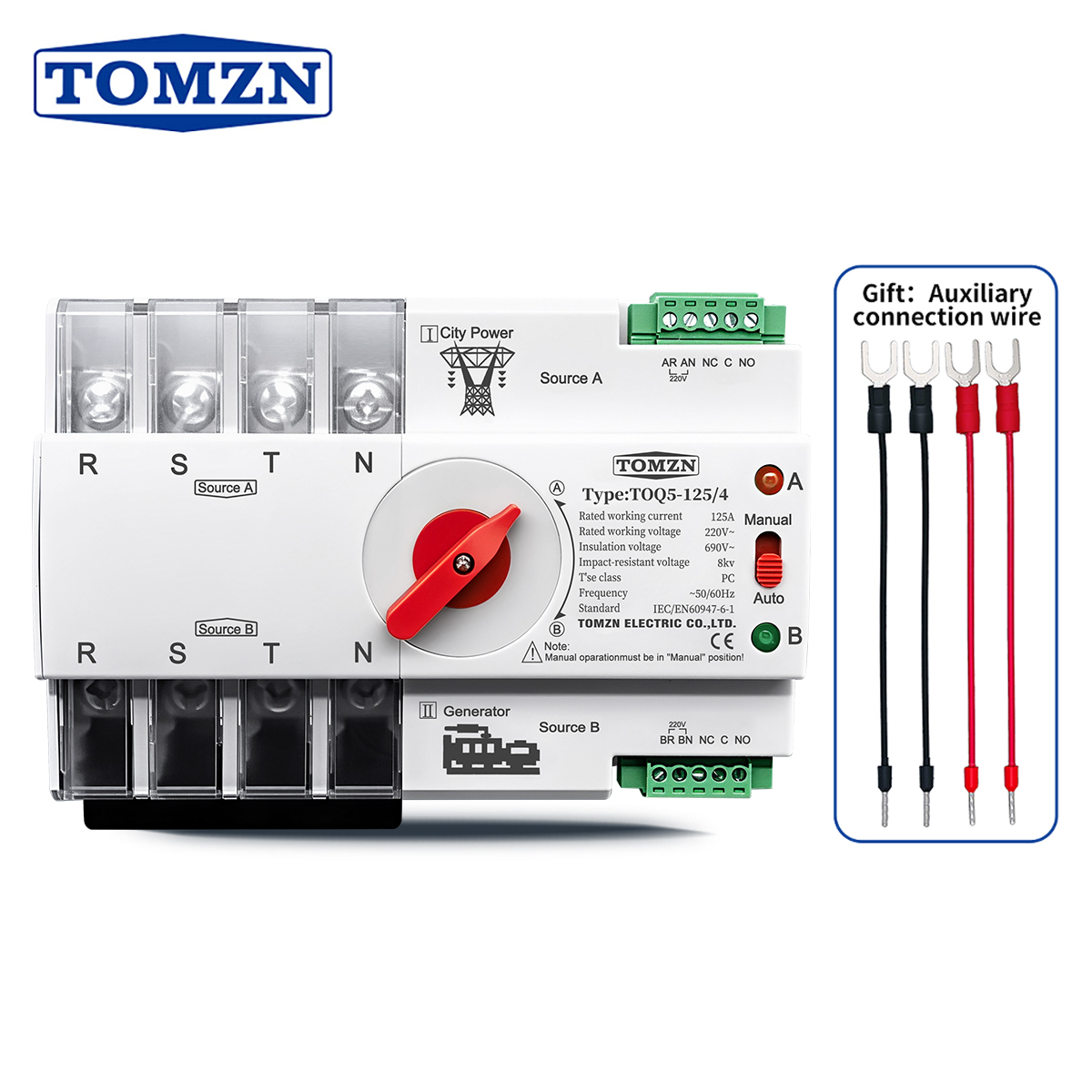
In modern power distribution engineering, the Manual Transfer Switch (MTS)—frequently designated as a manual changeover switch or dual-power isolation switch—serves as the foundational safeguard for critical power continuity. Operating across utility-to-generator, grid-to-solar inverter, and main-to-backup circuits, MTS units provide deterministic, human-operated electrical isolation that strictly eliminates the risk of backfeeding power into de-energized utility lines.
As global energy grids undergo decentralization and integrate higher proportions of distributed energy resources (DERs) such as residential photovoltaic (PV) systems, battery energy storage systems (BESS), and localized standby diesel generators, the market demand for robust, high-endurance manual changeover switches has escalated. Purchasing departments, electrical contractors, and OEM brand owners seeking reliable supplier partners in China must navigate a complex landscape of metallurgical choices, arc quenching mechanisms, short-circuit withstand capabilities, and international standards compliance (IEC 60947-3, IEC 60947-6-1, GB/T 14048.11).
This technical whitepaper, produced by the engineering directorate at Zhejiang DVS Electric Co., Ltd., offers an exhaustive analysis of manual transfer switch selection criteria, structural mechanics, current market trends, manufacturing quality assurance protocols, and long-term procurement strategy.
Break-Before-Make Mechanics
Ensures complete mechanical disconnection of Primary Source A prior to establishing electrical contact with Secondary Source B, preventing hazardous cross-phase short circuits.
Silver-Alloy Metallurgy
High-purity AgNi (Silver Nickel) or AgCdO (Silver Cadmium Oxide) contact tips minimize contact resistance (<0.5 mΩ) and inhibit arc-induced contact welding during high-inrush transfers.
Modular DIN-Rail Form Factors
Compact 35mm DIN-rail mount designs (1P, 2P, 3P, 4P) allow seamless integration into residential sub-panels, commercial distribution boards, and solar combiner boxes.
Engineering Anatomy of Heavy-Duty Manual Transfer Switches
A professional-grade manual transfer switch is far more than a basic double-throw knife switch. When breaking full load currents up to 125A or 630A at 230V/400V AC, the internal arc-quenching chute and contact movement dynamics dictate operational longevity and operator safety.
1. Contact Interlocking & Toggle Mechanism
The core of an MTS lies in its mechanical interlocking mechanism. The switch handle is kinematically linked to a dead-center spring mechanism that forces rapid snap-action switching regardless of the speed at which the human operator moves the handle. This eliminates manual hesitation—a primary cause of electric arcing in inferior switches.
2. Arc Splitter Chutes & De-ion Plates
During manual operation under load, an electric arc is drawn between the moving contact and the stationary contact. High-quality Chinese manual transfer switches manufactured by direct producers like DVS Electric incorporate multi-plate steel arc chutes. These splitter plates draw the arc away from the silver contacts via magnetic blowout forces, splitting and cooling the ionized gas within milliseconds.
3. Enclosure Flame Retardancy (UL94-V0)
Safety guidelines dictate that all structural plastics within the switch body pass the stringent UL94-V0 flammability test. Thermosetting unsaturated polyester resins or reinforced polyamide 66 (PA66) housings ensure zero sustainment of open flame, high tracking resistance (CCT > 600V), and superior mechanical impact resistance (IK08).
Engineering Comparison: Manual Transfer Switch (MTS) vs. Automatic Transfer Switch (ATS)
Understanding when to specify a Manual Transfer Switch versus an Automatic Transfer Switch is critical for optimizing system cost, reliability, and regulatory compliance. The matrix below outlines the primary technical differentiators:
| Performance Parameter | Manual Transfer Switch (MTS) | Automatic Transfer Switch (ATS) | Rotary Cam Changeover Switch |
|---|---|---|---|
| Operating Principle | Human-operated toggle or lever handle | Solenoid / Motorized drive + Logic controller | Manual rotary dial / Cam-driven shaft |
| Transfer Time | Operator dependent (typically 1.0 – 3.0 sec) | Ultra-fast (<50ms to 100ms) | Operator dependent (typically 1.0 – 2.0 sec) |
| Primary Application | Residential standby generators, solar changeover, small workshops | Data centers, hospitals, critical commercial infrastructure | Industrial control panels, motor forward/reverse, instrument selector |
| Control Circuit Complexity | Zero external electronics; 100% mechanical reliability | Requires voltage sensing PCB, relays, auxiliary power | Purely mechanical cam structure |
| Mechanical Life Expectancy | 10,000+ operations | 8,000–12,000 operations | 15,000+ operations |
| Cost Profile | Cost-Effective (Low capex) | Premium (Higher capex & installation cost) | Moderate |
| Failure Mode Risk | Near Zero (No control board to burn out) | Moderate (PCB/solenoid vulnerability) | Low |
Future Procurement Trends in China’s Electrical Export Market
As global procurement managers evaluate China's low-voltage manufacturing hub in Liushi, Wenzhou, three key trends are defining the future of manual transfer switch purchasing between 2025 and 2030:
1. Hybrid Smart-MTS Integration
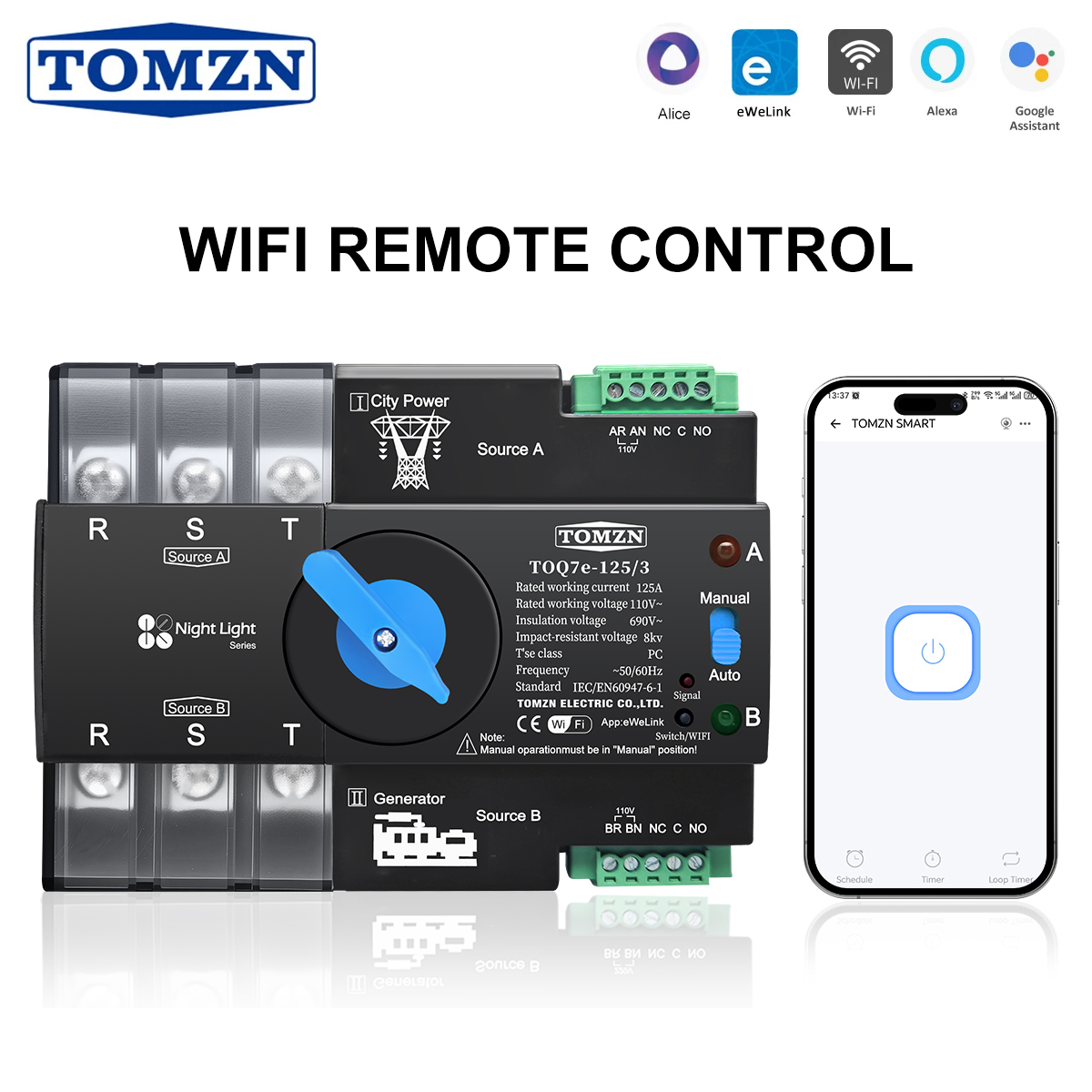
Traditional manual switches are rapidly evolving into hybrid units. Modern buyers demand manual override switches equipped with integrated digital voltage, current, and kWh energy monitoring displays, or Tuya/eWeLink smart modules. This enables remote telemetry over WiFi or RS485 Modbus while retaining a 100% fail-safe manual mechanical handle for manual isolation during total electronic failure.
2. DC-Specific Changeover Switches for BESS & Solar
With the rapid rise of residential energy storage systems (51.2V Lithium battery banks up to 1000V DC solar arrays), standard AC manual changeovers are insufficient. Procurement trends point toward high-voltage DC manual transfer switches capable of safely breaking direct current arcs, featuring specialized magnetic blowout fields and double-break contact structures.
3. Stringent Environmental & Material Audits (RoHS / REACH)
European and North American importers are enforcing strict chemical compliance. Overseas buyers now require verified material test reports proving total compliance with RoHS 2.0 and REACH regulations, specifically targeting heavy metal content in silver contacts and phthalate-free plasticizers in molded cases.
Looking for Verified China MTS Manufacturers?
Gain direct factory pricing, custom current/voltage ratings, OEM private label packaging, and CE certification datasheets from Zhejiang DVS Electric Co., Ltd.
Get CatalogProduct Development Trends: What Technical Directors Are Designing Next
Leading R&D teams in Wenzhou are prioritizing three core product development vectors for manual changeover technology:
- Compact Footprint Optimization: Reducing the width of 4-pole 125A DIN-rail manual transfer switches from 8 standard modules down to 4 or 6 modules without compromising creepage distances or heat dissipation.
- Visual Contact Status Windows: Direct mechanical flag indicators linked physically (not via electrical auxiliary) to the internal moving contact blade, providing visual confirmation of "Source A Closed", "OFF", and "Source B Closed" for high-security industrial safety audits.
- Padlockable Safety Interlocks: Integrated locking tabs that allow maintenance engineers to lock the switch in the neutral "OFF" position using standard lockout/tagout (LOTO) padlocks during grid or generator service.
Procurement FAQ: Critical Sourcing Guidance for Overseas Buyers
To assist international purchasing managers, project engineers, and importers in making informed supplier selections, we have answered the top technical and commercial sourcing questions below:
Why Sourcing from Zhejiang DVS Electric Co., Ltd. Delivers Competitive Advantage
Located in Liushi Town, Wenzhou—the globally recognized capital of low-voltage electrical apparatus—Zhejiang DVS Electric Co., Ltd. combines 24 years of manufacturing heritage with modern export infrastructure.
By eliminating trading intermediaries and managing raw material sourcing, metal stamping, plastic molding, assembly, and testing in-house, DVS Electric provides overseas distributors and brand owners with direct factory pricing, rigorous quality control, and complete flexibility for OEM/ODM customizations.
