1. Executive Overview: The Evolution of Short Circuit Protection Architecture
Short circuit protection forms the critical baseline of global electrical safety, power quality, and operational continuity across industrial, commercial, residential, and renewable energy infrastructures. A short circuit fault occurs when an unintended low-resistance connection forms between live conductors or between a live phase and ground. This triggers prospective short-circuit currents ($I_{cp}$) that can rapidly exceed tens of kiloamperes ($kA$) within milliseconds ($ms$). Without rapid, definitive arc quenching and physical galvanic isolation, such thermal and electromagnetic surges cause severe conductor melting, insulation degradation, electrical fires, and catastrophic equipment damage.
As the global power sector accelerates toward decentralization, smart grid digitalization, and high-penetration photovoltaic (PV) and energy storage system (ESS) integrations, the parameters governing low-voltage circuit protection have changed fundamentally. Modern Miniature Circuit Breakers (MCBs), Molded Case Circuit Breakers (MCCBs), Automatic Transfer Switches (ATS), and Surge Protective Devices (SPDs) must execute instantaneous fault isolation—often under extreme direct current (DC) arcing conditions where natural current zero-crossings are absent.
Technical Information Gain Note: Unlike alternating current (AC) arcing—where magnetic arc quenching is aided by natural current zero-crossings every half-cycle (50Hz/60Hz)—DC short-circuit clearing demands specialized permanent-magnet arc chutes, elongated arc stretch channels, and silver-alloy contact metallurgy to extinguish non-zero-crossing continuous DC arcs before ion cloud flashover occurs.
2. Featured Short Circuit Protection & Power Switching Portfolio
Explore our industry-standard DIN-rail circuit breakers, automatic transfer switches, smart energy monitors, and security access devices optimized for export markets.
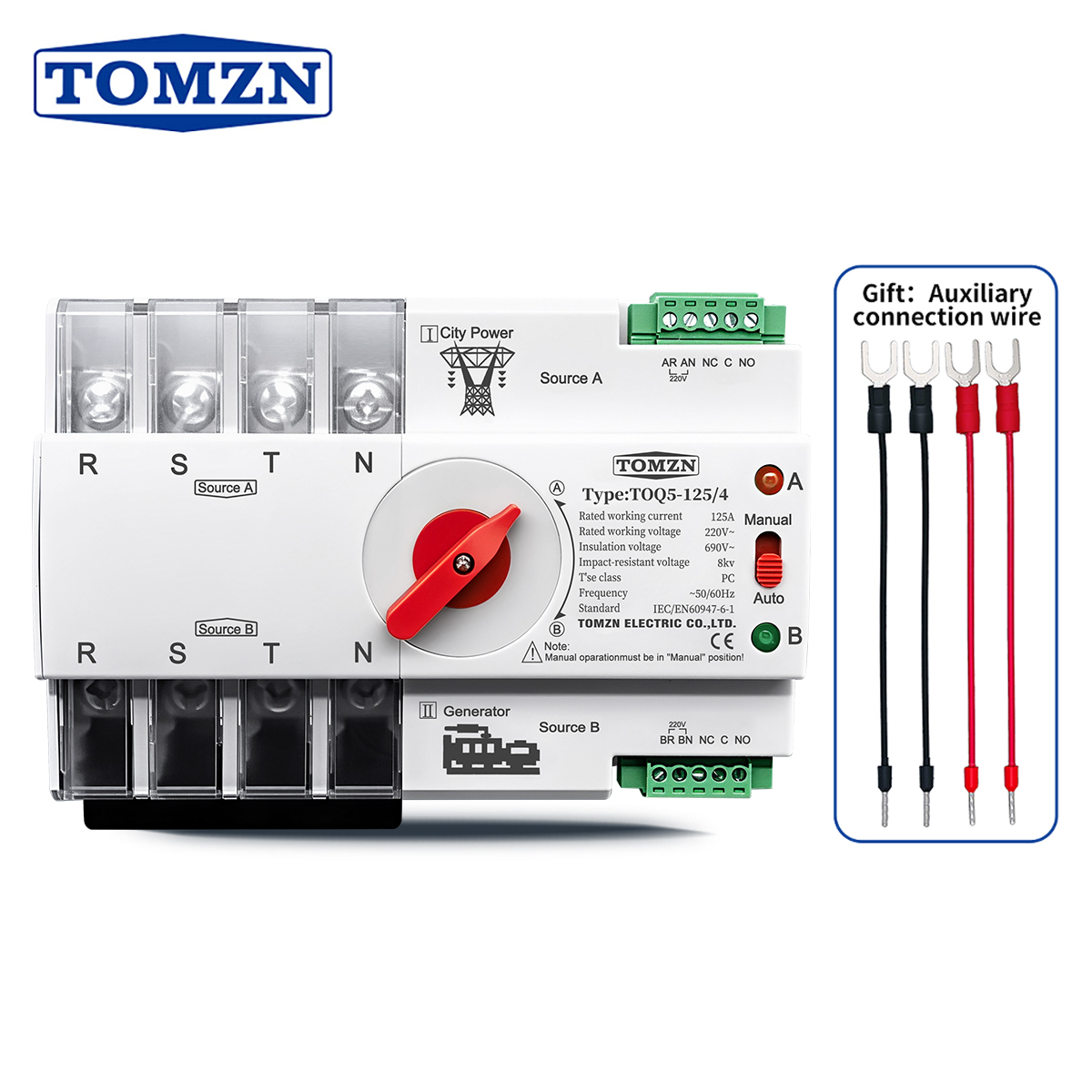
TOMZN 3 Phase Din Rail ATS Dual Power Automatic Transfer Switch Electrical Selector Uninterrupted Power 4P 63A 100A 125A
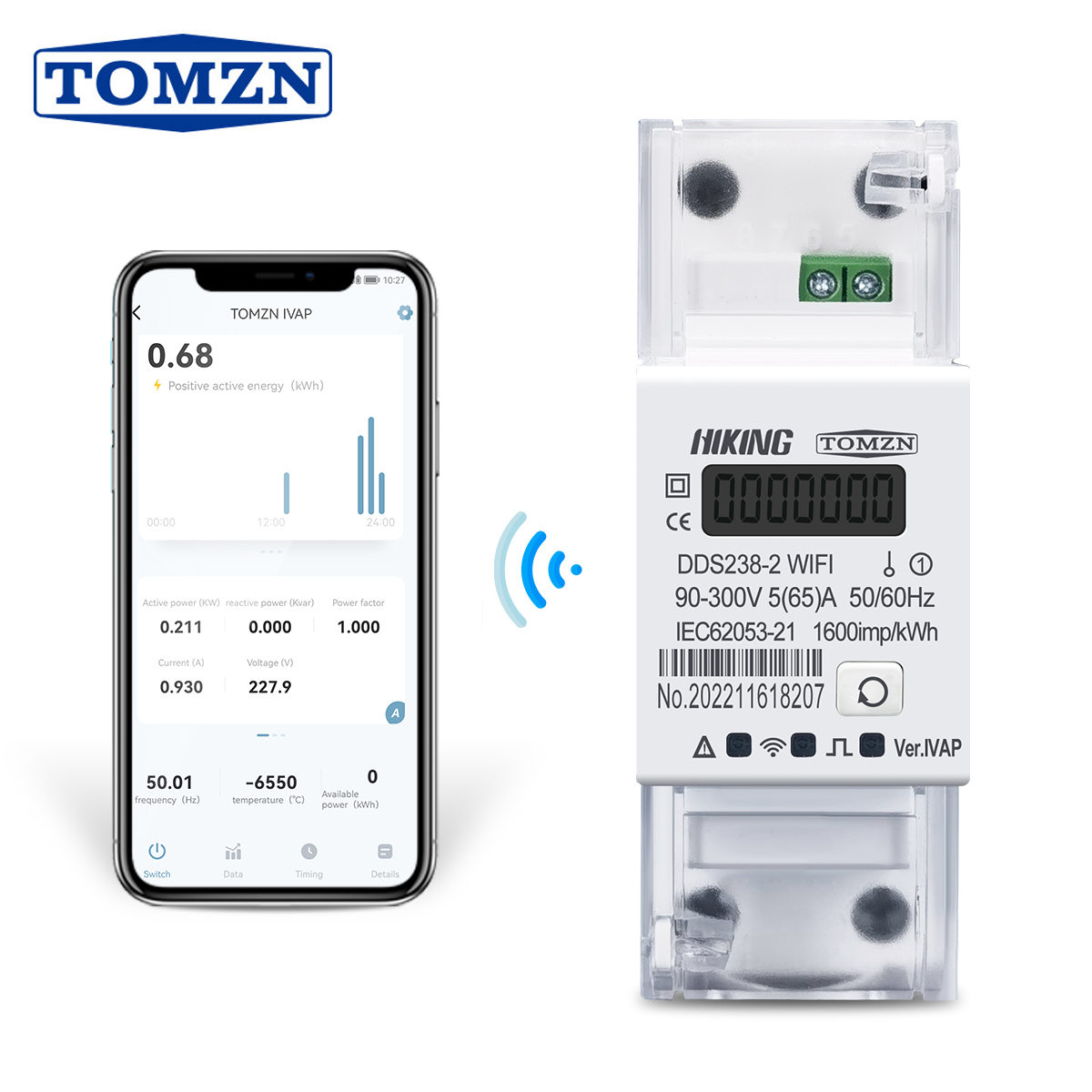
Tuya Single Phase 65A Din Rail WIFI Smart Energy Meter Timer Power Consumption Monitor kWh Meter Wattmeter 110V 220V 50/60Hz
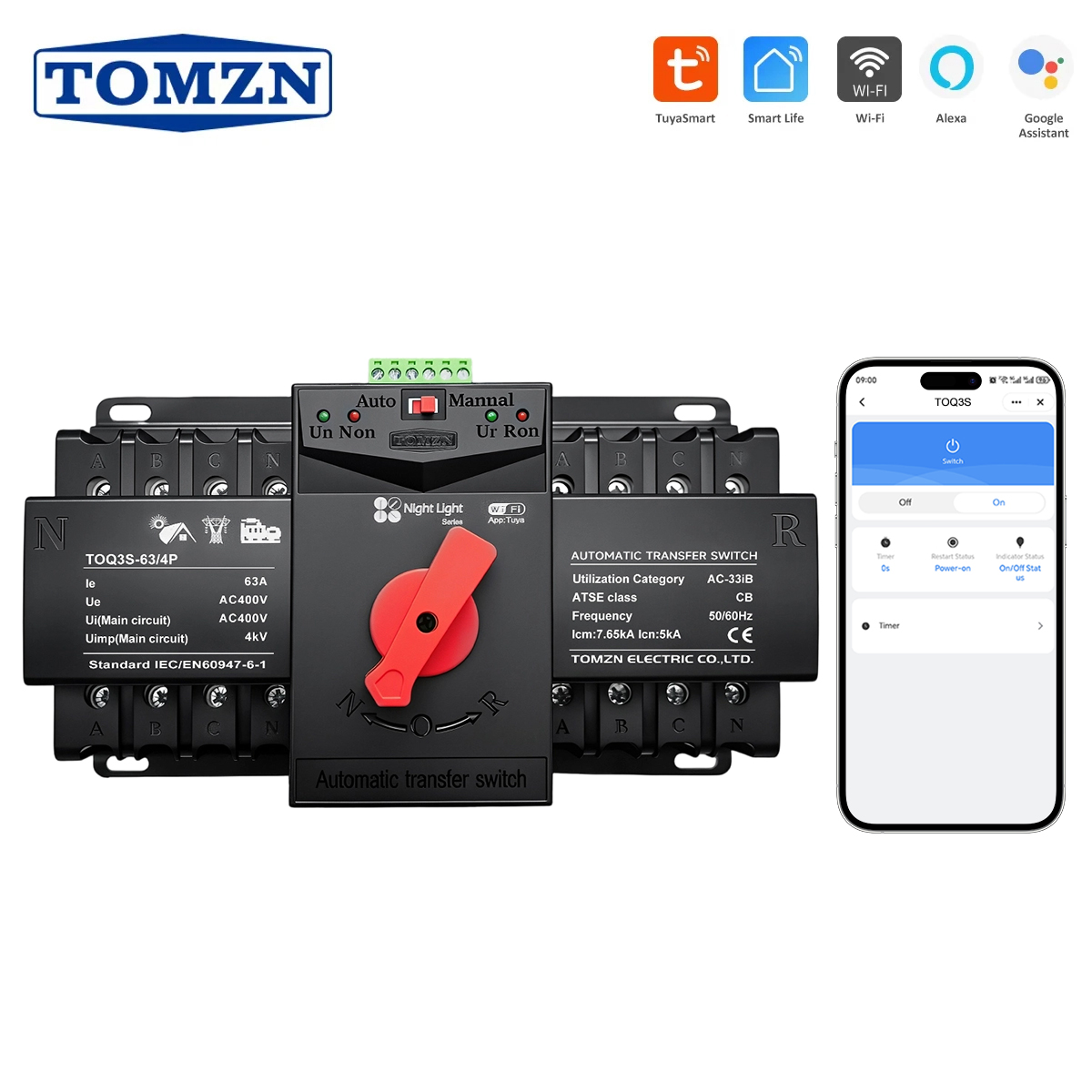
TOMZN Tuya WIFI Smart ATS 4P 63A Dual Power Automatic Transfer Switch AC220V 230V 50/60Hz MCB Type Generator Overload Protection

TOMZN WIFI Smart Circuit Breaker 2P 230V AC 1-100A Overload Protection Short-circuit Breaker Timer Switch Din Rail Smartlife
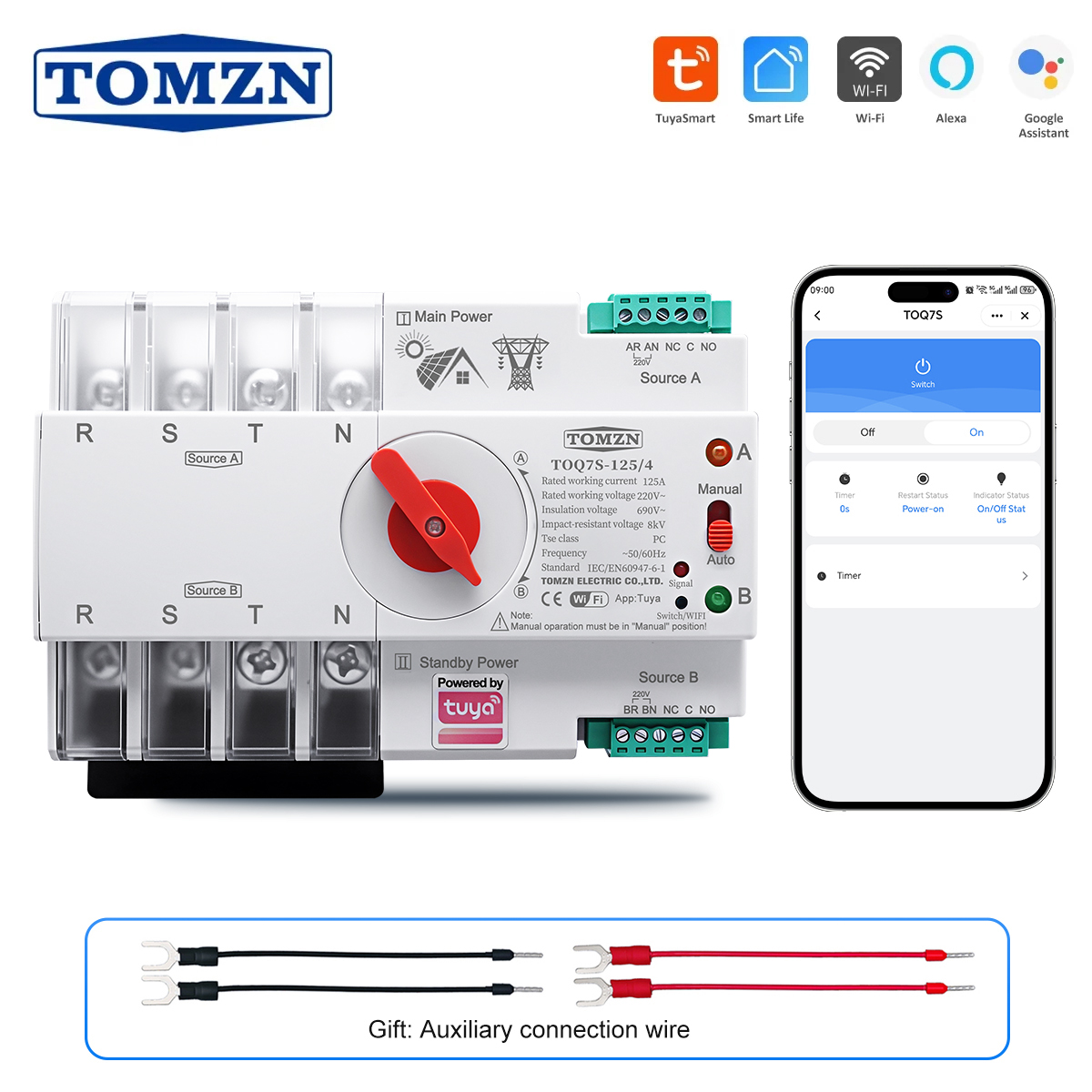
TOMZN TUYA SmartLife ATS 4P AC230V 63A 100A 125A Dual Power Automatic Transfer Switch TOQ7S Three-phase Four-wire DIN Rail
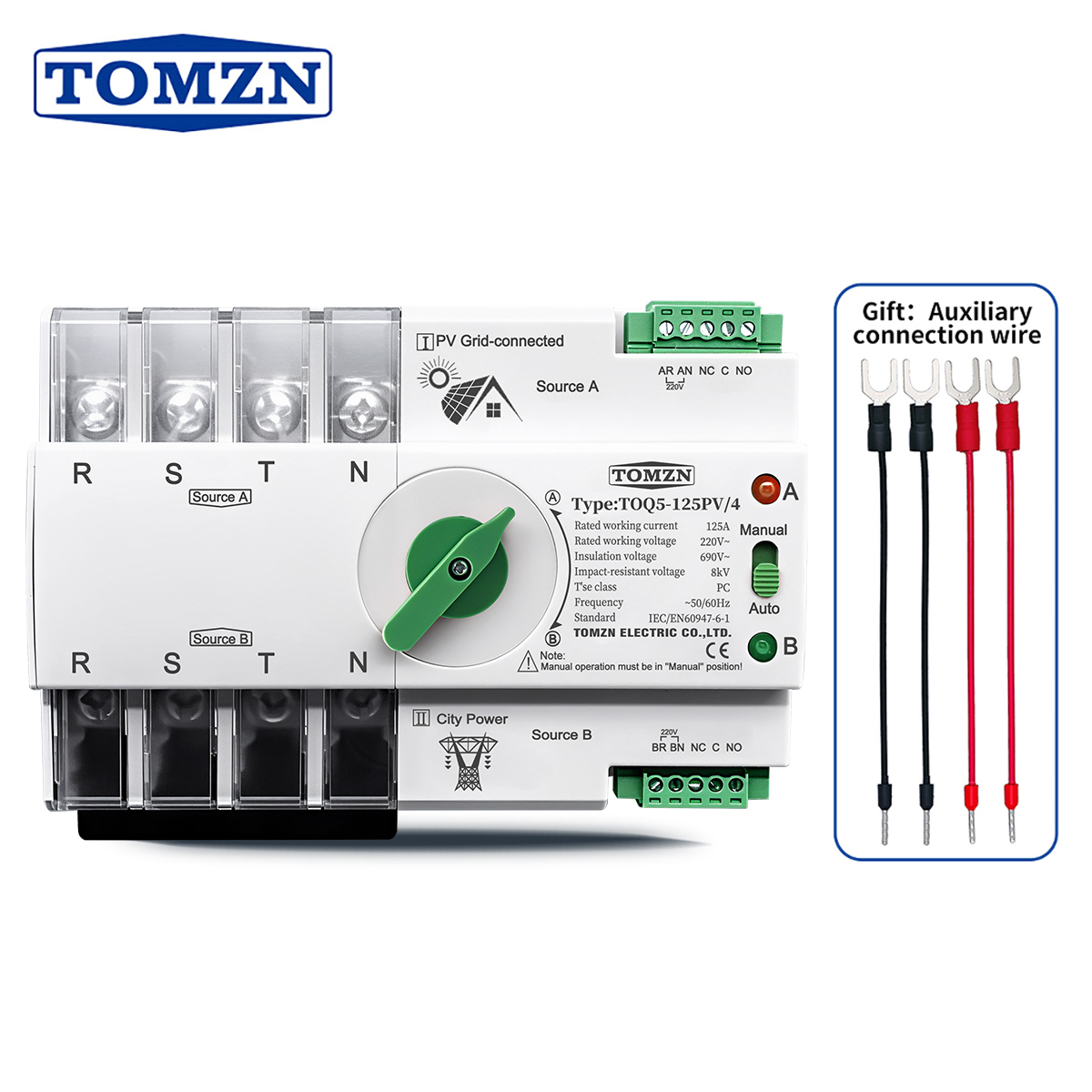
TOMZN 4P 3 Phase 4 Wire Din Rail ATS PV and Inverter Dual Power Automatic Transfer Selector Switches Uninterrupted 63A 100A 125A

TOMZN NFC Passive Intelligent Padlock Keyless No Keyway Waterproof Theft-proof Thickened Body Lock/Unlock Record Nfc Lock APP
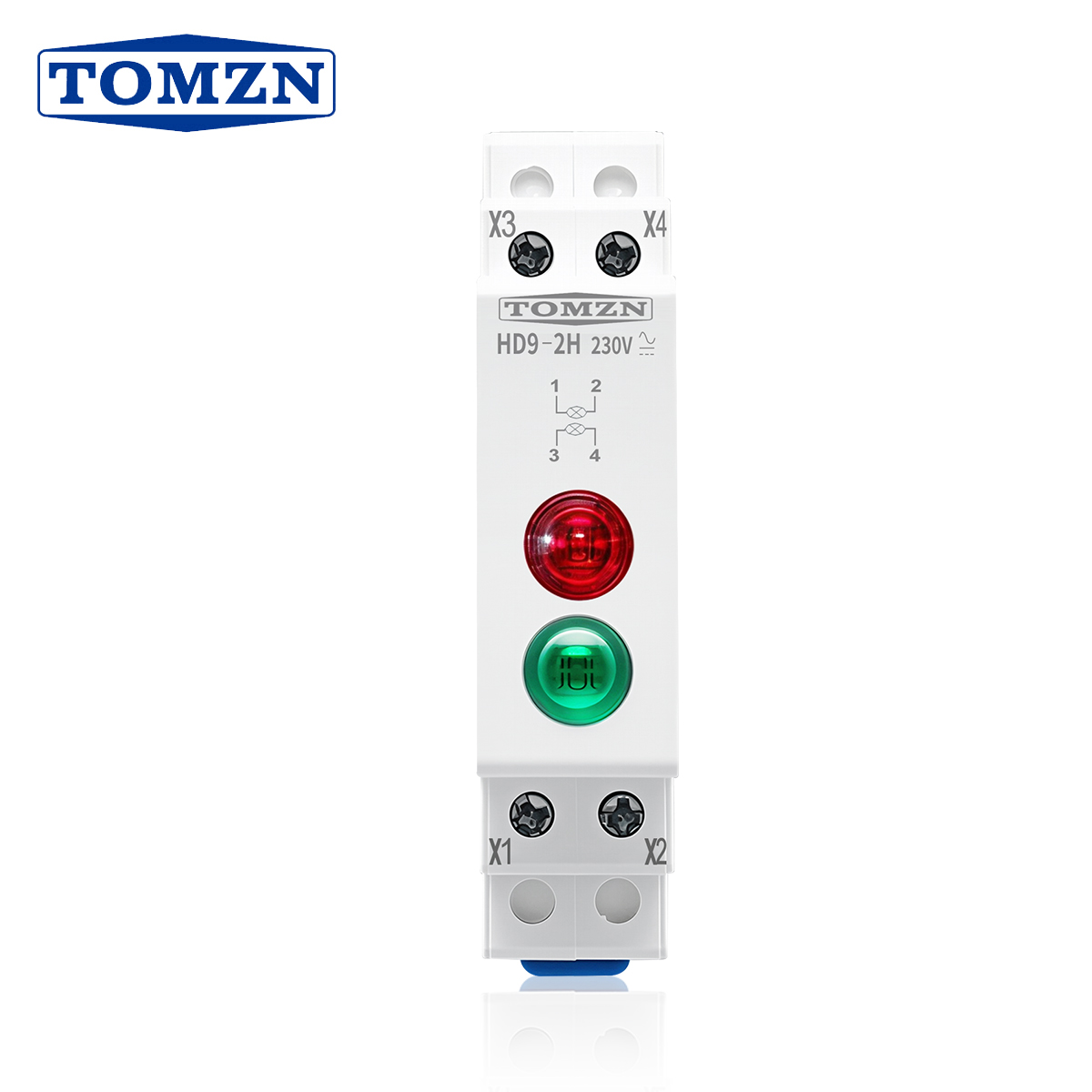
TOMZN DIN Rail HD9-2H 230V AC/DC LED 1P 18mm Signal Indicator Light Red and Green for Household
3. Corporate Excellence & Manufacturing OEM/ODM Infrastructure
Headquartered in Liushi Town, Wenzhou—widely recognized as China's low-voltage electrical capital—Zhejiang DVS Electric Co., Ltd. (operating globally under the established TOMZN brand benchmark) brings 24 years of specialized expertise to low-voltage electrical protection, switching, and intelligent metering manufacturing.
Operating a state-of-the-art 5,700 m² integrated production center, our site encompasses automated coil winding, silver-contact welding, thermal-magnetic calibration benches, automated breaking capacity testing rigs, and rigorous final quality control stations. Our direct-factory manufacturing model gives global OEM partners, electrical wholesalers, and engineering buyers total control over product specifications, certification pathways, housing customization, and supply chain timelines.
Verified OEM & ODM Capability
Full private-label customization including custom trip curve calibration (B, C, D curves), laser marking, custom amp ratings (1A to 125A), bespoke casing colors, and specialized packaging.
Strict Quality & Compliance
Every production batch undergoes 100% automated calibration for instantaneous magnetic tripping and bimetal thermal overload response, backed by full CE certification and third-party facility audits.
Global Export Reach
Exporting over US$3.3M+ annually to more than 80 countries across Europe, South America, Southeast Asia, and the Middle East, with tailored documentation support for fast customs clearance.
4. Future Procurement & Technical Trends in Circuit Protection (2025–2030)
The global low-voltage circuit protection market is undergoing a structural transition driven by renewable energy targets, smart city infrastructure, and distributed microgrids. Importers and procurement executives must align their product sourcing strategies with five major technical vectors:
A. Solid-State & Hybrid Arc Interruption Technologies (SSCB)
Traditional mechanical air-break circuit breakers rely on bimetal heating and electromagnetic armatures to open physical silver alloy contacts, yielding trip clearing times between 5ms and 15ms. In high-density semiconductor environments, battery storage systems, and microgrids, 15ms of short-circuit energy exposure ($I^2t$) can destroy delicate power electronics. Next-generation hybrid and Solid-State Circuit Breakers (SSCBs) utilize Silicon Carbide (SiC) or Gallium Nitride (GaN) MOSFET power switches to interrupt fault currents within microsecond ($\mu s$) timescales, virtually eliminating mechanical contact erosion and arcing hazards.
B. IoT-Native Smart Breakers & Tuya/Wi-Fi/RS485 Integration
Circuit protection is evolving from passive hardware into connected edge-computing nodes. Modern commercial and residential distribution boards require DIN-rail breakers equipped with embedded Wi-Fi, Zigbee, or RS485 Modbus telemetry. As showcased in the TOMZN Tuya Wi-Fi Smart Breaker Series, procurement teams are actively sourcing units that combine real-time active power monitoring (kWh, V, A, Temperature), remote app switching, scheduling, over-voltage/under-voltage protection, and predictive maintenance analytics into a single 18mm or 36mm DIN-rail footprint.
C. High-Voltage Direct Current (HVDC) Solar & ESS Protection
Residential and commercial solar PV strings have scaled from 600V DC up to 1000V DC and 1500V DC operating voltages to minimize line transmission losses ($I^2R$). Breakers designed for AC utility grids cannot interrupt DC arcs effectively. Future-proof procurement requires direct-current miniature circuit breakers (DC MCBs) and DC MCCBs equipped with directional magnetic arc-blowout systems that force high-voltage DC arcs into specialized ceramic-reinforced splitter plates.
D. Decentralized Grid Backups & Ultra-Fast Automatic Transfer Switches (ATS)
With grid instability rising globally due to climate extremes and renewable power intermittency, dual-power automatic transfer switches (ATS) have become essential baseline hardware. Sourcing trends favor compact DIN-rail ATS modules capable of seamless switching between Main Utility power, Solar Inverter backfeed, and Standby Diesel Generators in under 50 milliseconds, ensuring uninterrupted continuity for critical residential circuits and cloud server loads.
5. Technical Selection Matrix: Circuit Protection Standards Comparison
To assist technical purchasing managers in specifying the exact breaker parameters required for compliance, the following matrix compares core operational standards across different application environments:
| Breaker Type | IEC/EN Standard | Typical Voltage Rating | Tripping Characteristics | Arc Extinction Method | Primary Target Application |
|---|---|---|---|---|---|
| Standard AC MCB | IEC 60898-1 / IEC 60947-2 | 230V / 400V AC | B Curve (3-5In), C Curve (5-10In) | De-ion Arc Chute Splitter Plates | Residential & Commercial Lighting / Outlets |
| Solar DC MCB | IEC 60947-2 / EN 60947-2 | 500V / 800V / 1000V DC | C Curve / Special DC Trip Curve | Permanent Magnet Arc Blowout + Arc Chute | Solar PV String Combiner Boxes & Batteries |
| Smart WiFi MCB | IEC 60947-2 + ETSI EN 300 328 | 110V / 230V AC | C Curve with Remote Software Override | Mechanical Contacts + Microcontroller Servo | Smart Homes, Rental Energy Control, Automation |
| Dual Power ATS | IEC 60947-6-1 | 220V / 400V AC (2P/3P/4P) | Utilizes Integrated MCB Overload Elements | Dual Mechanical Contactors / Interlocks | Generator / Grid Backup Switching |
| DC Solar MCCB | IEC 60947-2 | 500V / 1000V DC | Adjustable Thermal & Magnetic Trip Units | Multi-stage Heavy Duty Arc Chutes | Inverter Inputs, Battery Room Main Breakers |
6. B2B Buyer FAQ: Sourcing Short Circuit Protection Devices
Technical answers to critical questions faced by electrical distributors, panel builders, and procurement officers during supplier evaluation.
Ultimate Short-Circuit Breaking Capacity ($I_{cu}$): Represents the maximum short-circuit current the circuit breaker can interrupt safely at least once without causing catastrophic structural damage, fire, or flashover. After clearing an $I_{cu}$ event, the breaker may no longer be operational and should be replaced.
Service Short-Circuit Breaking Capacity ($I_{cs}$): Represents the short-circuit current level at which the breaker can successfully interrupt the fault multiple times (typically 3 sequential events) and remain fully functional to carry its rated continuous current thereafter. High-quality export breakers maintain $I_{cs} = 75\% \text{ to } 100\% \text{ of } I_{cu}$.
- B Curve (Trips at 3-5 $I_n$): Designed for sensitive electronic equipment, long cable runs, and resistive loads where fault currents are low.
- C Curve (Trips at 5-10 $I_n$): The international standard default for general power outlets, lighting circuits, resistive loads, and small inductive appliances.
- D Curve (Trips at 10-14 $I_n$): Optimized for high-inrush inductive loads such as industrial electric motors, transformers, welding machinery, and large power supplies to prevent nuisance tripping during initial startup surges.
