Flagship Overload Protection Breakers & Automatic Transfer Switches
Direct Factory Engineering Solutions for Solar PV, Residential Distribution Boards, and Commercial Backup Power Networks
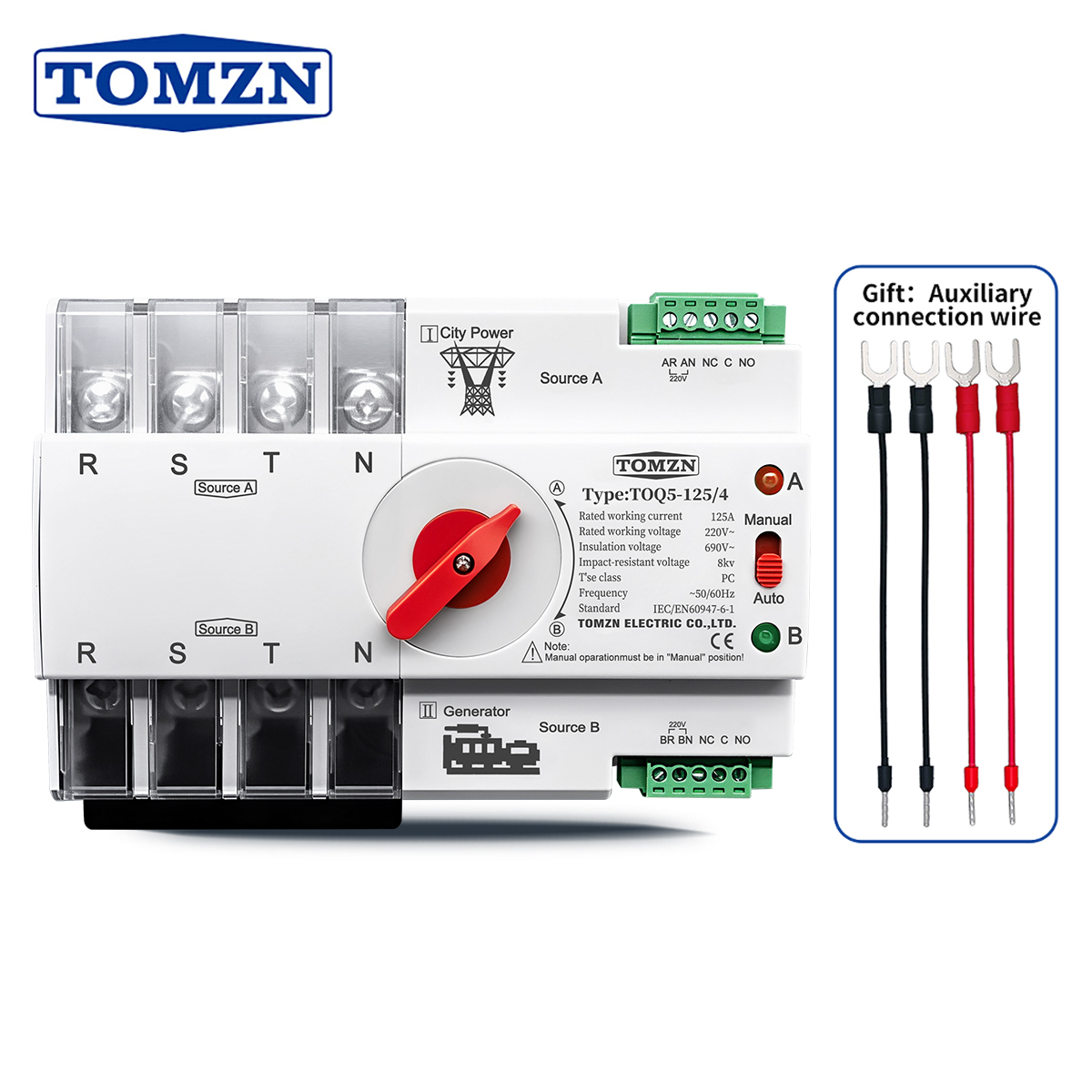
TOMZN 3 Phase DIN Rail Dual Power Automatic Transfer Switch (4P 63A 100A 125A)
- Pole Count: 4P Three-Phase Four-Wire
- Current Range: 63A, 100A, 125A
- Switching Time: < 50ms Seamless Transfer
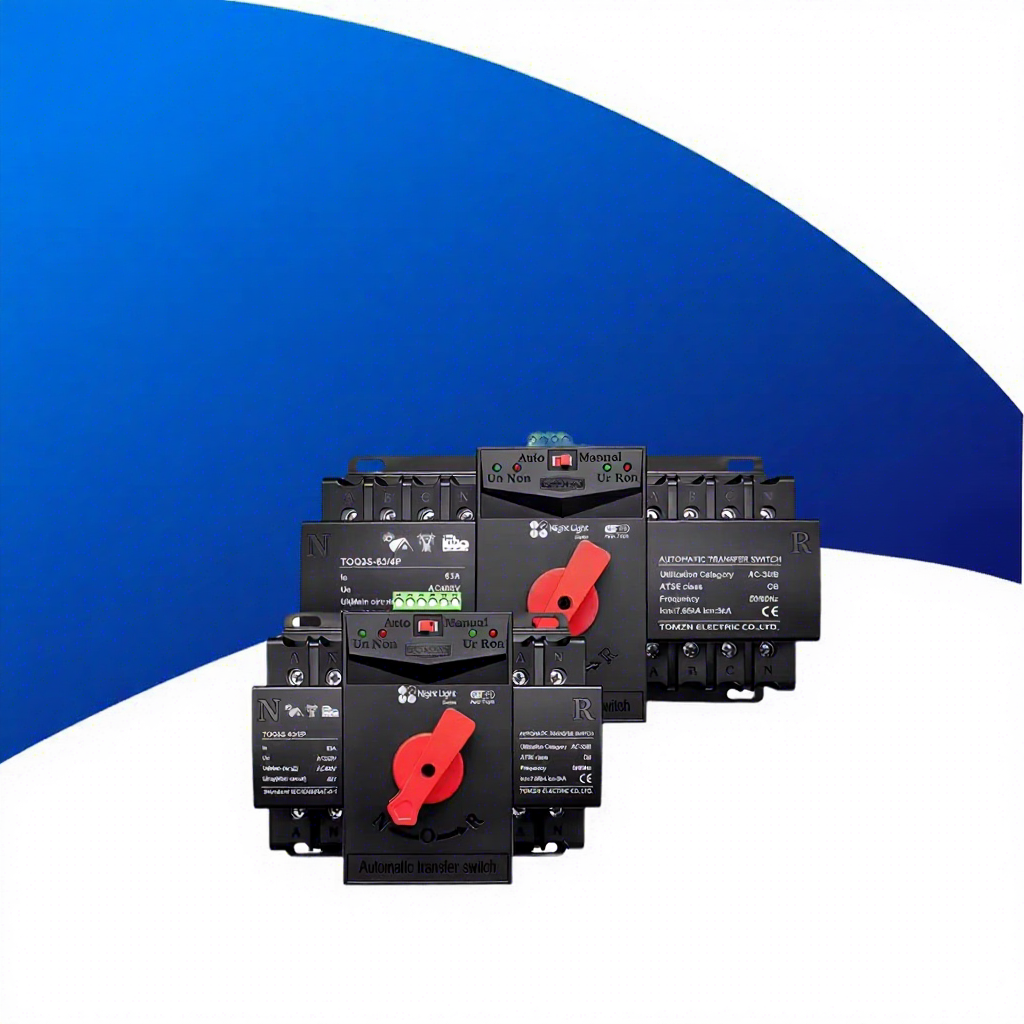
TOMZN SmartLife WiFi Smart ATS 2P/4P 63A Dual Power Switch
- Voltage Rating: AC 220V / 230V 50/60Hz
- Smart Protocol: Tuya SmartLife / WiFi App
- Protection: Overload & Generator Changeover
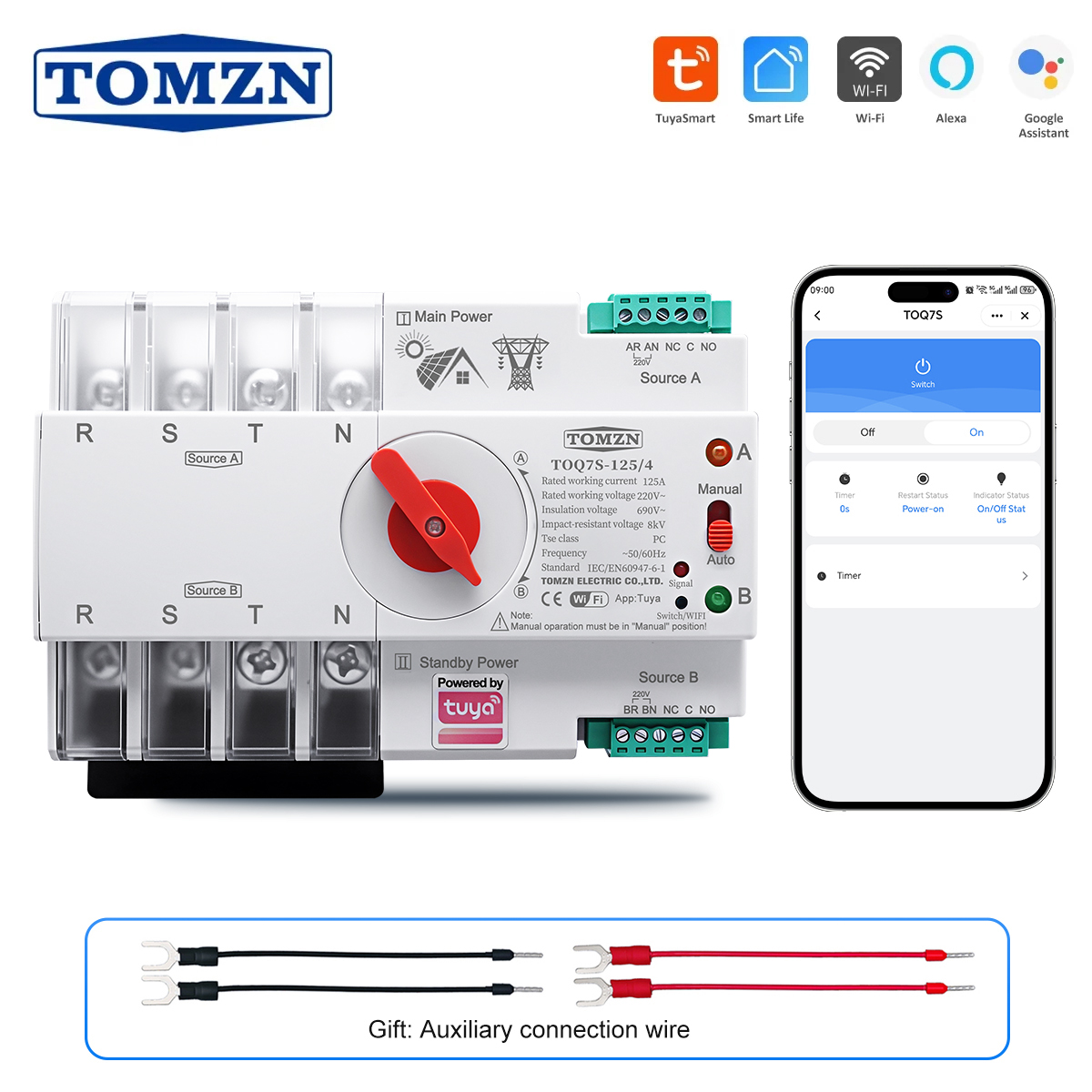
TOMZN TUYA SmartLife TOQ7S 4P Three-Phase DIN Rail ATS
- Configuration: TOQ7S 4P Three-Phase 4-Wire
- Ampere Capacity: 63A / 100A / 125A
- Integration: IoT Remote Control & Monitoring
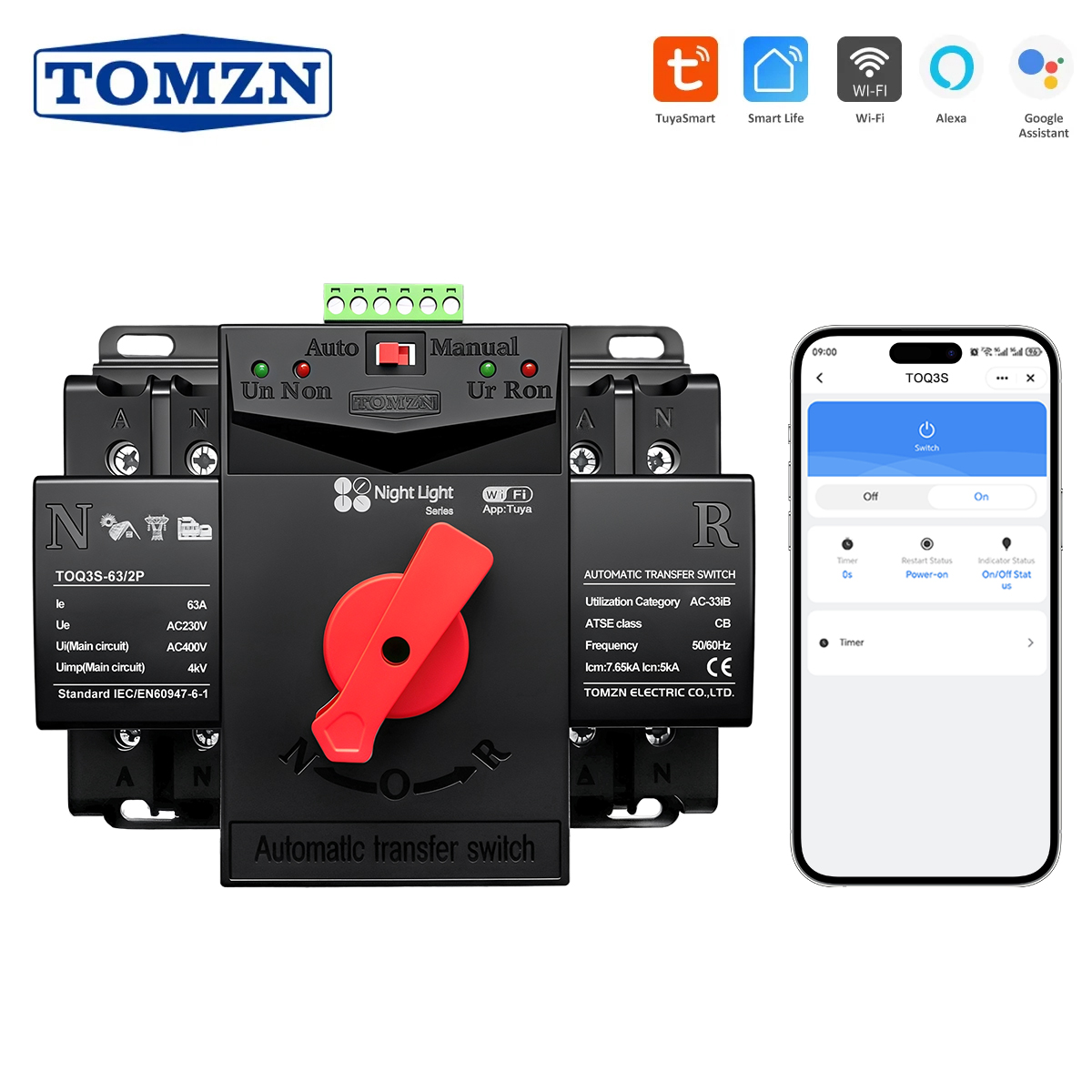
TOMZN SmartLife WiFi ATS 2P 63A Single Phase Generator Switch
- Poles: 2P Single Phase 230V
- Safety Features: Short Circuit & Overload Arc Chute
- Control: Wireless App & Manual Override
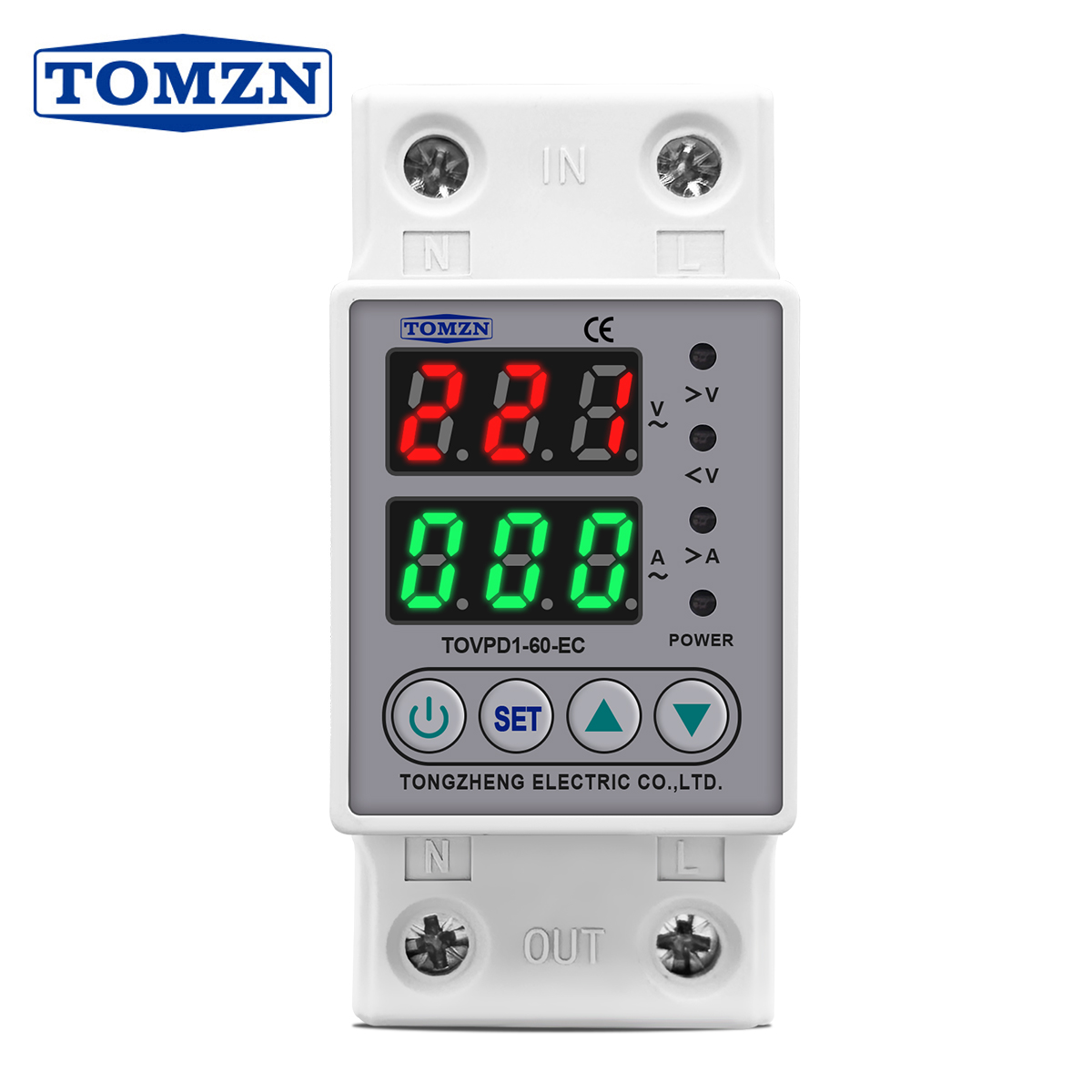
TOMZN DIN Rail 230V Adjustable Over & Under Voltage Protector (63A)
- Threshold Setting: Over/Under Voltage & Current Limit
- Display: Digital Dual Meter Voltage/Amperage
- Auto-Reset: Configurable Recovery Delay
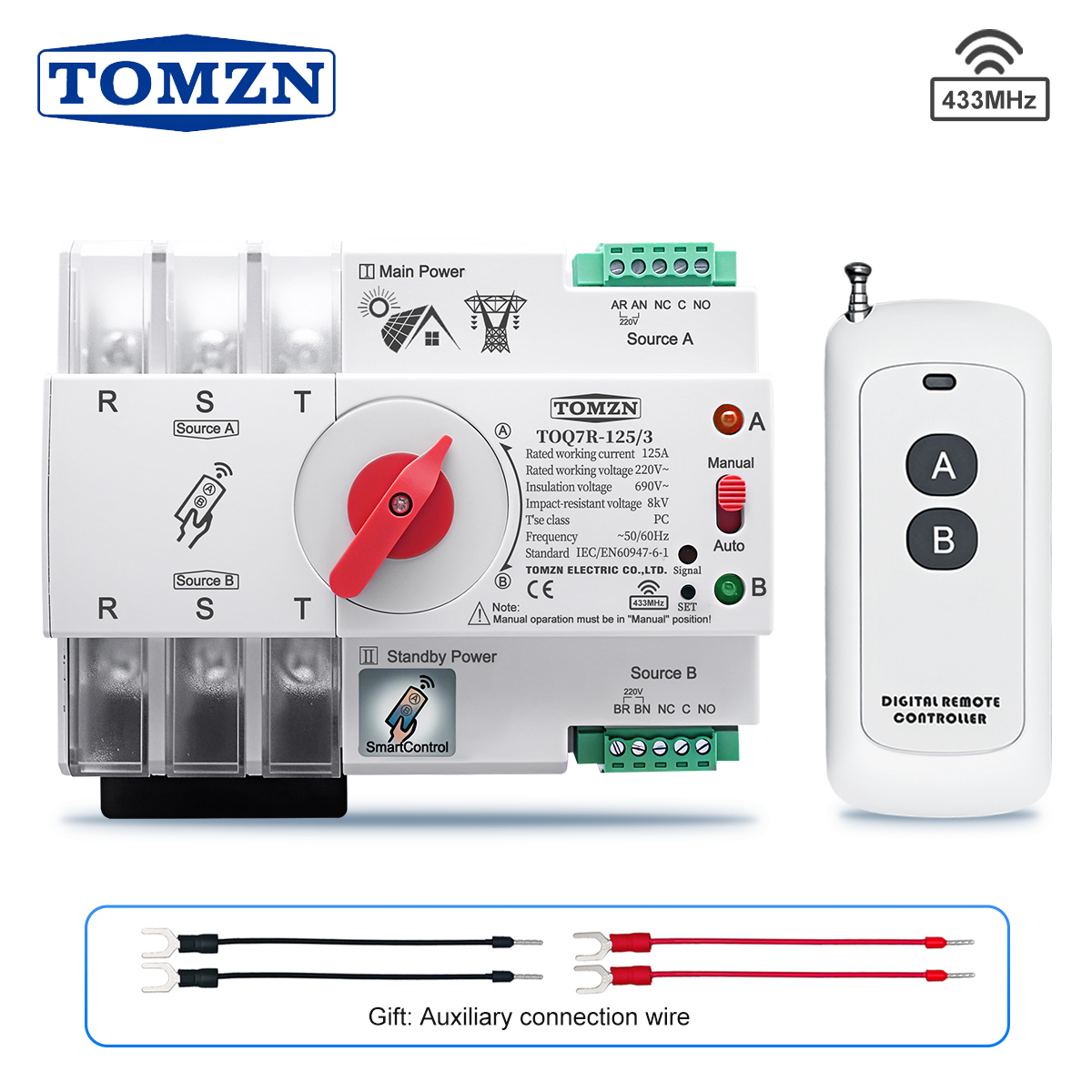
TOMZN 3P 3-Pole Wireless 433MHz Remote Control ATS Switch
- Wireless Frequency: RF 433MHz Long Range
- Topology: 3-Pole Uninterrupted Power Switch
- Application: Inverter & Generator Automation
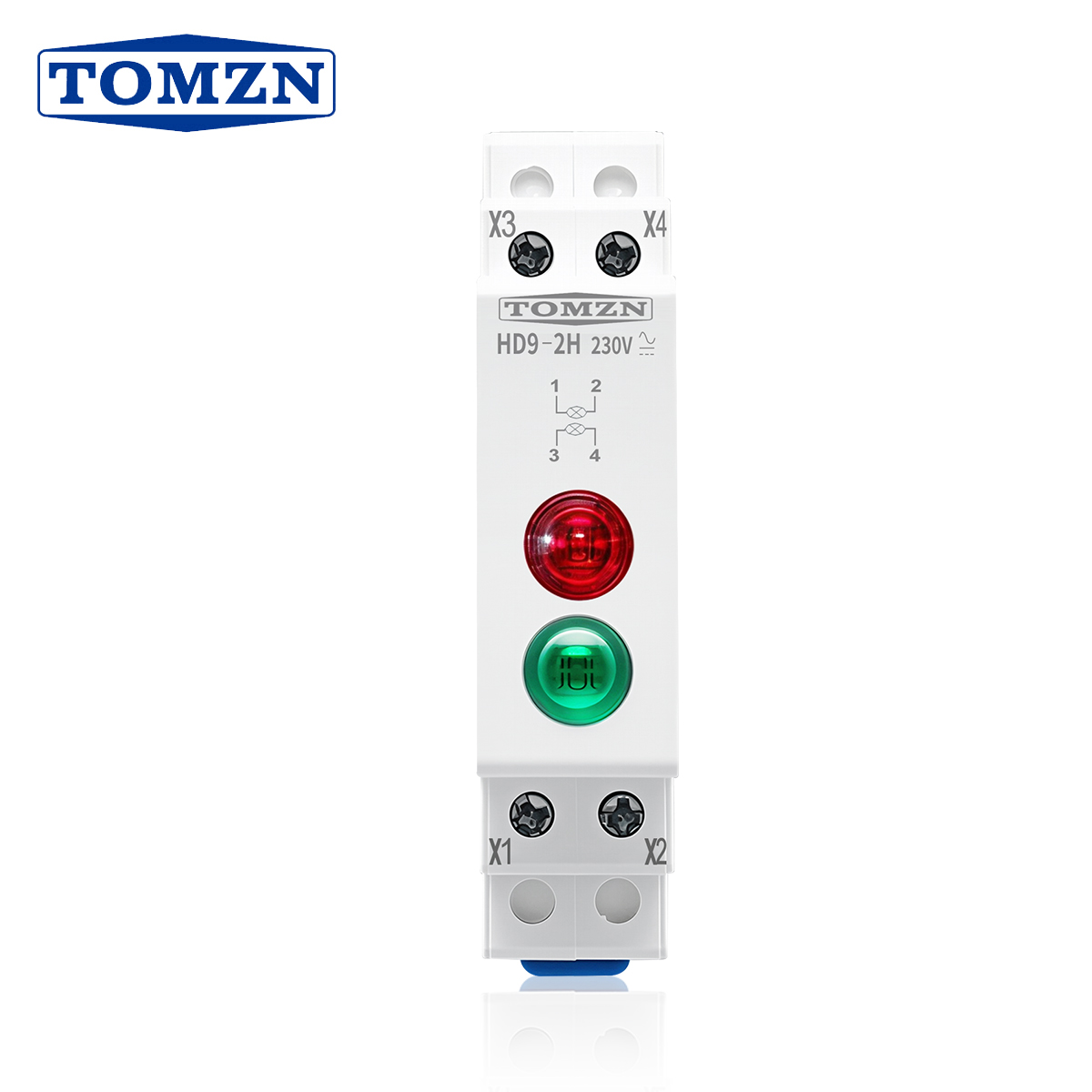
TOMZN DIN Rail HD9-2H 230V AC/DC LED Signal Indicator (Red & Green)
- Standard Width: 1P 18mm DIN Module
- Illumination: Dual LED Red/Green Modular Status
- Voltage: AC/DC 230V Universal Household
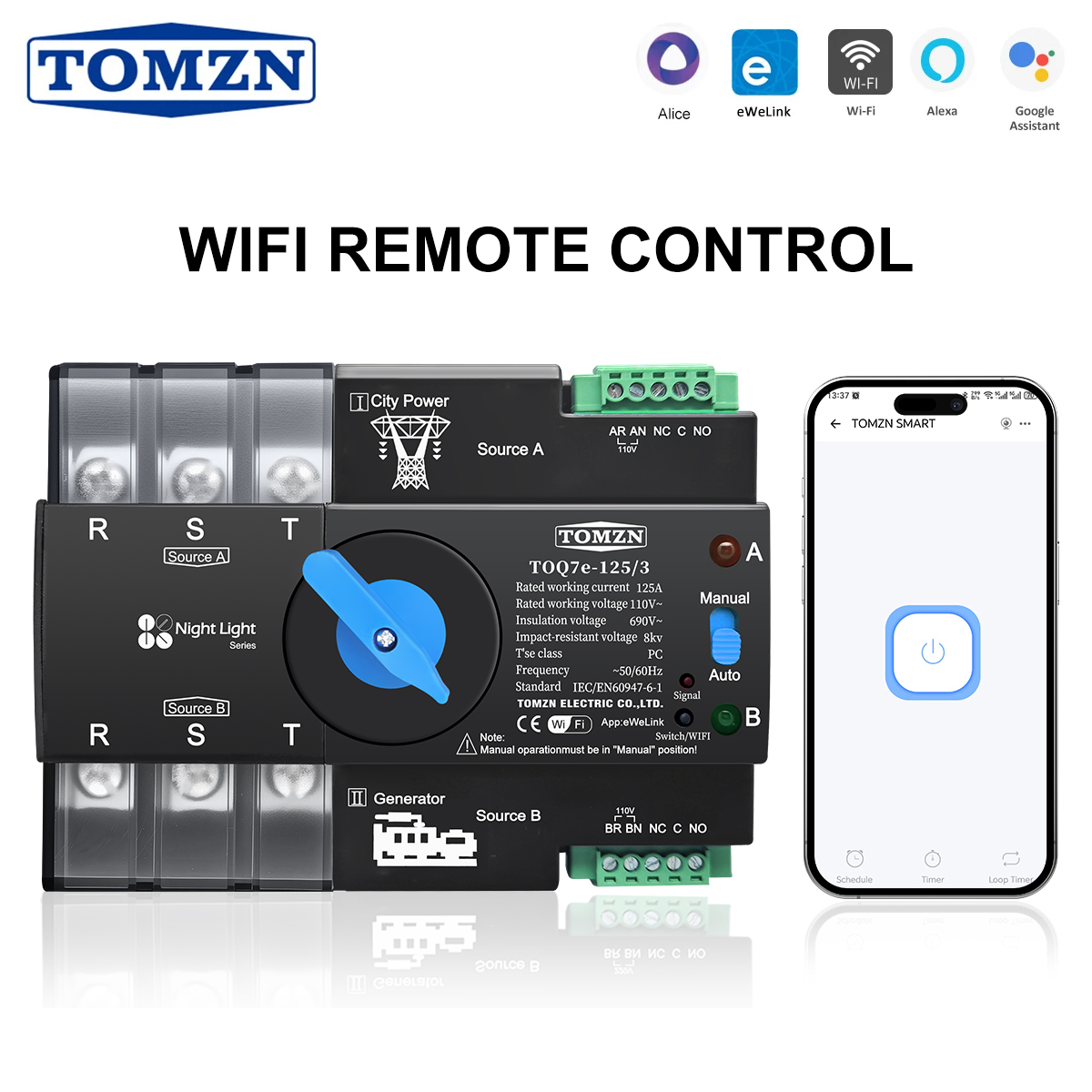
TOMZN 110V/120V Three Phase Smart ATS EWeLink DIN Rail (3P 125A)
- Low Voltage Support: 110V / 120V Dual Grid Compatible
- Platform: eWeLink Ecosystem Smart Integration
- Max Capacity: 125A Heavy Duty Power Isolation
Why Zhejiang DVS Electric / TOMZN Leads Low-Voltage Protection Sourcing
In modern low-voltage power distribution, grid volatility, renewable energy integration, and smart home automation demand unprecedented breaking capacities and thermal withstand ratings. Headquartered in Liushi Town, Wenzhou—China's global capital for electrical equipment—Zhejiang DVS Electric Co., Ltd. (TOMZN) operates as a premier original equipment manufacturer (OEM) and custom exporter with 24 years of specialized low-voltage engineering authority.
Our state-of-the-art 5,700 m² manufacturing plant houses dedicated automated assembly lines, high-precision thermal-magnetic tripping calibration stations, arc-extinction testing chambers, and rigorous dielectric voltage withstand equipment. Every overload protection circuit breaker, digital voltage monitor relay, and dual-power automatic transfer switch (ATS) undergoes 100% full-load functional testing before export packaging.
Verified OEM & ODM Engineering
Full private-label customization including laser-etched brand marking, bespoke current/voltage curves, housing shell coloration, and custom packaging for international distributors.
Stringent CE & IEC Compliance
Manufactured strict to IEC 60947-2, IEC 60898-1, and IEC 60364-7-712 global safety benchmarks, carrying full CE, RoHS, and ISO9001 certified quality control verification.
Global Export Logistics
With an annual export value exceeding US$3.3 Million across 80+ countries, our supply chain ensures low MOQs, rapid air/sea turnarounds, and customs-ready documentation.
Information Gain Insight: Overload protection circuit breakers engineered for solar PV DC networks and AC backup networks operate under fundamentally different physical arcing mechanics. While AC current benefits from natural zero-crossing points every 10ms (at 50Hz) that quench arcs, DC current never crosses zero. TOMZN DC MCBs and Smart ATS units integrate specialized permanent magnetic blow-out fields and multi-plate arc chutes to instantaneously stretch and extinguish DC/AC arcs, preventing thermal runaway and catastrophic panel fires.
Technical Evolution Matrix: Conventional vs Smart Overload Breakers
When selecting low-voltage circuit protection for modern electrical installations, procurement managers must evaluate trip characteristics, telemetry integration, and physical insulation endurance. The matrix below outlines structural performance differences across generations of overload protective devices.
| Performance Specification | Legacy Thermal-Magnetic MCB | Digital Over/Under Voltage Relay | IoT Smart ATS Breaker (TOMZN) |
|---|---|---|---|
| Primary Protection Vector | Overcurrent & Short Circuit | Voltage Sags, Swells & Current Limits | Overcurrent, Short Circuit, Auto Transfer & Voltage monitoring |
| Arc Quenching Mechanism | Standard 9-Plate Arc Chute | Electronic Solid-State Relay / Contact Isolation | Enhanced Multi-Grid Arc Chute + Silver Alloy Contacts |
| Response Switching Time | 10ms – 100ms (Magnetic) | 0.1s – 30s (Configurable) | < 50ms Seamless Auto-Transfer |
| Remote Telemetry & Control | None (Manual Switch Only) | Digital LED Display Screen | Tuya / SmartLife / eWeLink WiFi App & 433MHz Wireless |
| Target Application | Basic Terminal Distribution | Unstable Grids & Appliance Isolation | Solar PV Storage, Hybrid Microgrids, Critical Standby Power |
Strategic Procurement & Development Trends (2025–2030)
As electrical infrastructure worldwide shifts toward distributed energy resources (DERs), decarbonization, and smart city microgrids, the global market for overload protection circuit breakers and automatic changeover switches is undergoing a technological revolution. Wholesalers and EPC contractors must align their inventory strategies with four critical industry transformations:
1. High-Voltage DC Circuit Protection for Solar PV & Energy Storage (ESS)
With residential and commercial solar installations transitioning from 600V DC to 1000V and 1500V DC string topologies, standard AC breakers are no longer sufficient. Future procurement centers on specialized DC MCBs and MCCBs equipped with polarized or non-polarized bi-directional breaking capabilities. Sourcing managers must prioritize breakers tested to withstand elevated ambient temperatures within IP65 outdoor solar combiner boxes.
2. IoT-Enabled Cloud Telemetry & Remote Diagnostic Switching
Static circuit breakers are rapidly giving way to smart IoT protection switches. Industrial and residential buyers demand real-time energy metering (kWh, Voltage, Current, Leakage current), remote app scheduling, and automatic fault alerts via Tuya SmartLife or eWeLink cloud ecosystems. The inclusion of wireless 433MHz controls and RS485 Modbus communications allows facility managers to execute predictive maintenance without physical cabinet access.
3. Microgrid Resilience via Sub-50ms Automatic Transfer Switches (ATS)
The increasing frequency of extreme weather events and grid instability makes dual-power automatic transfer switching standard practice in modern distribution panels. Modern ATS units must offer compact DIN-rail footprints, high withstand current ($I_{cw}$), and ultra-fast transfer speeds (< 50ms) to ensure sensitive electronics, servers, and refrigeration systems remain powered during grid-to-generator switchovers.
4. Integrated Dynamic Over-Under Voltage Protection
In developing markets and rural distribution grids, voltage fluctuations cause far more equipment damage than direct overcurrent events. Procurement trends show explosive demand for DIN-rail mounted adjustable over/under voltage protective relays with real-time digital current display monitors. Devices offering customizable auto-reset time delays protect inductive motor loads from rapid power cycling.
Comprehensive Sourcing FAQ for B2B Importers & Engineers
Clear, technical answers to common queries encountered during low-voltage breaker procurement, OEM compliance, and installation planning.
What is the difference between a Type B, Type C, and Type D overload protection curve?
The tripping curve defines the instantaneous magnetic tripping threshold relative to the rated current ($I_n$):
- Type B Curve: Trips between $3I_n$ and $5I_n$. Ideal for resistive loads and delicate electronic circuits with minimal inrush currents (e.g., long cable runs, computer power supplies).
- Type C Curve: Trips between $5I_n$ and $10I_n$. The global standard for general residential, commercial lighting, and standard appliances.
- Type D Curve: Trips between $10I_n$ and $20I_n$. Engineered for heavy inductive loads with high starting inrush surges (e.g., electric motors, transformers, industrial compressors).
Why must DC Miniature Circuit Breakers (DC MCB) be specified for solar PV arrays instead of standard AC MCBs?
Alternating current (AC) naturally drops to zero voltage 100 or 120 times per second (at 50/60Hz), allowing arc extinction chambers to clear electrical arcs easily. Direct current (DC) maintains continuous voltage without zero-crossing points, producing persistent high-temperature arcs during fault interruption. A dedicated DC MCB features internal permanent magnets that pull the electrical arc into extended ceramic arc chutes, safely extinguishing it up to 1000V DC.
How does a Dual Power Automatic Transfer Switch (ATS) function during a primary grid failure?
An ATS continuously monitors the primary power source (Grid Power - Source A). When grid voltage drops below an operational threshold or fails entirely, the ATS internal logic controller triggers a motor or solenoid actuator to mechanically disconnect Source A and connect the backup power source (Generator or Solar Inverter - Source B) within < 50ms. Upon grid restoration, the switch automatically transfers back to Source A after a short stabilization delay.
What are the OEM / ODM private labeling customization capabilities for wholesale orders?
Zhejiang DVS Electric / TOMZN provides complete B2B OEM custom services for importers and regional brands. Customization options include custom brand logo laser printing, specialized housing colorways (White, Ivory, Dark Gray), modified voltage/current ratings, custom user instruction manuals, and multi-lingual master carton packaging tailored to target import market regulations.
What environmental factors require thermal derating for circuit breakers placed inside solar combiner boxes?
Breakers installed in unventilated IP65 outdoor solar combiner boxes face internal enclosure ambient temperatures exceeding 50°C to 60°C. Since thermal-magnetic breakers utilize bimetallic strips calibrated to a standard 30°C benchmark, elevated heat causes premature thermal nuisance tripping. Engineers must apply a thermal derating factor (typically selecting a breaker rated 1.15x to 1.25x higher than maximum calculated string current) or request high-temperature calibrated bimetallic elements from our factory.
