Precision Electrical Components & Smart Switching Systems
Engineered for solar PV string isolation, dual-power automatic transfer, over-voltage suppression, and intelligent IoT distribution panels.
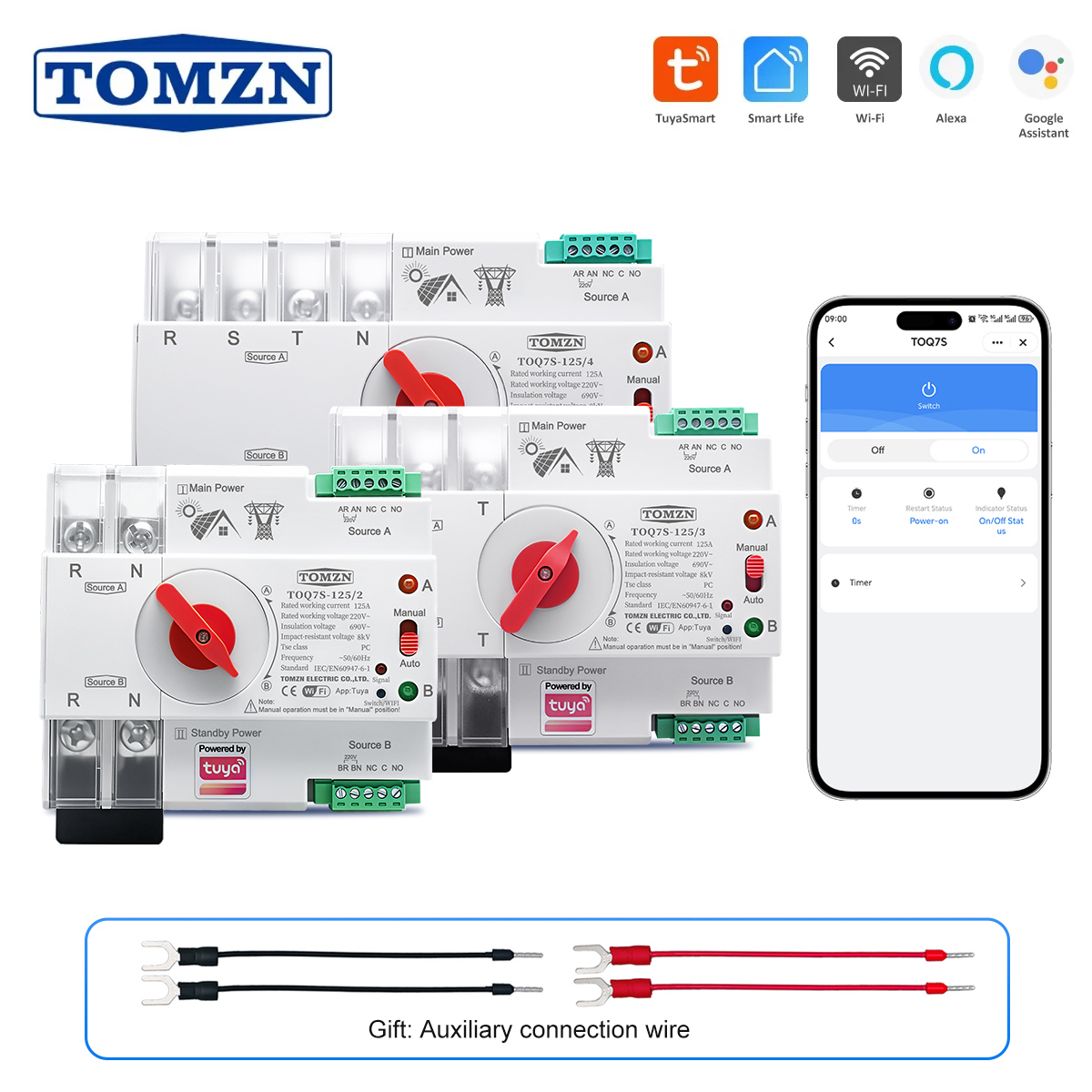
TOMZN TUYA SmartLife WIFI Smart ATS Dual Power Automatic Transfer Selector Switch Uninterrupted 230V
Explore Specifications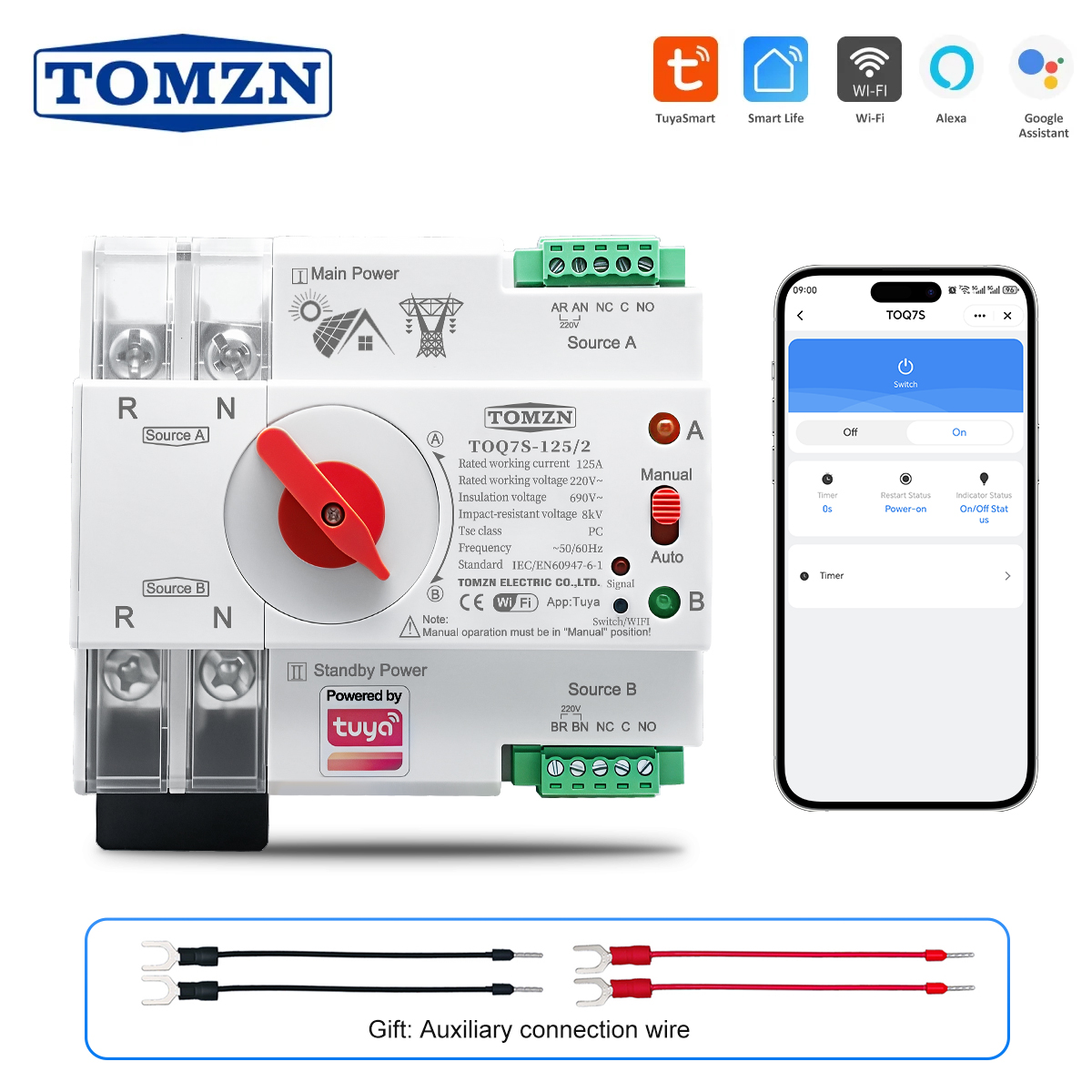
TOMZN TUYA SmartLife WIFI Smart ATS Dual Power Automatic Transfer Selector Switch Uninterrupted 2P 63A-125A
Explore Specifications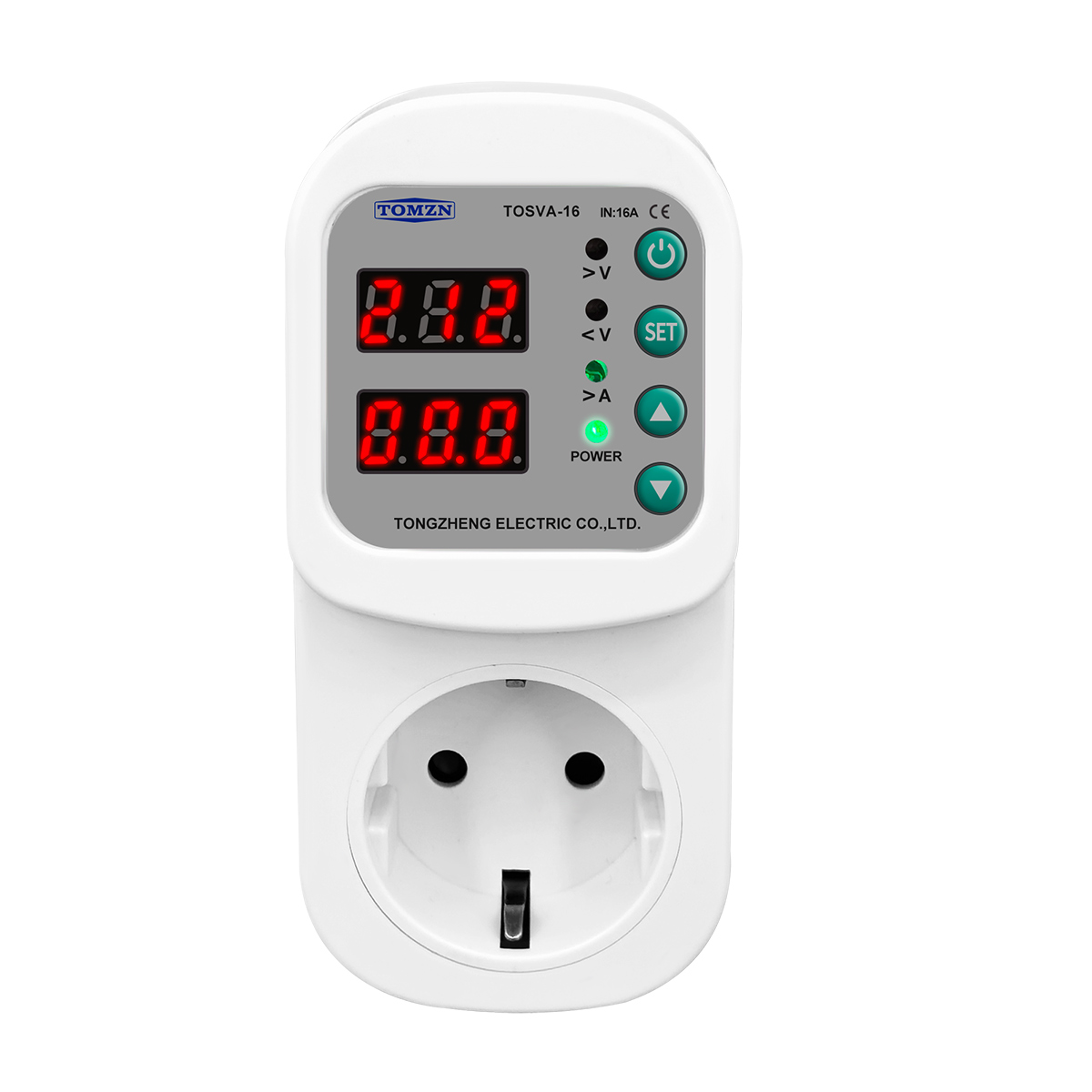
TOMZN TOSVA-16 Automatic Voltage Current Protector Socket AC 110V 220V EU Plug Socket
Explore Specifications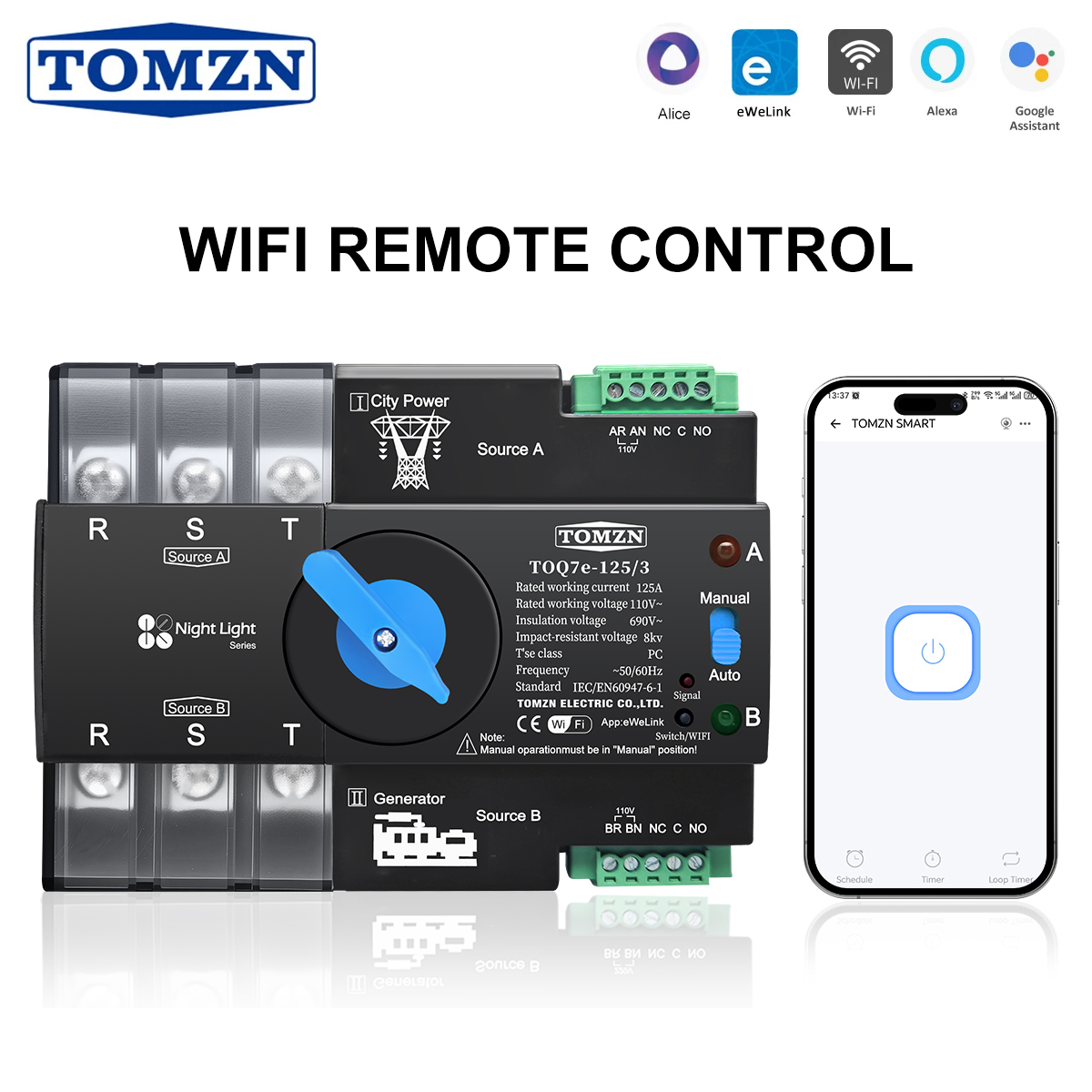
TOMZN 110V/120V Three Phase Smart ATS Dual Power Automatic Transfer Selector Switch 3P 125A
Explore Specifications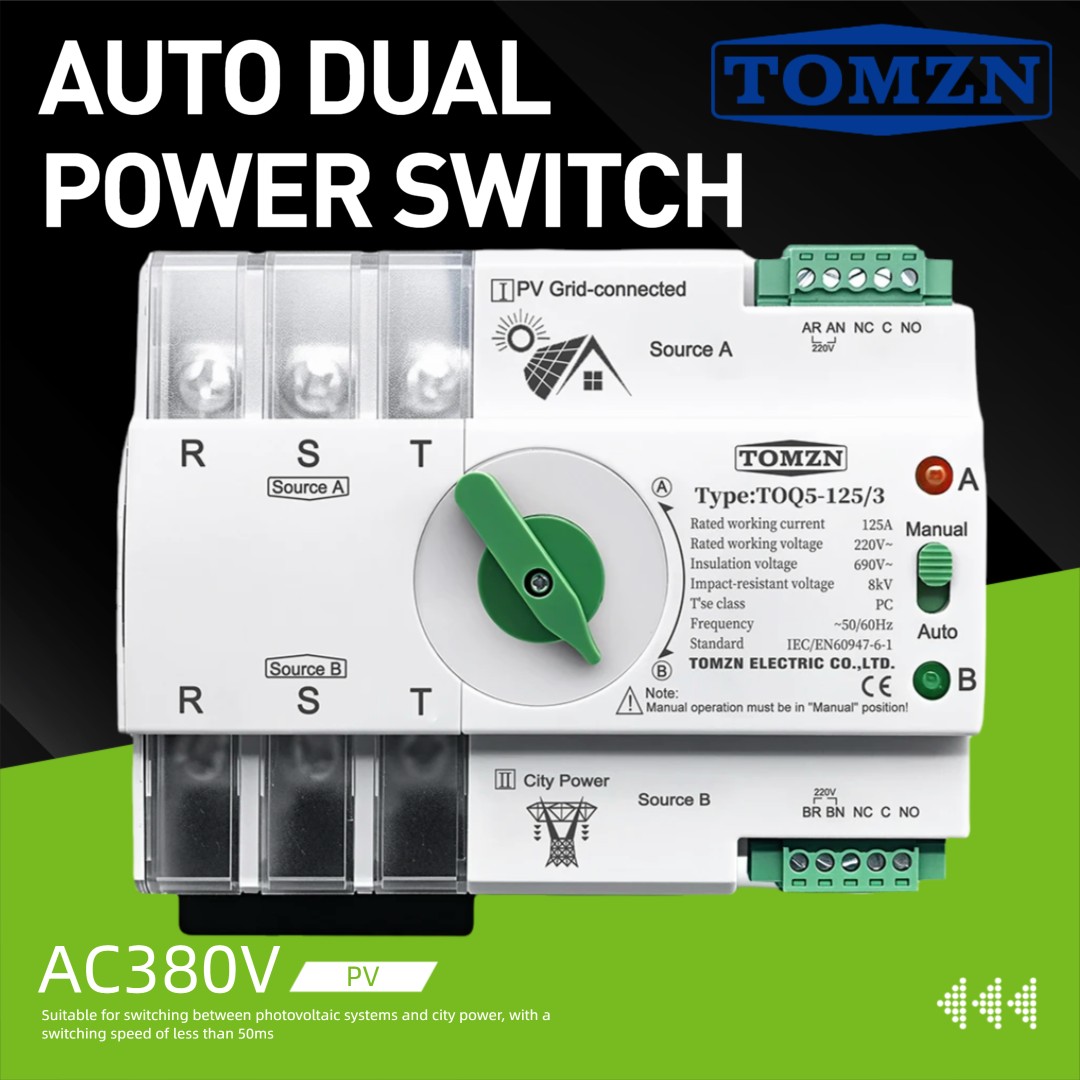
TOMZN 3 Phase DIN Rail ATS for PV Inverter Dual Power Auto Transfer Switch Uninterrupted 2P 63A-125A
Explore Specifications
TOMZN WIFI Smart Circuit Breaker 2P 230V AC Overload Protection Short-circuit Breaker Smartlife
Explore Specifications
TOMZN NFC Passive Intelligent Padlock Keyless Waterproof Theft-proof Thickened Lock App Control
Explore Specifications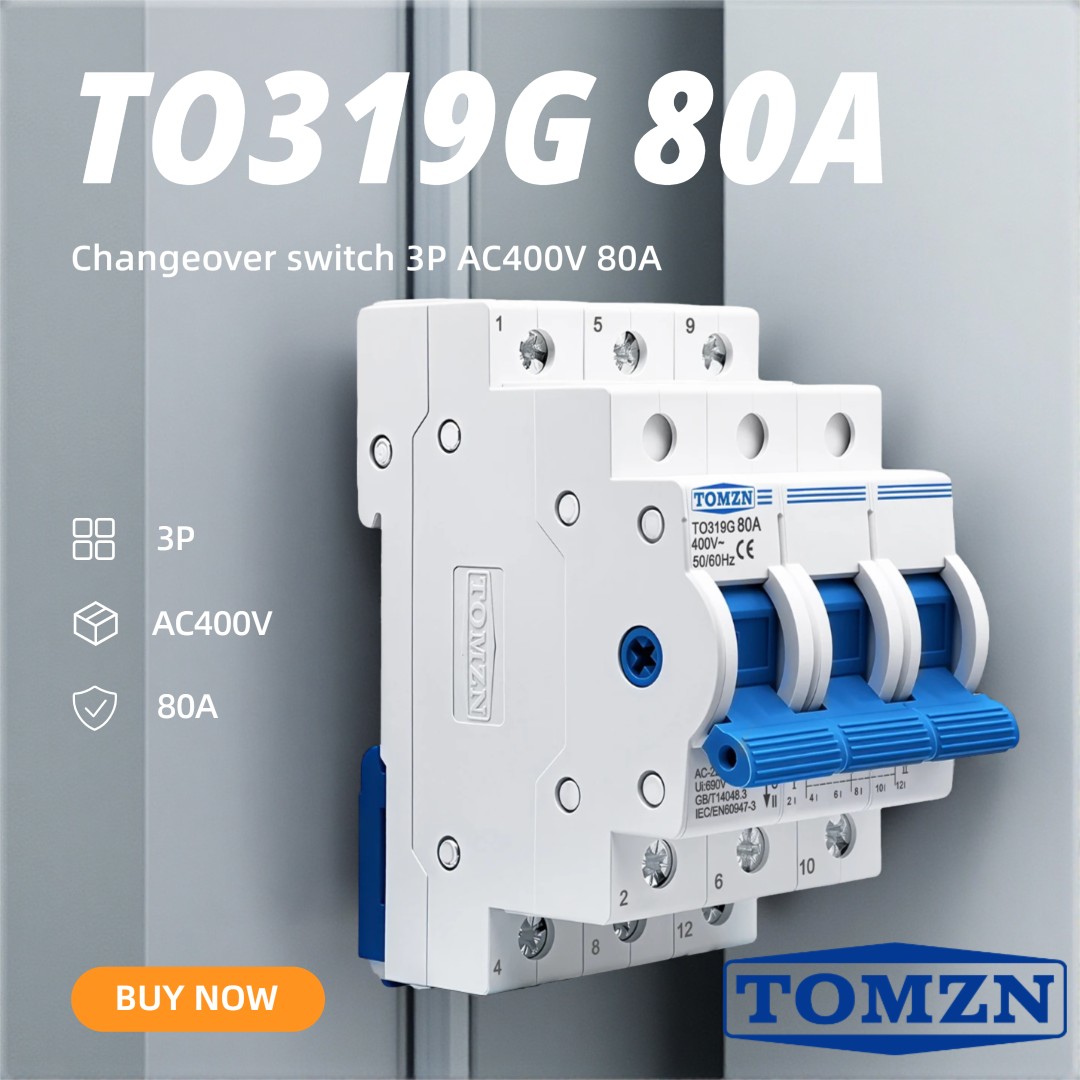
TOMZN TO319G 3 Phase 3P AC400V 80A Changeover Switch MTS Dual Power Manual Transfer Isolator
Explore Specifications1. The Physics of Direct Current (DC) Arc Extinction vs. AC Circuit Breaking
In modern commercial, industrial, and utility-scale solar Photovoltaic (PV) installations, selecting the appropriate circuit protection topology is paramount to system reliability, fire safety, and operational longevity. Unlike Alternating Current (AC) electrical systems, where the voltage waveform naturally passes through a zero-crossing point twice per cycle (allowing electric arcs formed during contact separation to extinguish naturally), Direct Current (DC) maintains a continuous, uninterrupted voltage potential. This continuous current vector prevents self-extinction of arcs, generating intense sustained thermal plasma during fault interruption or switching events under full load.
When an overcurrent or short-circuit event occurs within a high-voltage solar array (ranging from 600V DC up to 1500V DC), a direct current miniature circuit breaker (DC MCB) or molded case circuit breaker (DC MCCB) must actively force the electric arc into an engineered quenching chamber. Specialized OEM/ODM PV DC circuit breaker factories utilize multi-stage permanent magnetic blowout systems combined with arc chutes featuring up to 13-17 silver-plated splitter plates. The permanent magnets create a Lorentz force that rapidly drives the plasma arc away from the primary silver-alloy contacts and deep into the de-ionizing arc chute. This stretches, cools, and divides the single high-energy arc into multiple smaller series arcs, building an arc voltage that exceeds the system’s working DC voltage and driving the current rapidly to zero.
Technical Insight for Engineering Procurement: Standard AC circuit breakers installed in DC solar strings will fail catastrophically during a high-energy short-circuit fault due to sustained arcing, leading to contact welding, housing combustion, and catastrophic panel fires. Always ensure your supplier specifies polarized or non-polarized DC breakers certified under IEC 60947-2 Annex P and IEC 60898-2 benchmarks.
2. Benchmark Comparison: Legacy Breakers vs. Modern OEM/ODM PV DC Breakers
To assist procurement managers, EPC contractors, and brand owners in evaluating engineering parameters, the following empirical comparison illustrates the key design enhancements integrated into next-generation photovoltaic DC isolation equipment.
| Engineering Metric | Legacy Standard AC/DC Breakers | Next-Gen OEM/ODM Solar PV DC Breakers | System Advantage |
|---|---|---|---|
| Working Voltage Rating ($U_e$) | Up to 250V DC / 400V AC | DC 500V, 800V, 1000V, up to 1500V DC | Supports high-efficiency long-string solar array designs |
| Arc Suppression Mechanism | Passive mechanical contact gap | Permanent magnetic blowout + De-ionizing splitter grid | Extinguishes non-zero-crossing DC arcs in <5 milliseconds |
| Short-Circuit Breaking Capacity ($I_{cu}$) | 4.5kA - 6kA | 6kA, 10kA, 15kA, up to 20kA | Withstands severe short-circuit energy from massive battery banks & PV arrays |
| Housing Material Flame Retardancy | Standard UL94 V-1 or ABS | High-dunk UL94 V-0 polyamide PA66 with glass-fiber reinforcement | Prevents outer shell melting or structural failure under high thermal stress |
| Contact Composition | Copper-nickel plated base metal | AgC (Silver Graphite) or AgZnO (Silver Zinc Oxide) alloy tips | Low contact resistance (<0.5mΩ), zero welding under peak inrush current |
| IoT & Communication Protocols | None (Purely mechanical) | Tuya / eWeLink / RS485 Modbus / NFC Passive Telemetry | Real-time remote trip control, current monitoring, predictive fault analytics |
3. Future Sourcing Trends in Photovoltaic DC Circuit Protection (2025–2030)
The global solar energy ecosystem is experiencing unprecedented acceleration toward higher system voltages, decentralized energy storage integration (BESS), and digital grid management. OEM/ODM buyers sourcing circuit breakers from manufacturing hubs like Wenzhou/Liushi in Zhejiang, China must align their product roadmaps with several defining industry trends:
Trend 1: Migration from 1000V DC to 1500V DC Utility & C&I Topologies
To reduce Balance of System (BoS) costs, commercial and utility-scale solar projects are rapidly shifting from 1000V DC string architectures to 1500V DC setups. Higher voltage strings reduce the overall conductor cross-sectional area, cut combiner box requirements by up to 30%, and lower power transmission losses. Consequently, demand for 1500V DC MCBs and MCCBs with higher creepage distances (exceeding 25mm) and multi-pole series connection geometries is growing at over 28% CAGR globally.
Trend 2: Convergence of Smart Microgrids, Smart ATS, and Smart MCBs
Purely passive mechanical circuit protection is evolving into intelligent energy management nodes. Modern solar-plus-storage systems require uninterrupted power supply capabilities when grid power fails. Advanced Automatic Transfer Switches (ATS) integrated with WiFi, Zigbee, or RS485 interfaces allow homeowners and microgrid operators to remotely manage load shedding, monitor energy consumption (kWh), configure over-voltage/under-voltage protection setpoints, and trigger seamless changeovers between solar-inverter power, utility grid, and backup diesel generators in under 15 milliseconds.
Trend 3: Bi-directional Current Breaking for Battery Energy Storage Systems (BESS)
Traditional solar DC breakers were designed assuming unidirectional power flow—from PV panels to the centralized inverter. However, modern lithium-ion and Na-ion Battery Energy Storage Systems (BESS) operate with bi-directional power currents (charging vs. discharging). Leading OEM/ODM factories are now mass-producing non-polarized DC MCBs equipped with symmetrical magnetic blowout systems that safely interrupt short-circuit currents regardless of current direction, eliminating installation polarity errors during field commissioning.
4. Enterprise Superiority: Why Partner with Zhejiang DVS Electric Co., Ltd.?
As a premiere low-voltage electrical apparatus manufacturer based in Liushi Town, Wenzhou—the world-renowned capital of China's electrical equipment industry—Zhejiang DVS Electric Co., Ltd. brings 24 years of manufacturing expertise, engineering innovation, and international compliance to global buyers.
Vertical Manufacturing Operations
Our 5,700 m² modern production facility houses dedicated automated assembly lines, precision mold tooling injection, laser marking equipment, and multi-stage thermal trip calibration testing rigs.
Strict Quality Assurance & CE Compliance
Every single batch of DC MCBs, ATS switches, and voltage protectors undergoes 100% full-function testing, insulation resistance checking, and instant magnetic trip verification prior to export packing.
Full OEM / ODM Customization
We empower global brand owners, importers, and electrical wholesalers by providing custom housing colors, brand laser printing, private label packaging design, and tailored current/voltage trip curves.
5. Sourcing & Engineering FAQ for International Buyers
Find authoritative answers to critical technical and commercial questions routinely encountered during the procurement of DC circuit protection and automatic transfer equipment.
Are you an original custom manufacturer or an export trading intermediary?
Zhejiang DVS Electric Co., Ltd. is a verified original custom manufacturer with direct export rights, operating from our headquarters in Liushi Town, Wenzhou, Zhejiang, China. Our facilities, production capacity, automated testing equipment, and quality control systems have been audited onsite by world-leading independent third-party verification bodies. Importers deal directly with factory engineering and export sales management.
What specific OEM & ODM customization services do you provide for wholesalers?
We provide comprehensive OEM/ODM solutions including private logo placement via high-resolution laser marking, customized carton branding, custom-molded enclosure colors (e.g., custom white, industrial grey, high-visibility orange), tailored thermal magnetic tripping curves (B, C, or D curves), adjusted current ratings (from 1A up to 125A), and localized multilingual instructional manuals.
Why must a PV system utilize a dedicated DC MCB rather than a standard AC MCB?
Direct current lacks a natural AC voltage zero-crossing point. When contacts open under load, a DC electric arc remains continuous and extremely hot. Dedicated PV DC circuit breakers feature specialized magnetic blowout mechanisms that propel the electrical arc into de-ionizing arc chutes to extinguish it in under 5 milliseconds. Using an AC breaker in a high-voltage DC string will result in unextinguished arcing, thermal destruction of the device, and severe risk of electrical fires.
How do I calculate the proper rated current ($I_n$) and voltage ($U_e$) for a DC string MCB?
According to IEC 60364-7-712 and NEC 690 guidelines, the rated voltage ($U_e$) of the DC MCB must be equal to or greater than the maximum Photovoltaic Array Open-Circuit Voltage ($V_{oc}$) corrected for the lowest expected ambient temperature at the installation site. For current sizing, the rated breaker current ($I_n$) should generally be calculated as $I_n \ge 1.25 \times I_{sc}$ (Short-Circuit Current of the solar string) to prevent nuisance tripping caused by peak solar irradiance conditions.
What is the switching delay time of your Dual Power Automatic Transfer Switches (ATS)?
Our DIN-rail mounted smart ATS units feature ultra-fast switching times between Primary Power (e.g., Solar Inverter / Utility Grid) and Backup Power (e.g., Generator / Battery Inverter) ranging from 8 milliseconds to under 50 milliseconds. This ultra-low latency prevents sensitive electronic devices, home computers, server racks, and refrigeration compressors from rebooting or dropping offline during a grid outage.
What international quality certifications and test reports are available?
Our core product lines hold valid CE certificates of conformity (Low Voltage Directive LVD & EMC Directive), test reports conforming to IEC/EN 60947-2, IEC/EN 60898-2, IEC/EN 61008-1, and IEC/EN 61643-11 standards, as well as RoHS hazardous substance compliance certification. Complete testing dossiers are supplied upon request for official distributor brand registration in target markets.
Request Engineering Datasheets & OEM Wholesale Quotations
Connect with our technical export engineers in Wenzhou today to discuss bulk pricing, custom product samples, or ODM production scheduling for your market.
