Featured Low-Voltage Protection & Switchgear Devices
Directly manufactured in our verified Wenzhou production facility with CE compliance, customized current/voltage ratings, and private-label packaging.
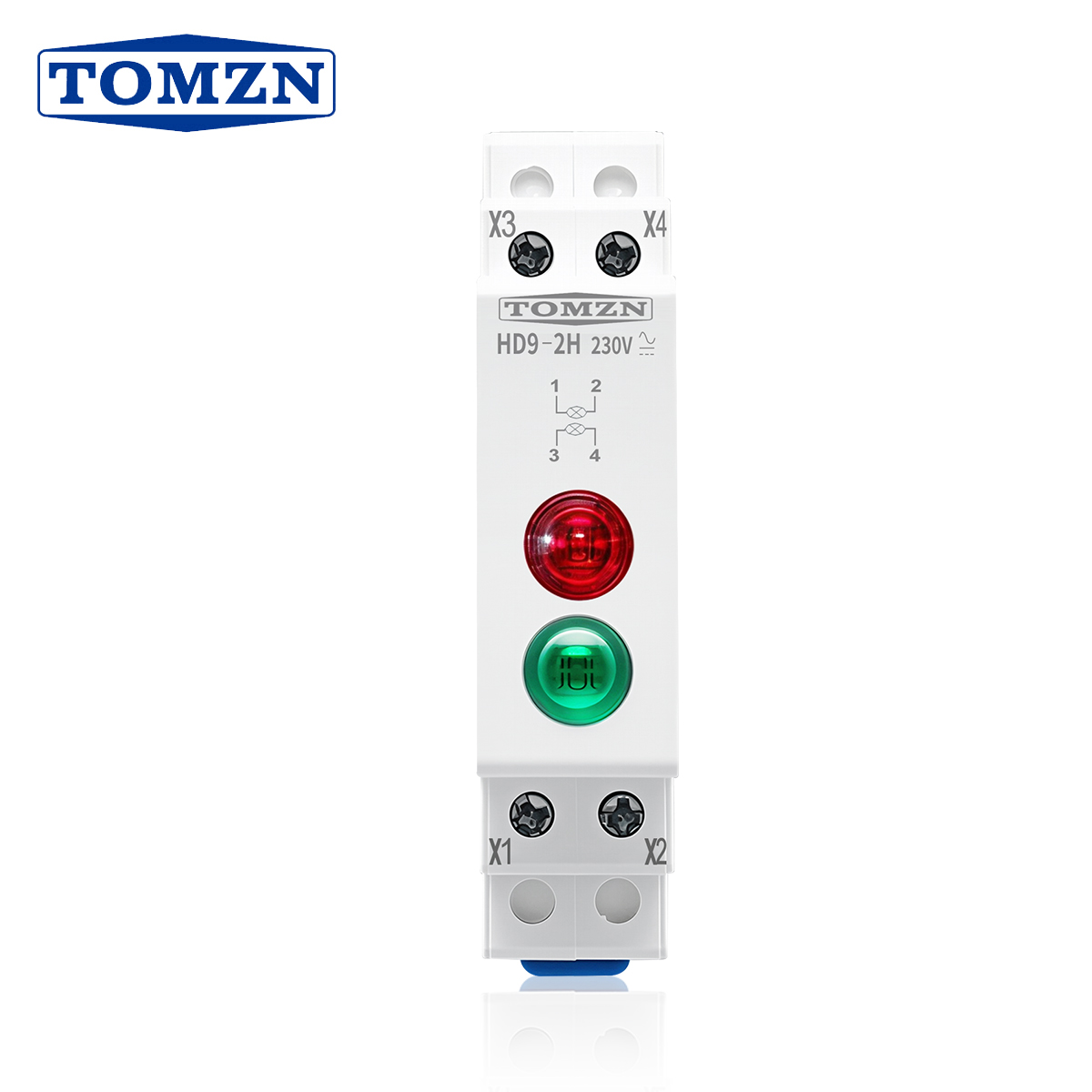
TOMZN DIN Rail HD9-2H 230V AC/DC LED 1P 18mm Signal Indicator Light Red and Green for Household
View Details →
TOMZN NFC Passive Intelligent Padlock Keyless No Keyway Waterproof Theft-proof Thickened Body Lock
View Details →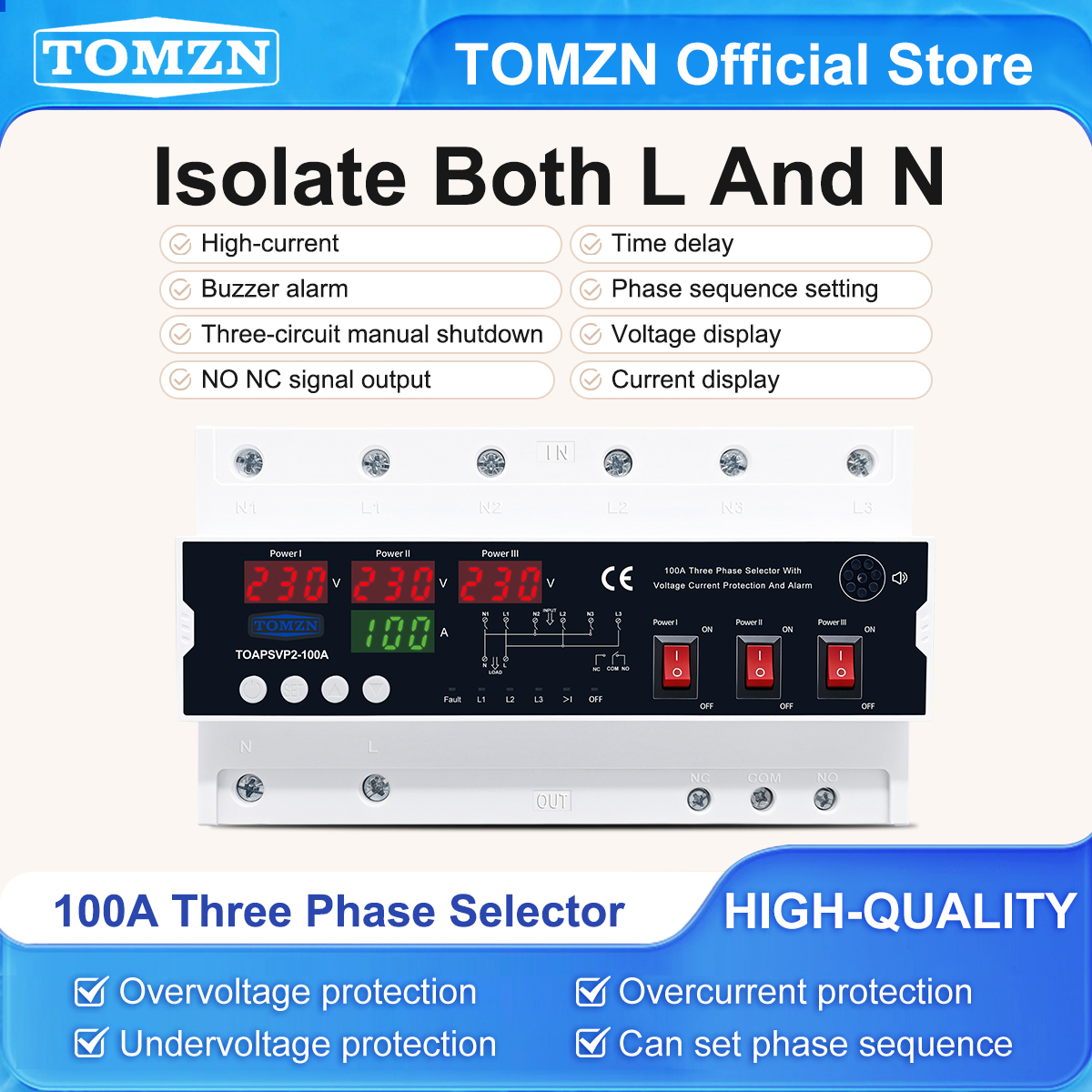
Relay-type Automatic Phase Selector ATS Dual Power Switch Changeover Switch OCP OVP UVP CUT OFF L N 2P 230V 63A
View Details →
TOMZN WIFI Smart Circuit Breaker 2P 230V AC 1-100A Overload Protection Short-circuit Breaker Timer Switch
View Details →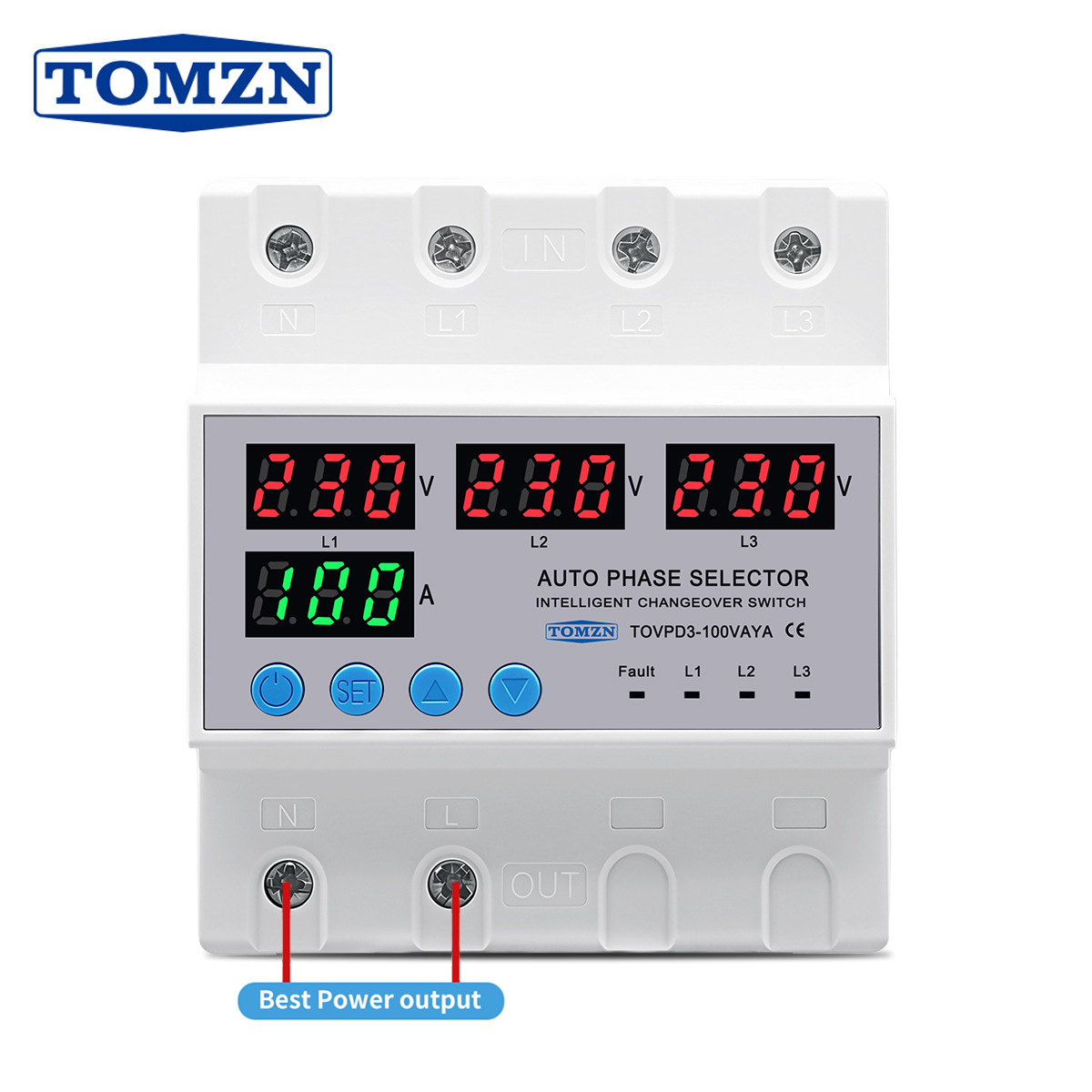
100A TOMZN 3 Phase 3P+N Din Rail Phase Selector Adjustable Over and Under Voltage Current protection Monitor Relays
View Details →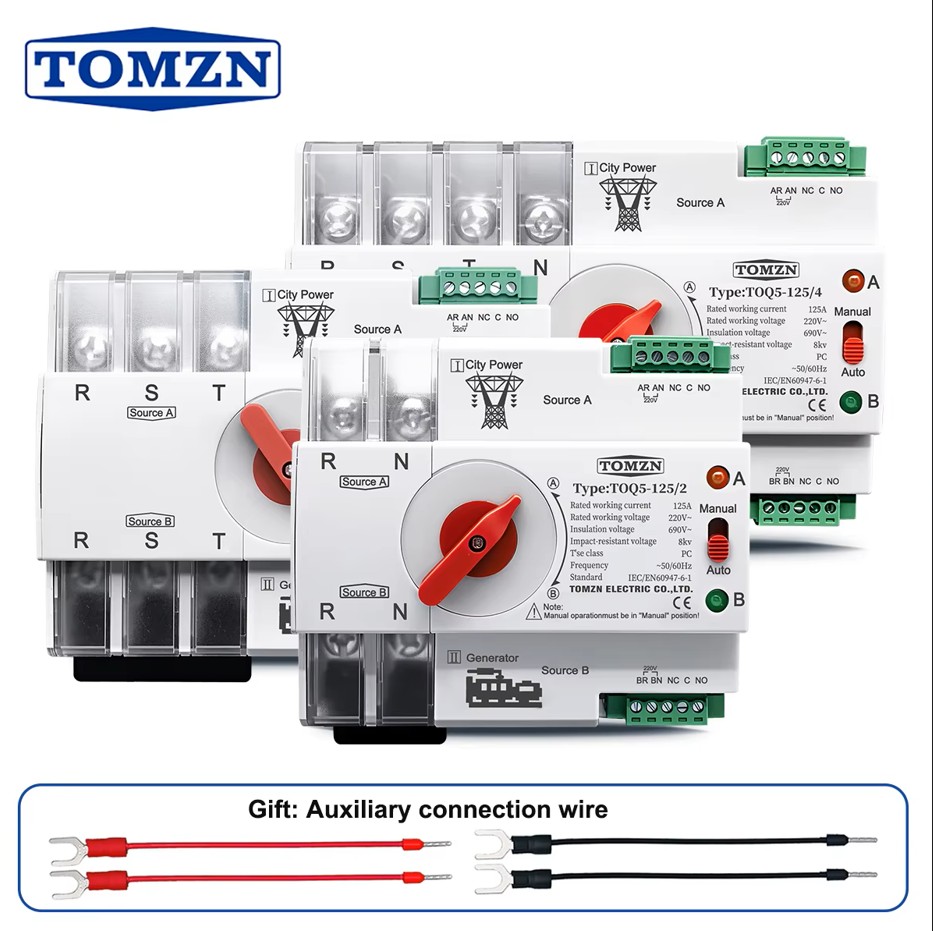
TOMZN Din Rail 2/3/4P ATS Dual Power Automatic Transfer Switch Electrical Selector Switches 63/100/125A
View Details →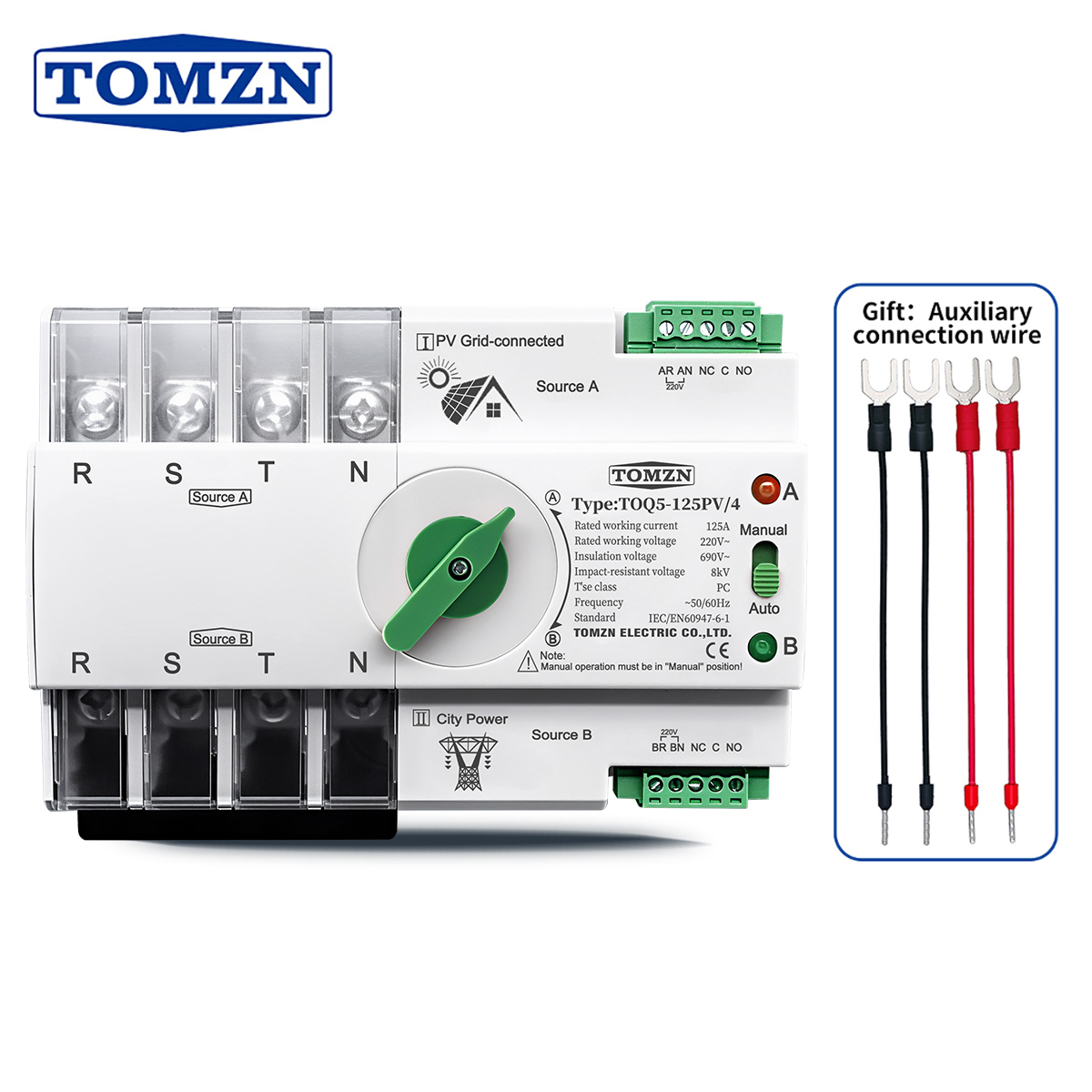
TOMZN 4P 3 Phase 4 Wire Din Rail ATS PV and Inverter Dual Power Automatic Transfer Selector Switches 63A 100A 125A
View Details →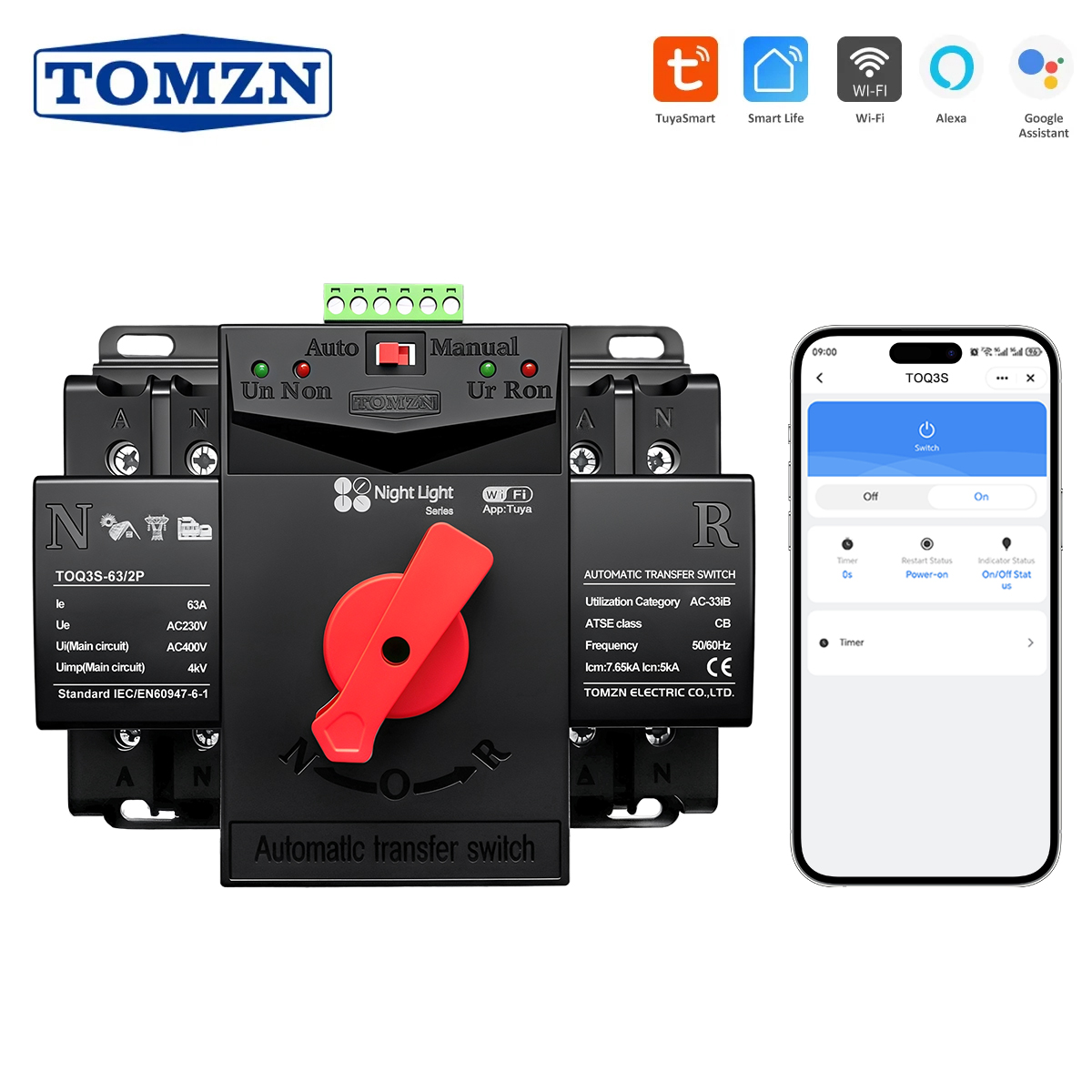
TOMZN SmartLife WiFi Smart ATS 2P 63A Dual Power Auto Transfer Switch AC 230V MCB Type Generator Changeover Switch
View Details →Engineering Blueprint: Next-Generation DC Circuit Breakers in Solar & Storage Architecture
As global energy infrastructures transition rapidly toward high-voltage direct current (HVDC) architectures—driven by utility-scale solar photovoltaic (PV) plants, commercial battery energy storage systems (BESS), and electric vehicle (EV) charging networks—the selection of robust, certified DC Miniature Circuit Breakers (MCB) and DC Molded Case Circuit Breakers (MCCB) has become a paramount safety imperative.
DC Arc Extinction Physics
Unlike Alternating Current (AC) which naturally passes through a zero-voltage crossing 100 or 120 times per second, Direct Current (DC) maintains continuous voltage. Extinguishing a DC electrical arc requires high-energy permanent magnetic blowouts and optimized, multi-plate arc chutes to physically stretch and cool the plasma arc inside milliseconds.
IEC 60947-2 & UL 489B Standards
Commercial-grade DC breakers must undergo rigorous short-circuit breaking capacity testing ($I_{cu}$ and $I_{cs}$) under high L/R time constants (typically 2ms to 15ms). Zhejiang DVS Electric manufactures non-polarized and polarized DC circuit breakers up to DC 1000V/1200V, thoroughly evaluated against international standards.
Custom OEM/ODM Integration
With 24 years of low-voltage experience and an audited 5,700 m² factory in Wenzhou, China, Zhejiang DVS Electric delivers end-to-end OEM/ODM custom solutions—ranging from customized trip curve calibrations (B, C, D curves) to private-label silk-screen branding and custom IP65 enclosure integration.
Substituting standard AC circuit breakers into DC photovoltaic strings is a high-risk compromise commonly committed by inexperienced installers. Because AC breakers rely on zero-crossing points to extinguish arcs, exposing them to continuous 500V–1000V DC fault currents results in sustained ionized plasma arcs. This generates catastrophic thermal runaways, melts terminal housings, and causes severe electrical fires. Dedicated DC breakers incorporate permanent magnets that force the arc laterally into de-ionizing arc chute chambers, quenching fault currents within 10 milliseconds.
Technical Comparison: DC MCB vs. DC MCCB vs. DC Isolator Switches
Selecting the correct protection device depends on system topology, maximum string open-circuit voltage ($V_{oc}$), nominal current ($I_n$), and short-circuit interrupt requirements.
| Electrical Parameter | DC Miniature Circuit Breaker (MCB) | DC Molded Case Circuit Breaker (MCCB) | DC Load Isolator Switch |
|---|---|---|---|
| Voltage Rating ($U_e$) | DC 12V to 1000V / 1200V | DC 250V to 1500V | DC 300V to 1500V |
| Current Rating ($I_n$) | 1A – 125A | 63A – 800A | 16A – 630A |
| Breaking Capacity ($I_{cu}$) | 6kA – 10kA | 15kA – 50kA | No Overcurrent Trip (Switch Only) |
| Trip Mechanism | Thermal-Magnetic (Fixed) | Thermal-Magnetic / Electronic (Adjustable) | Manual / Rotary Actuated |
| Primary Application | PV Strings, Battery Branch, Residential BESS | Utility Inverter Input, Central Battery Banks | Manual Main System Disconnect & Maintenance |
| OEM Customization | Laser Logo, Frame Colors, Rail Clips | Shunt Trips, Auxiliary Contacts, Custom Shell | Custom Handles, IP66 Enclosures, Lockout/Tagout |
Global Procurement & Future Technology Trends (2025–2030)
A deep dive into emerging market requirements for system integrators, EPC engineers, and electrical equipment importers.
1. Transition to 1500V DC Utility & Commercial Systems
To reduce balance-of-system (BOS) costs, solar engineering firms are migrating from 1000V DC to 1500V DC system voltages. Higher system voltages reduce string current, allowing thinner copper conductor wire gauge and lower power losses ($I^2R$). Consequently, global demand for 1500V DC MCBs and MCCBs tested under IEC 60947-2 is expanding at a 14.8% CAGR through 2030.
2. Bidirectional Non-Polarized Protection for BESS
Traditional DC breakers feature strict directional polarity (+ and - markings). However, modern Battery Energy Storage Systems (BESS) experience two-way power flow: charging (grid to battery) and discharging (battery to grid). Installing a polarized breaker in a bidirectional circuit can lead to catastrophic failure during reverse-current fault breaking. Advanced non-polarized DC MCBs utilizing dual arc-extinguishing chambers are now mandatory in energy storage procurement guidelines.
3. Integration of Smart IoT Telemetry & Remote Tripping
Substation digitizing and smart building energy management systems (BEMS) require circuit breakers capable of reporting real-time metrics—voltage, current load, power consumption (kWh), temperature, and switch status. Modern OEM procurement specifications heavily prioritize DIN-rail mounted WiFi, RS485 Modbus, and Tuya/eWeLink IoT-enabled smart breakers with motorized shunt trip actuation.
4. Sustainable V0 Flame-Retardant Polymer Housings
With tightening environmental regulations (RoHS, REACH, and WEEE compliance in the EU), global electrical brand owners require circuit protection housings molded from halogen-free, recyclable, high-grade PA66 nylon. These materials achieve UL94-V0 flame retardancy, enduring glow-wire tests up to 960°C without sustaining fire combustion.
Why Direct OEM/ODM Partnership with Zhejiang DVS Electric Yields Strategic Gains
24 Years Manufacturing Mastery
Headquartered in Liushi Town, Wenzhou—China's world-renowned low-voltage electrical capital—Zhejiang DVS Electric Co., Ltd. brings nearly a quarter-century of engineering refinement. We operate dedicated automated assembly lines, contact resistance testing stations, and calibration benches.
Third-Party Onsite Audit Verification
Our manufacturing capacity, production facilities, quality control procedures, and export documentation capabilities are fully audited onsite by independent international verification bodies. We operate under stringent ISO quality management protocols.
Flexible Low MOQ & Fast Lead Times
We empower importers, regional distributors, and panel builders with accessible trial order minimums (starting from 5 pieces for standard catalog models) and rapid 15-to-25 day OEM production lead times with complete export documentation.
Structured 4-Stage OEM/ODM Sourcing Workflow
Frequently Asked Questions (FAQ) for Global Buyers
Clear engineering and commercial responses to common technical inquiries raised during OEM/ODM supplier evaluation.
Are you a direct manufacturing factory or a trading company?
How do I correctly size a DC MCB for a solar PV string according to IEC 60364-7-712 / NEC 690?
1. Voltage Rating ($U_e$): Calculate the maximum open-circuit voltage ($V_{oc\_MAX}$) of the string under lowest expected ambient site temperature using temperature coefficient formulas ($V_{oc\_MAX} = V_{oc\_STC} \times [1 + \alpha V_{oc} \times (T_{min} - 25)]$). The breaker's rated DC voltage must exceed $V_{oc\_MAX}$.
2. Current Rating ($I_n$): Size the current rating to at least $1.25 \times I_{sc}$ (short-circuit current of the string) according to NEC 690, or follow local IEC regulations.
3. Temperature De-rating: Apply thermal de-rating factors when installing breakers inside unventilated, direct-sunlight IP65 outdoor combiner enclosures.
What custom OEM/ODM options are available for circuit breaker distributors?
What certifications and compliance documentation can you provide for import customs clearance?
What is the functional difference between an Automatic Transfer Switch (ATS) and a Phase Selector Relay?
What is your Minimum Order Quantity (MOQ) and production lead time?
Request Technical Datasheets & OEM Quotation
Connect directly with Zhejiang DVS Electric's senior low-voltage application engineering team. We provide free technical consultation, custom CAD drawings, sample dispatches, and competitive factory-direct pricing for your target market.
Contact Us