Featured Current Protection & Transfer Switches
Explore our top-performing DIN-rail automatic transfer switches, circuit breakers, and current protective relays engineered for industrial panels, residential switchboards, and solar PV energy systems.
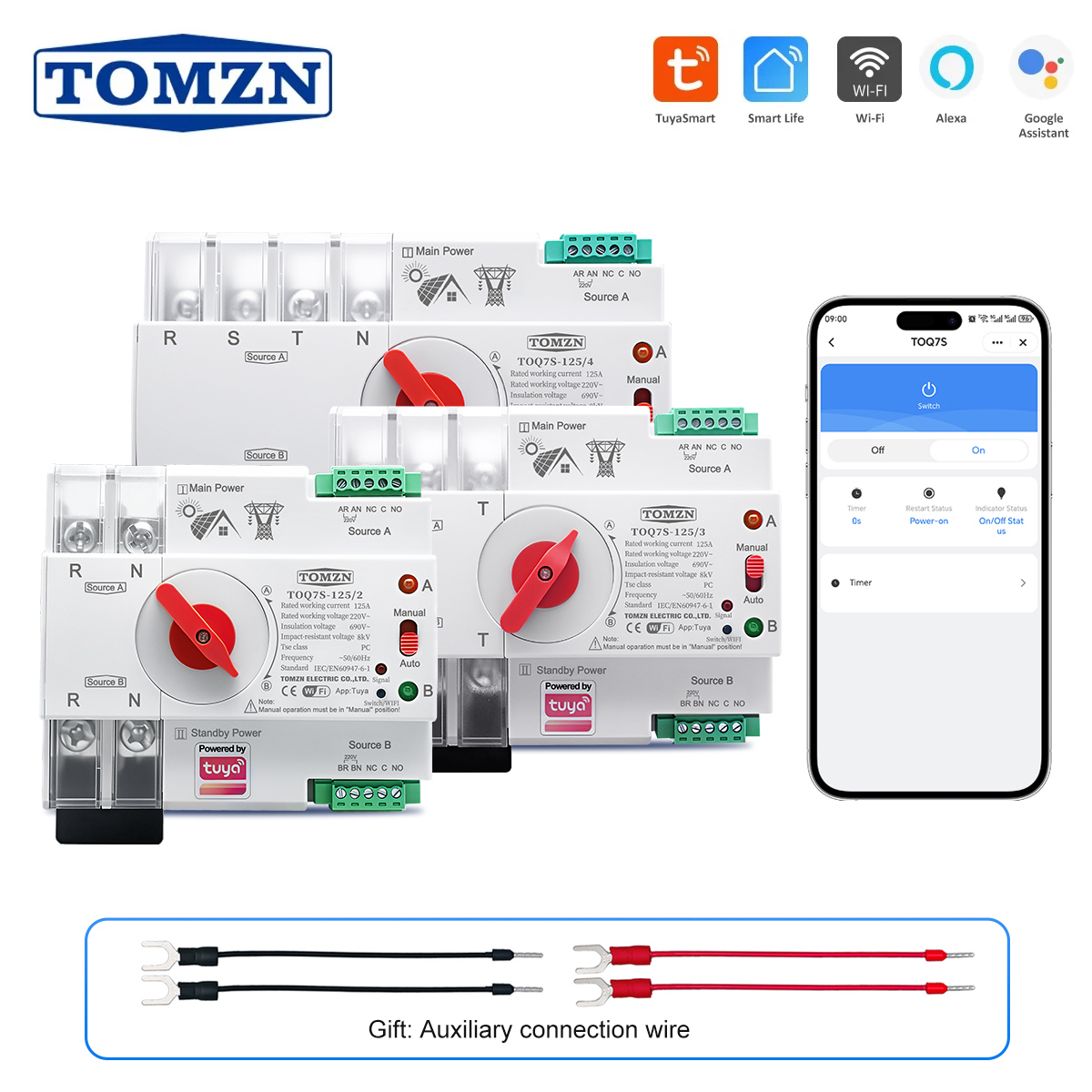
TOMZN TUYA SmartLife WIFI Smart ATS Dual Power Automatic Transfer Selector Switch Uninterrupted 2P 3P 4P 230V 63A 100A 125A
Inquire Now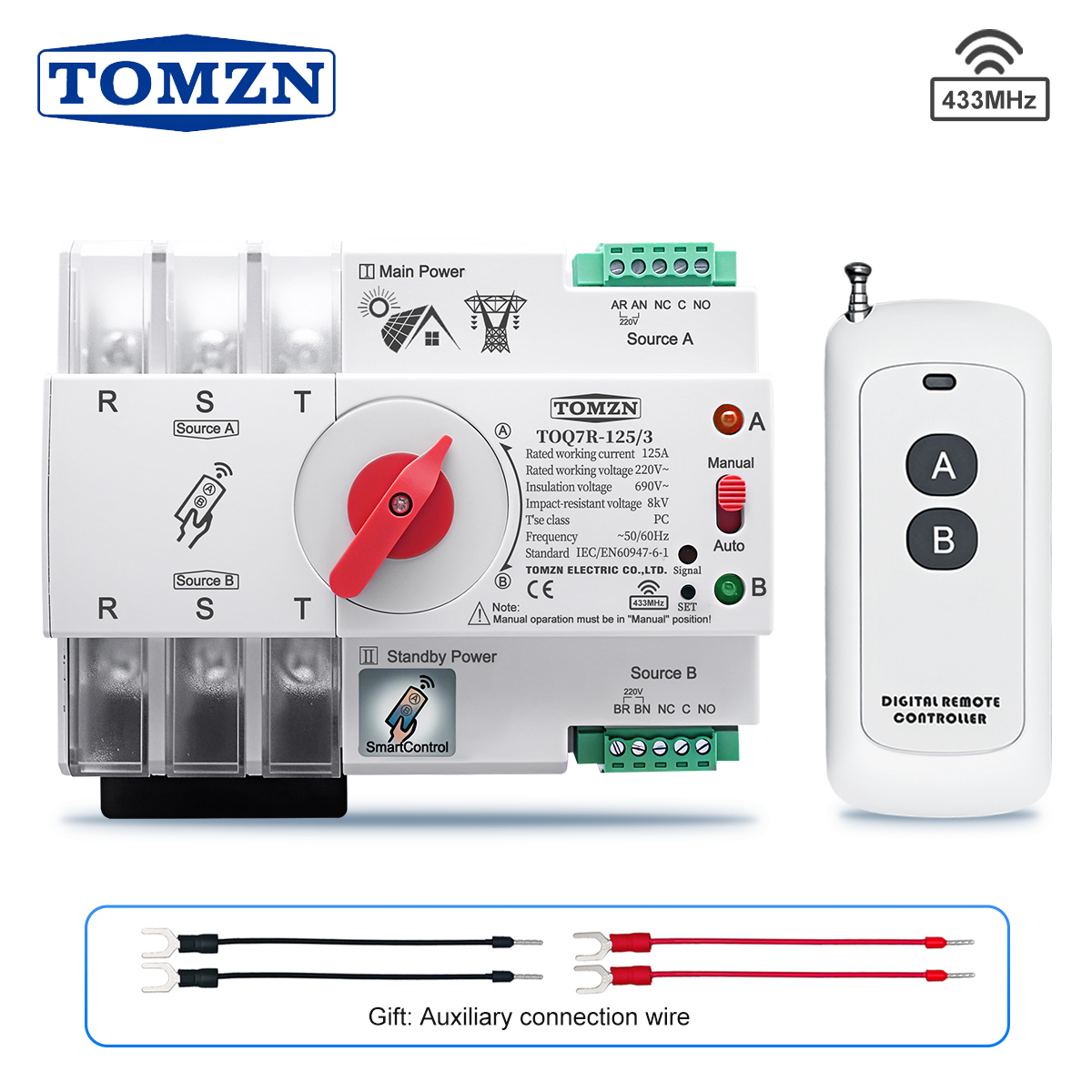
TOMZN 3P 3 Pole Remote Control ATS Wireless 433MHz Dual Power Auto Transfer Switch Electrical Selector Uninterrupted Power
Inquire Now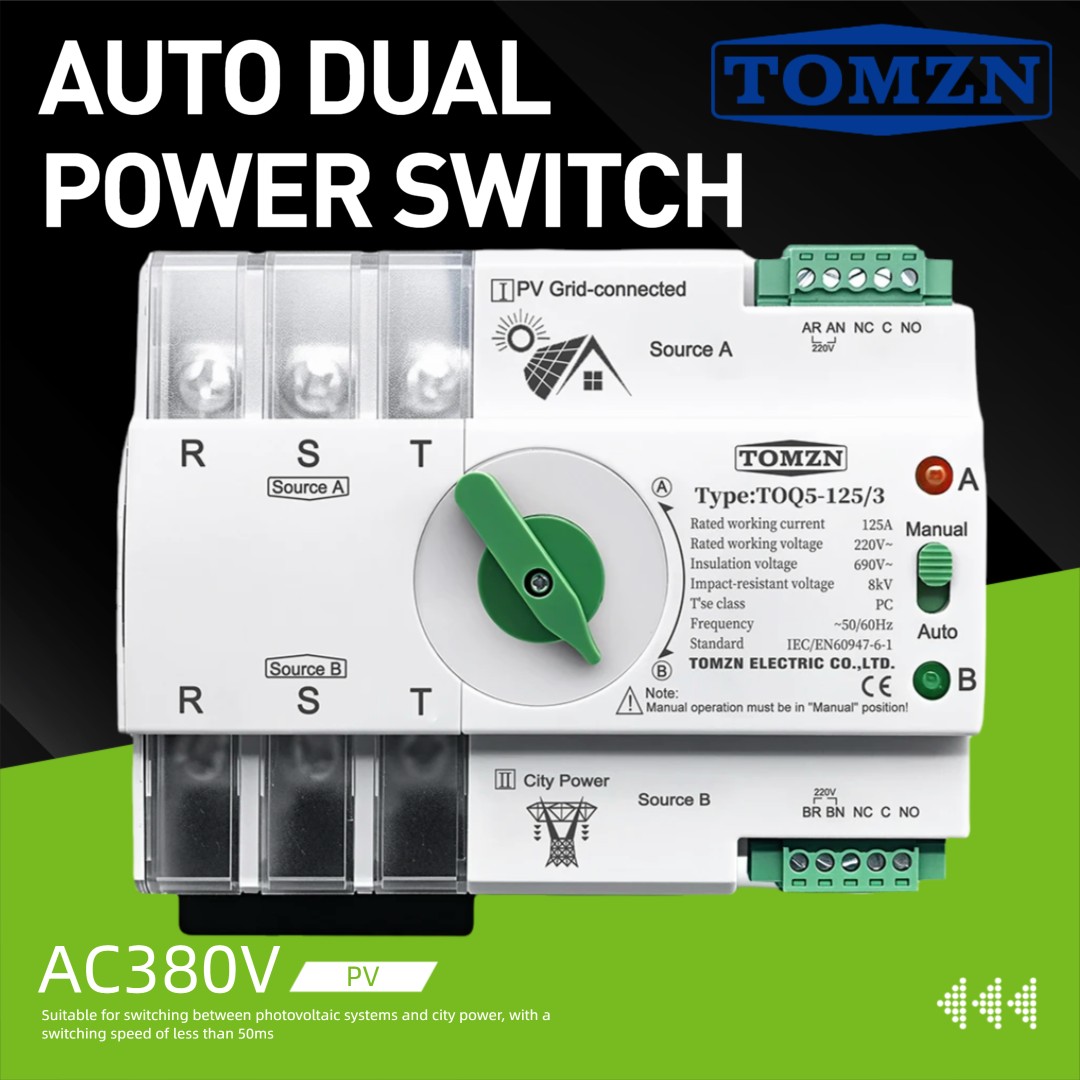
TOMZN 3 Phase DIN Rail ATS for PV Inverter Dual Power Auto Transfer Selector Switches Uninterrupted 2P 230V/380VAC 63A 100A 125A
Inquire Now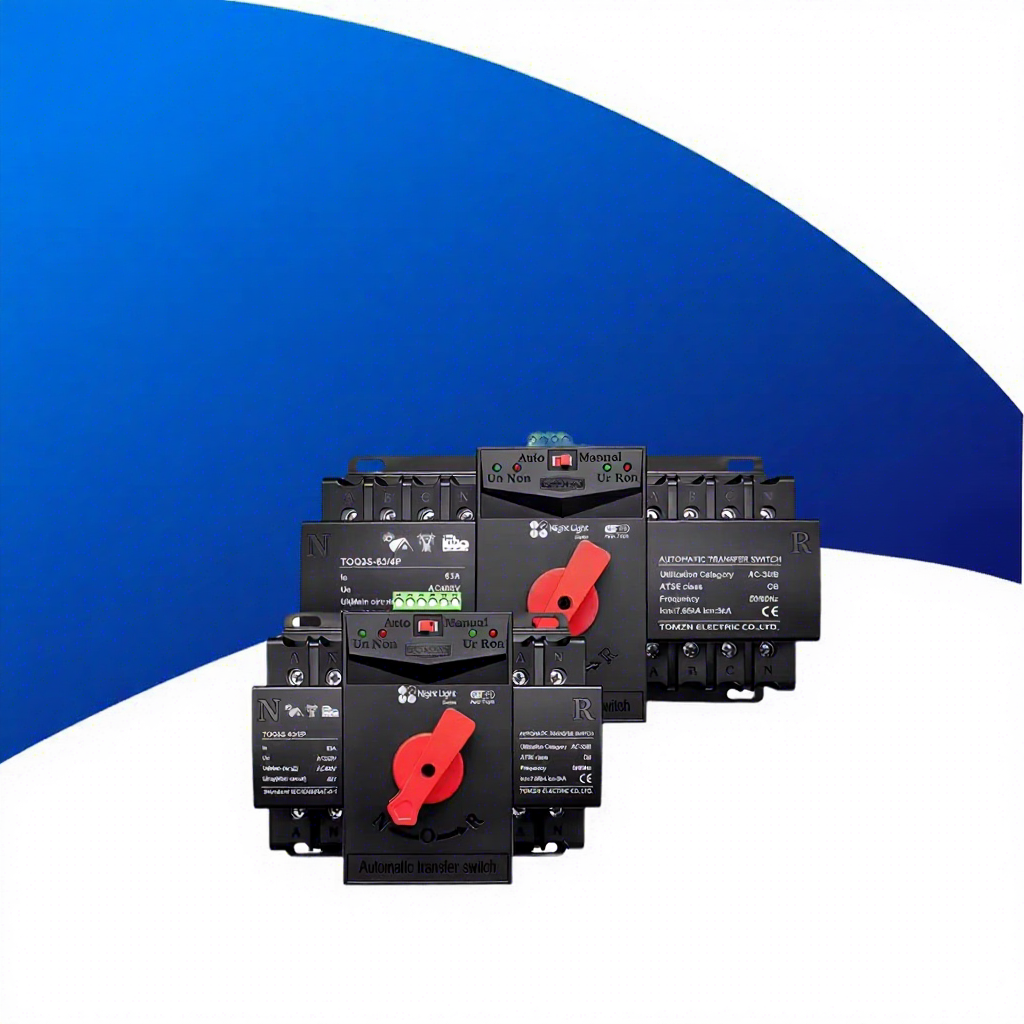
TOMZN SmartLife WiFi Smart ATS 2P4P 63A Dual Power Auto Transfer Switch AC220V 230V 50/60Hz MCB Type Generator Changeover Switch
Inquire Now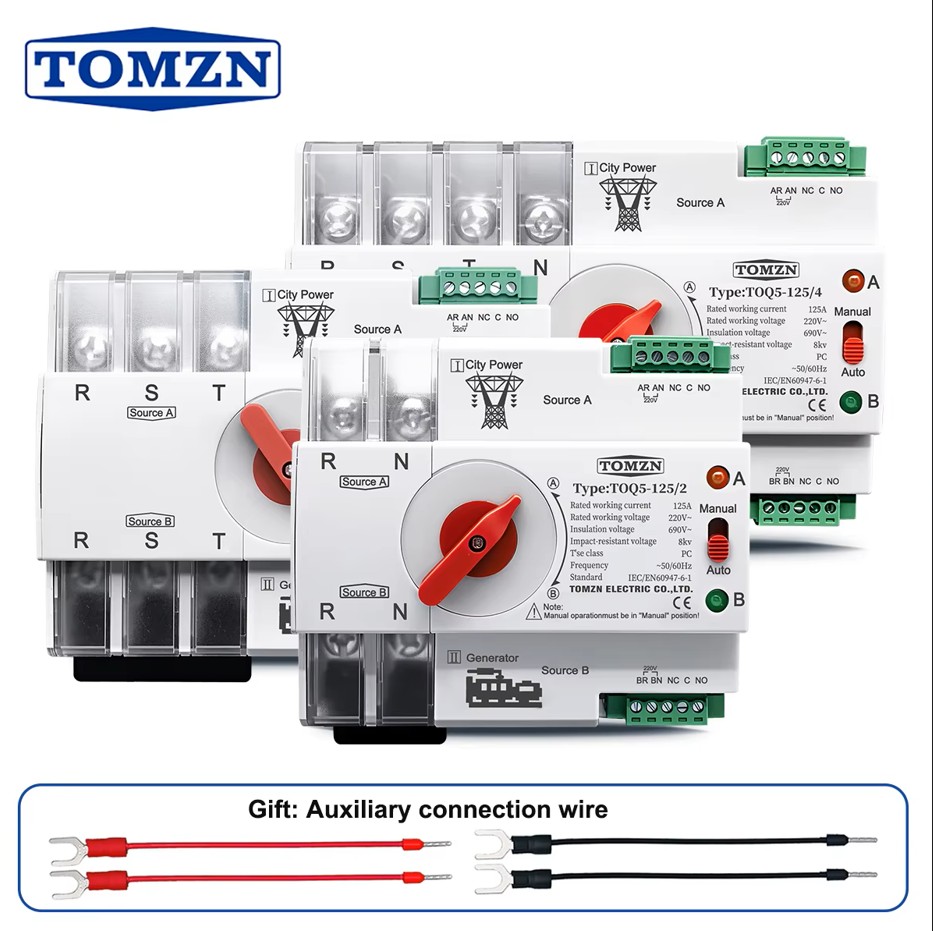
TOMZN Din Rail 2/3/4P ATS Dual Power Automatic Transfer Switch Electrical Selector Switches Uninterrupted Power 63/100/125A
Inquire Now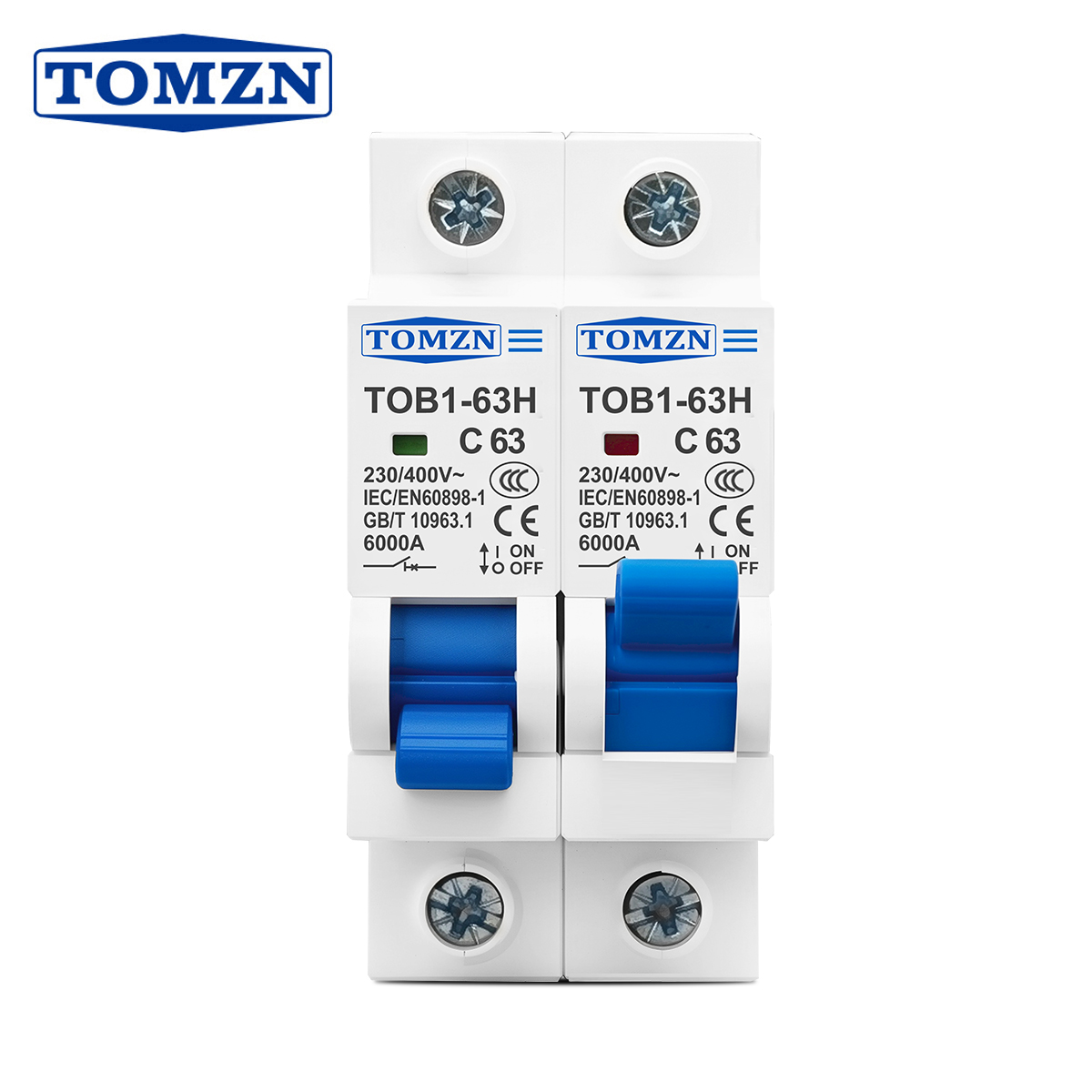
TOMZN Din Rail 1P+1P Interlock MTS Circuit Breaker Changeover Switch Short-circuit Protective Overload Protection 230/400V~ AC
Inquire Now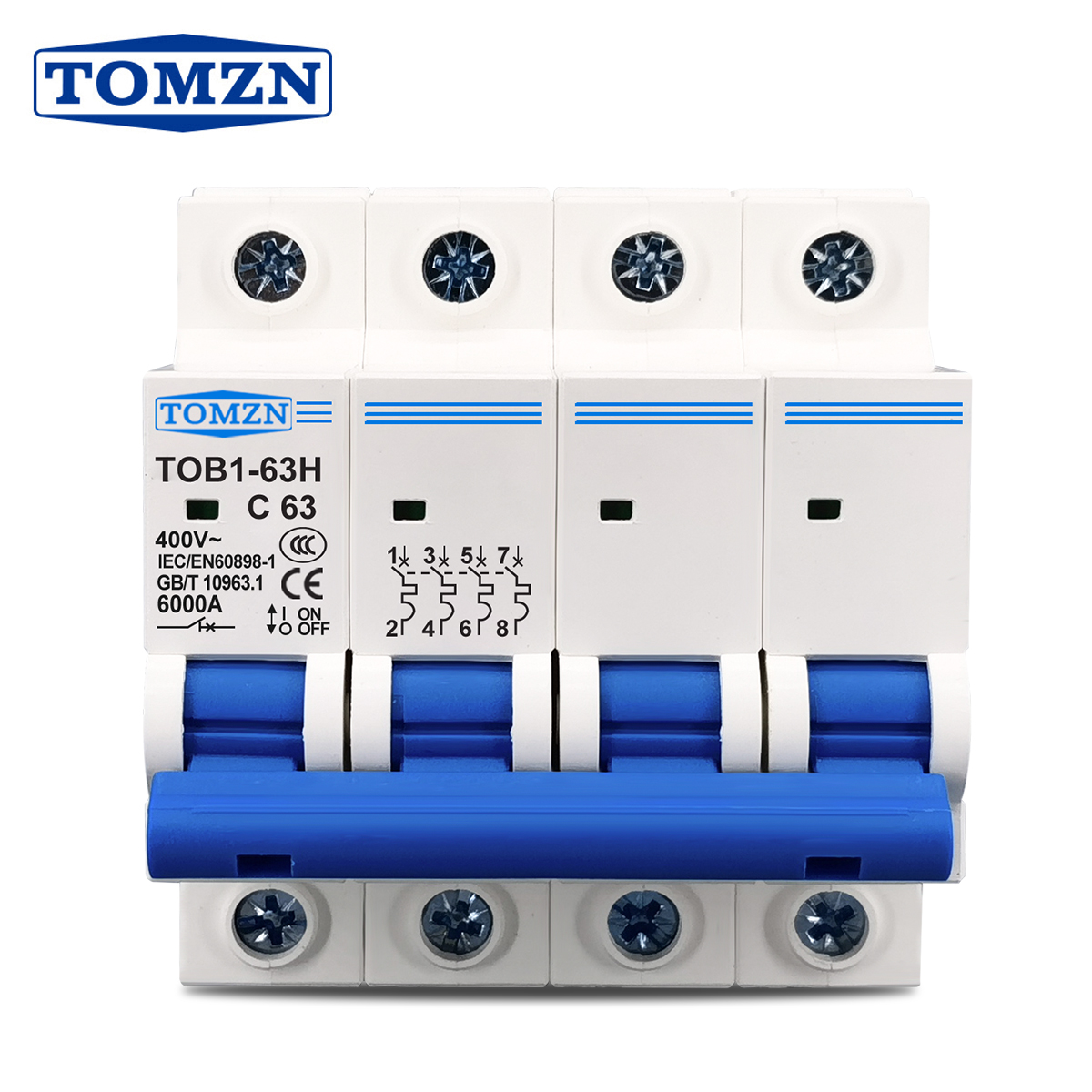
4P AC MCB TOB1-63 C Type Mini Circuit Breaker 230/400V~ 50HZ/60HZ 3A 6A 10A 16A 20A 25A 32A 40A 50A 63A Protective Industrial CB
Inquire Now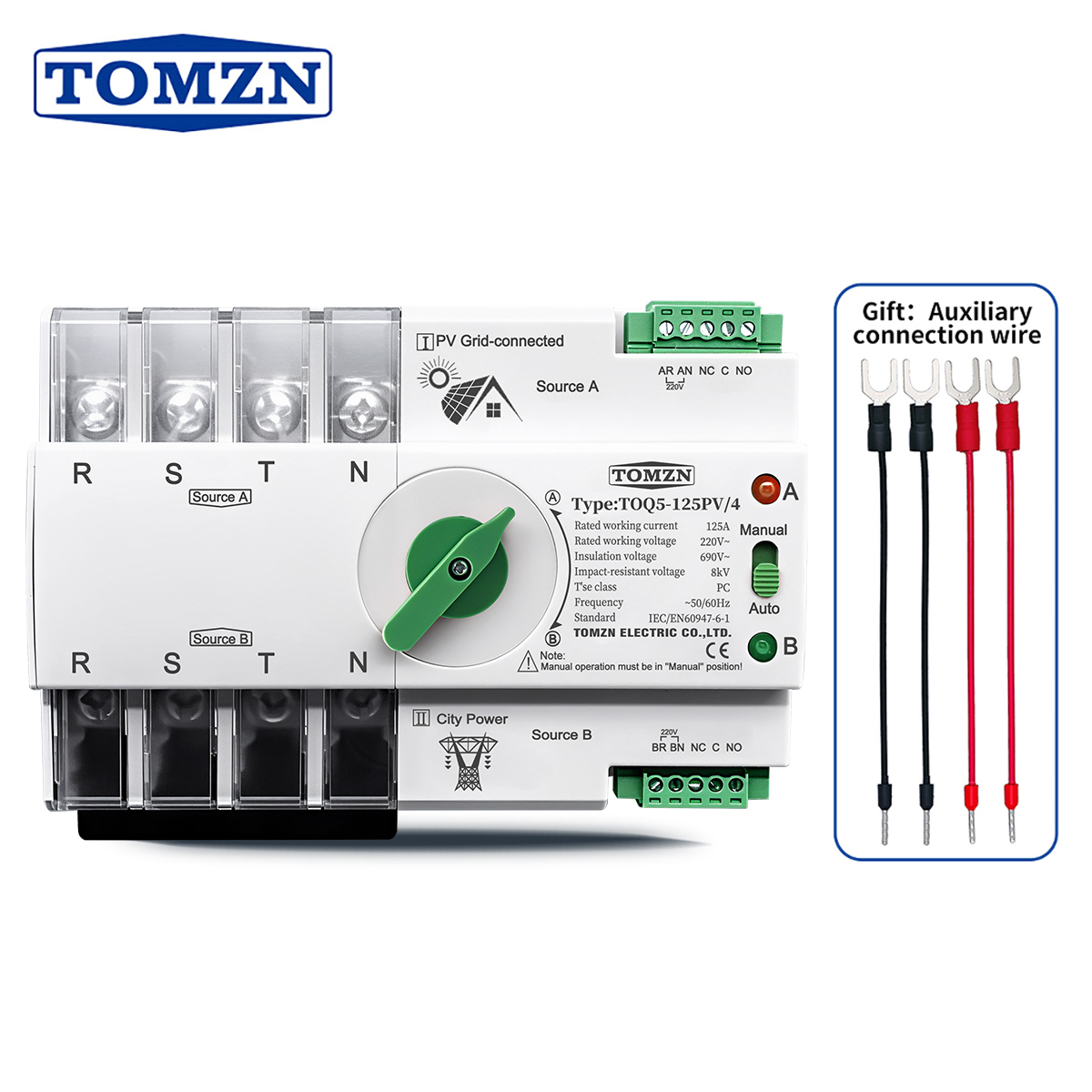
TOMZN 4P 3 Phase 4 Wire Din Rail ATS PV and Inverter Dual Power Automatic Transfer Selector Switches Uninterrupted 63A 100A 125A
Inquire NowZhejiang DVS Electric Co., Ltd. — Enterprise Strength & OEM Excellence
Headquartered in Liushi Town, Wenzhou—China's recognized capital of low-voltage electrical apparatus—Zhejiang DVS Electric Co., Ltd. brings 24 years of manufacturing domain expertise to international OEM and ODM clients.
End-to-End Production Facility
Spanning over 5,700 square meters of modern manufacturing floorspace, our facility integrates automated Surface Mount Technology (SMT), high-precision current coil winding machines, ultrasonic plastic welding, and automated functional testing lines under strict ISO9001 quality management systems.
Tailored OEM / ODM Customization
We provide complete ODM white-label development for global brands. From customized trip curves, dual-display LED/LCD user interfaces, RS485 Modbus protocol maps, to private-label silk-screening and specialized packaging designed for regional market compliance.
Verified Third-Party Compliance
Our products carry international CE marks and comply strictly with IEC 60947-5-1, IEC 60255-1, and IEC 61000 EMC standards. Verified on-site by top independent inspection authorities, DVS Electric guarantees 100% full-load trip and thermal burn-in testing before dispatch.
Engineering Current Monitoring Relays: Principles, Protection Logic & Topology
A comprehensive technical guide for electrical engineers, panel builders, and procurement officers detailing micro-controller current sensing, trip timing parameters, and protective coordination.
1. Operational Fundamentals & Current Sensing Architectures
A Current Monitoring Relay (CMR) is an advanced electronic control protection device designed to continuously sample AC or DC currents passing through an electrical circuit. Unlike basic miniature circuit breakers (MCBs) that rely solely on passive bimetallic thermal expansion or magnetic solenoids for catastrophic short-circuit interruption, a Current Monitoring Relay offers high-precision, microprocessor-driven parameter evaluation.
The internal topology relies on two predominant sensing mechanisms:
- Integrated Current Transformers (Internal CT): For AC currents up to 100A, the conductor passes directly through an onboard toroidal transformer. This galvanically isolated magnetic coupling generates a proportional secondary current ($I_s$), which is rectified and filtered into a low-voltage DC analog signal fed into a 12-bit Analog-to-Digital Converter (ADC).
- Shunt Resistors / Hall Effect Sensors: Used for direct current (DC) measurement or ultra-high accuracy applications. Hall-effect transducers enable true non-contact monitoring of both complex AC waveforms containing high harmonic distortion and pure DC currents in renewable battery bank storage systems.
Modern digital current relays execute True RMS (Root Mean Square) mathematical algorithms. RMS processing ensures accurate current evaluation regardless of non-sinusoidal current spikes generated by variable frequency drives (VFDs), switching power supplies, or inverter outputs.
2. Multi-Functional Protection Logic Matrix
To prevent nuisance tripping while providing robust equipment defense, industrial-grade current relays incorporate complex delay logic and adjustable hysteresis loops:
| Protection Function | Sensing Threshold Range | Delay Mechanism ($T_s$ / $T_t$) | Primary Application Target |
|---|---|---|---|
| Overcurrent Protection ($I>$) | 0.1A – 100A (Direct) / Up to 1000A (External CT) | Adjustable Trip Delay $T_t$ (0.1s – 30s) | Conveyor jamming, motor locked-rotor protection, mechanical overload. |
| Undercurrent Protection ($I<$) | 0.05A – 95A (Adjustable threshold) | Off-Delay & Startup Inrush Suppression ($T_s$) | Submersible pump dry-running, belt slippage, fan blade loss detection. |
| Inrush Current Blanking ($T_s$) | 0.5s – 30s Startup Override Delay | Timer bypass during motor start phase | Preventing tripping during motor magnetizing locked-rotor startup surge. |
| Phase Asymmetry / Current Unbalance | 5% – 30% Phase Delta Evaluation | Fixed/Adjustable 2s Delay | Three-phase motor winding failure, phase loss detection in heavy equipment. |
Hysteresis Logic: To eliminate "relay chatter"—rapid, destructive switching of internal output contactors near threshold setpoints—current relays integrate adjustable hysteresis (typically 3% to 10% of operating threshold). Once tripped by an overcurrent condition $I > I_{set}$, the relay will only reset when measured current falls below $I_{reset} = I_{set} \times (1 - Hysteresis)$.
3. Comparative Analysis: Analog vs. Digital vs. IoT-Connected Relays
When selecting current protection hardware for OEM panel designs, evaluating technological tiers is vital for balancing unit cost against system intelligence:
| Feature Parameter | Legacy Analog Relays | Digital Microprocessor Relays | IoT Smart Current Relays (Tuya/RS485) |
|---|---|---|---|
| Measurement Accuracy | ±5% to ±10% (Potentiometer scale error) | ±1% (Digital LCD/LED Display) | ±0.5% (High-precision 16-bit ADC) |
| Waveform Handling | Peak Average Sensing (Fails on VFDs) | True RMS Sensing | True RMS + Harmonic Spectrum Filter |
| Communication Protocol | Dry Contact Relay Output Only | Dry Contact + Local Visual Alarm | Modbus-RTU RS485 / WiFi / Tuya Cloud API |
| Remote Diagnostic Data | None | Local Trip History Storage | Real-time Current Telemetry, kWh, Remote Reset |
| OEM Procurement Cost | Lowest ($) | Moderate ($$) | High Value / Premium ($$$) |
Future Procurement Trends in Current & Load Protection
Global electrical component procurement is undergoing a massive shift driven by renewable energy transition, decentralization of grids, and the demand for real-time asset monitoring.
1. Rise of DC Current Monitoring in Battery Energy Storage (BESS)
With global solar PV and battery storage adoption accelerating, distributors are rapidly increasing orders for DC-rated Current Monitoring Relays. BESS protection requires bidirectional current detection capable of tracking high DC current profiles during charge and discharge cycles, preventing thermal runaway and battery string damage.
2. Mandatory IoT Connectivity & Smart Building Integration
Commercial procurement specifications now overwhelmingly mandate smart communications. Standalone relays are being replaced by WiFi, Zigbee, and Modbus-enabled monitoring devices. Modern facility managers expect automated pushing of overcurrent alerts directly to Tuya Smart Life smartphone apps or centralized SCADA systems.
3. Consolidation of Multi-Protection DIN-Rail Modules
Cabinet space optimization has made single-function relays obsolete for premium panel builders. Wholesalers are prioritizing hybrid modules that unify Over/Under Current, Over/Under Voltage, Phase Sequence, and Automatic Transfer Switch (ATS) controllers into a single 2P or 4P DIN-rail housing, drastically cutting wiring time and assembly labor.
Key Technological Trends Shaping Next-Gen Relays
Looking ahead, state-of-the-art protection devices are shifting toward solid-state switching, machine-learning edge analytics, and extreme environmental durability.
Solid-State Arc-Free Switching
Traditional electromechanical contacts suffer from physical wear, contact welding, and electrical arcing. Advanced current monitoring systems are incorporating Solid-State Relay (SSR) MOSFET/IGBT stages, offering microsecond trip times (<1ms) and millions of maintenance-free switching cycles in harsh chemical or explosive industrial atmospheres.
AI Edge Predictive Load Tripping
Integrating tiny ML (Machine Learning) microcontrollers allows relays to analyze harmonic signature waveforms in real time. Instead of waiting for a hard overcurrent trip point, the smart relay detects anomalous high-frequency current ripples—predicting bearing failure in motors or dielectric breakdown in cables days before total equipment failure occurs.
Wide Auxiliary Power Supplies
To overcome voltage sag issues during utility fault conditions, next-generation relays utilize ultra-wide universal auxiliary power supply switchers (e.g., AC/DC 24V–265V). This guarantees continuous micro-controller operational integrity even when grid voltage collapses down to 30% of nominal rating.
Frequently Asked Sourcing & Technical Questions
Clear, engineer-backed answers to essential questions regarding OEM ordering, current transformer sizing, certification compliance, and electrical installation.
How do I correctly size an external Current Transformer (CT) for high-ampere monitoring relays?
What is the difference between an Overcurrent Relay and an Overload Thermal Relay?
What custom OEM/ODM parameters can Zhejiang DVS Electric provide for brand buyers?
- Custom current measurement ranges (e.g., fractional 0.01A–5A or heavy industrial 0–500A direct).
- Customized firmware response curves, hysteresis default values, and display update refresh rates.
- Laser-etched brand logos, custom housing plastic color schemes, and private-label packaging boxes.
- Communication integration: Custom RS485 Modbus register maps or Tuya IoT app branding.
What certifications and EMC test reports are available for export shipments?
What is the typical lead time and Minimum Order Quantity (MOQ) for OEM orders?
Partner with a Leading OEM/ODM Current Protection Manufacturer
Whether you require standard DIN-rail current relays, custom automatic transfer switches, or private-label low-voltage protection components, our engineering team is ready to deliver tailored solutions.
