High-Performance Voltage Protection & Power Transfer Relays
Explore our export-grade line of adjustable over/under voltage relays, smart transfer switches, and digital current monitoring protection units manufactured for B2B supply chains.
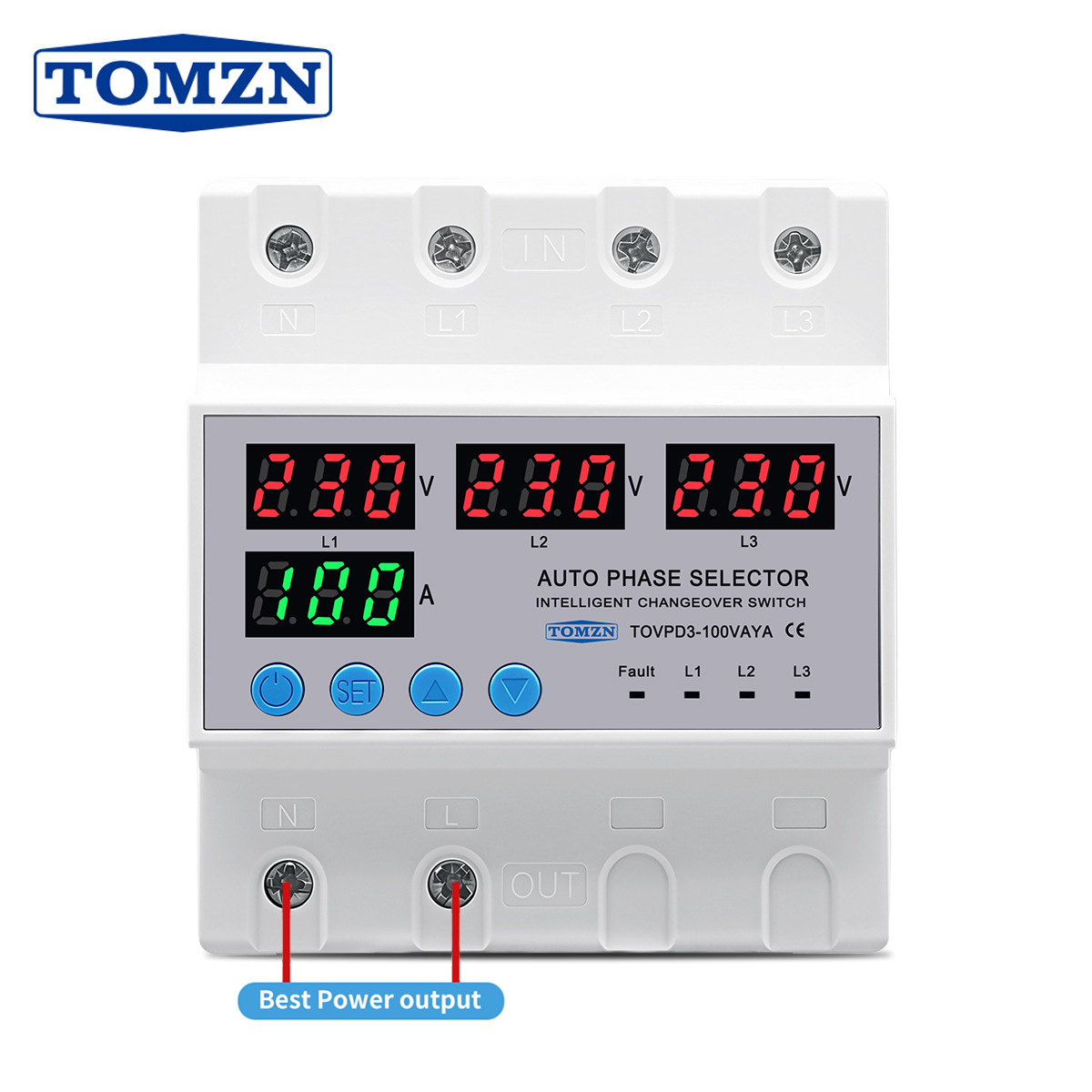
100A TOMZN 3 Phase 3P+N Din Rail Phase Selector Adjustable Over and Under Voltage Current protection Monitor Relays Protector
View Specifications →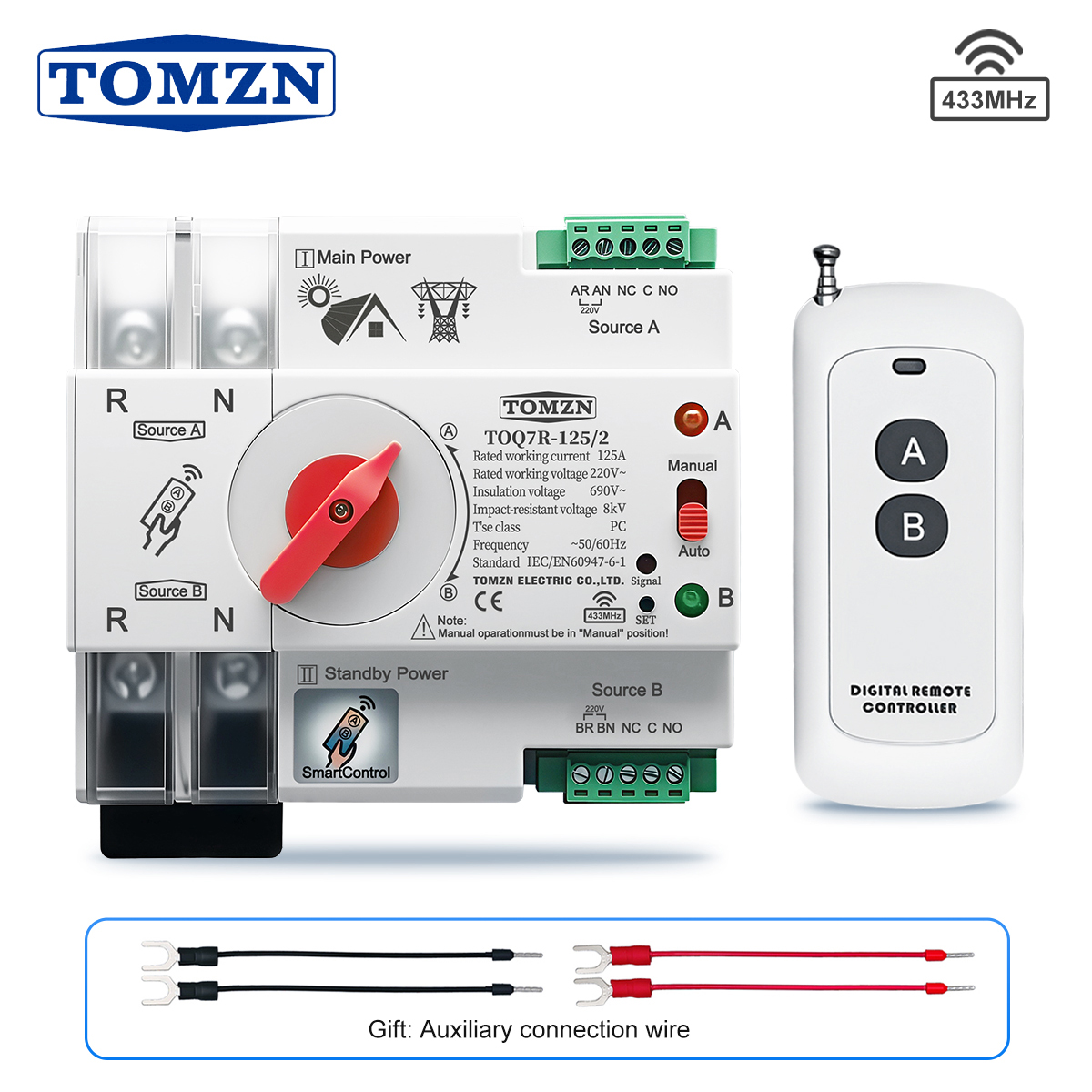
TOMZN 2P Remote Control ATS Wireless 433MHz Dual Power Auto Transfer Switch Electrical Selector Switches Uninterrupted Power
View Specifications →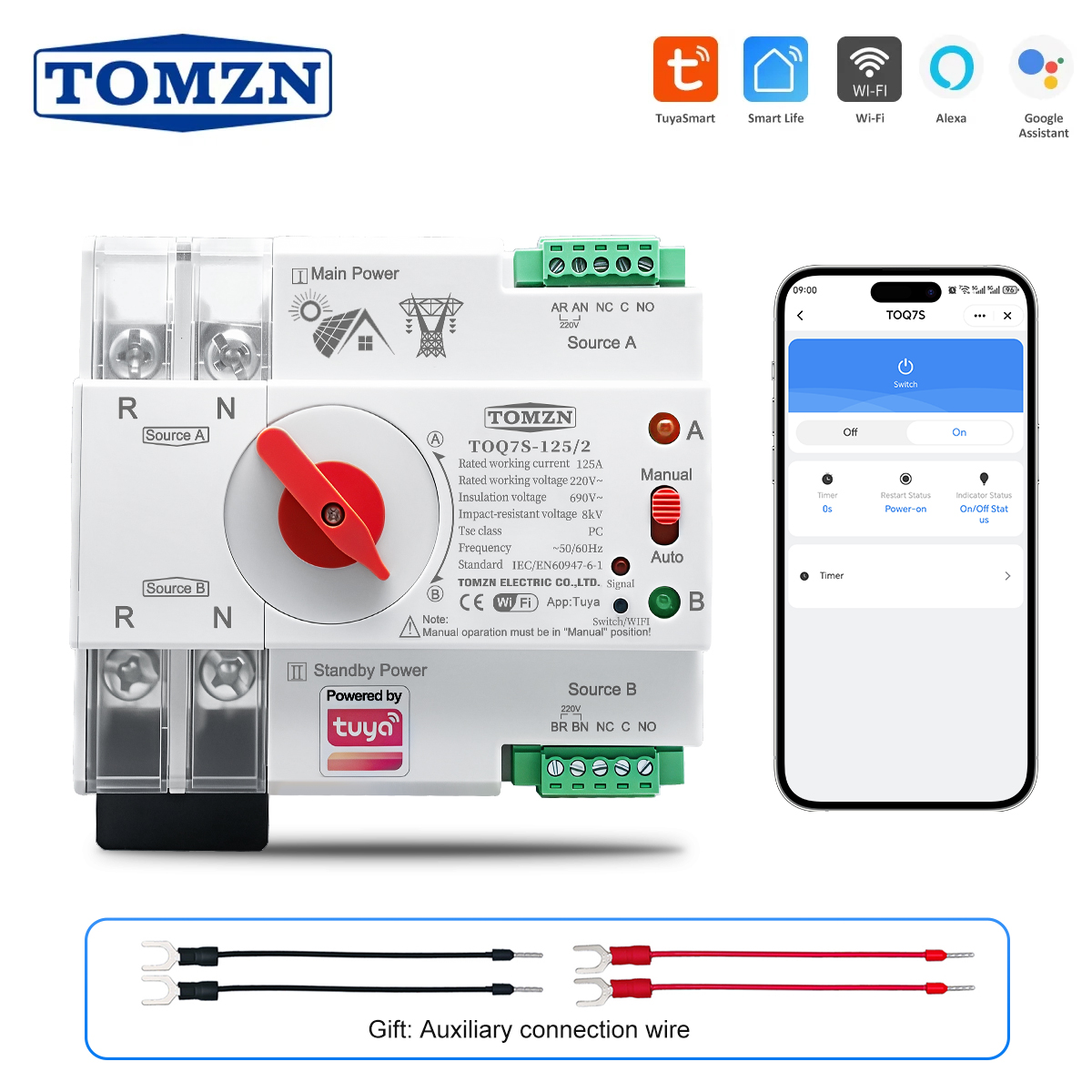
TOMZN TUYA SmartLife WIFI Smart ATS Dual Power Automatic Transfer Selector Switch Uninterrupted 2P 230V 63A 100A 125A
View Specifications →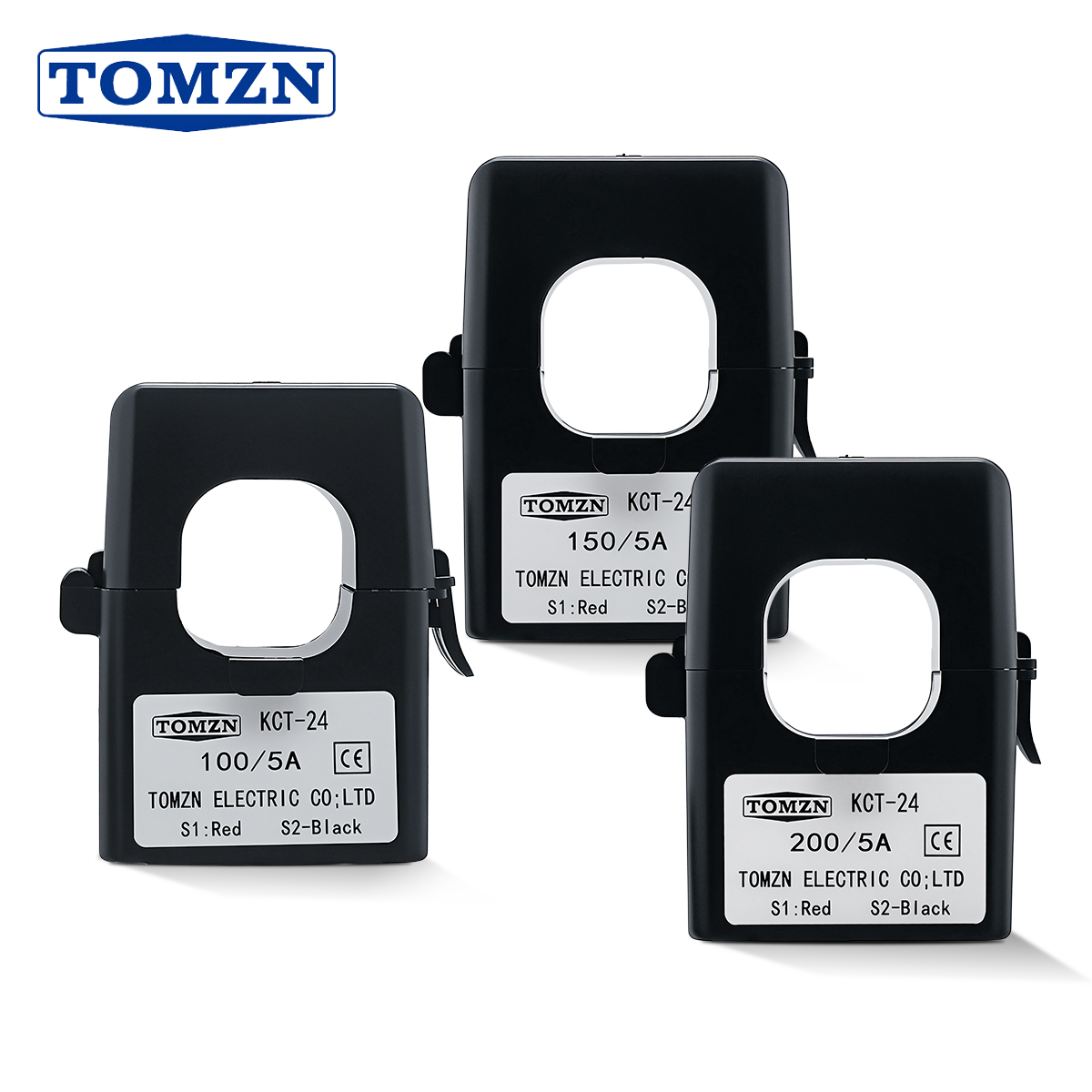
TOMZN Split Type Current Transformer High-current CT Primary 100A 150A 200A Secondary 5A ABS Sealed Wire
View Specifications →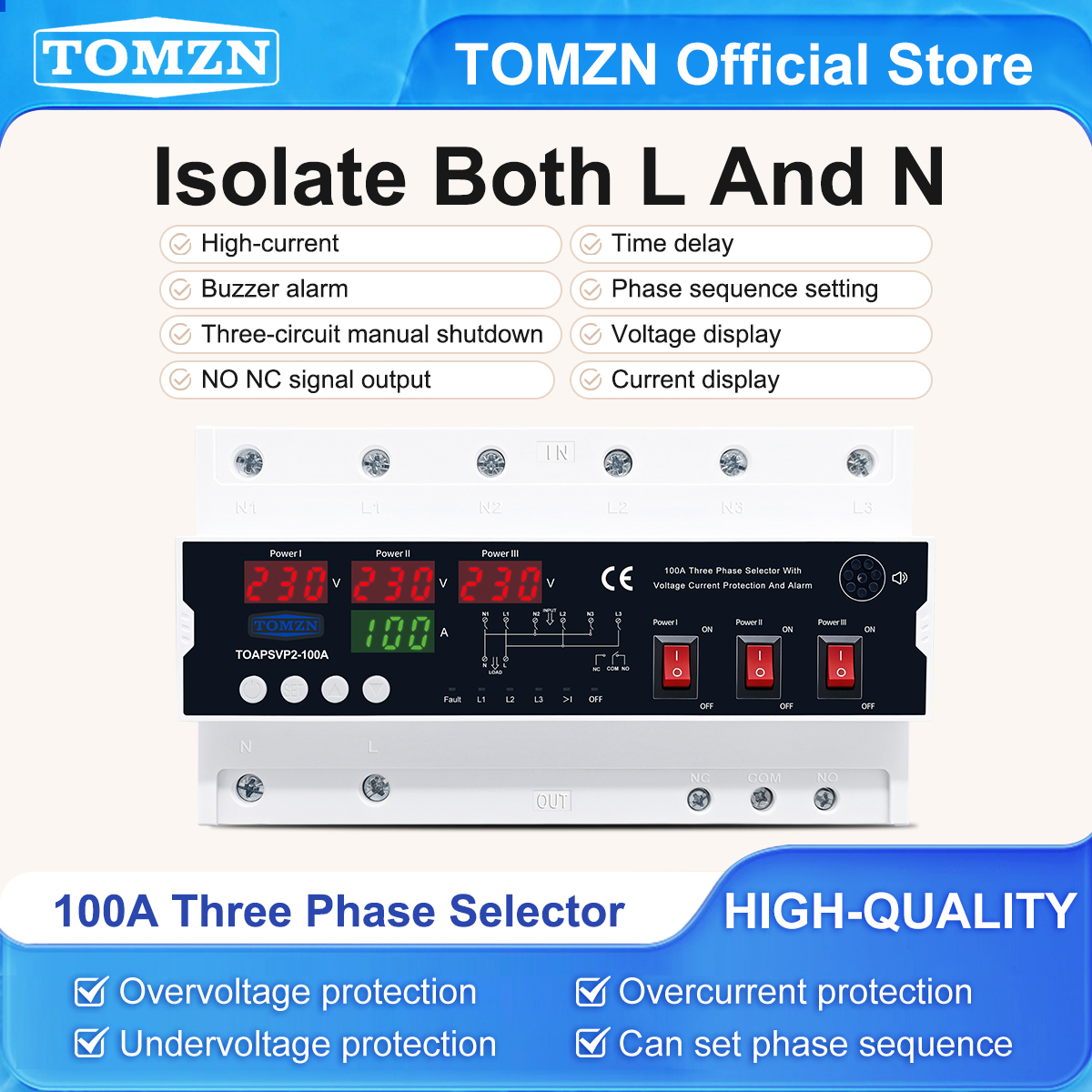
Relay-type Automatic Phase Selector ATS Dual Power Switch Changeover Switch OCP OVP UVP CUT OFF L N Tomzn Official 2P 230V 63A
View Specifications →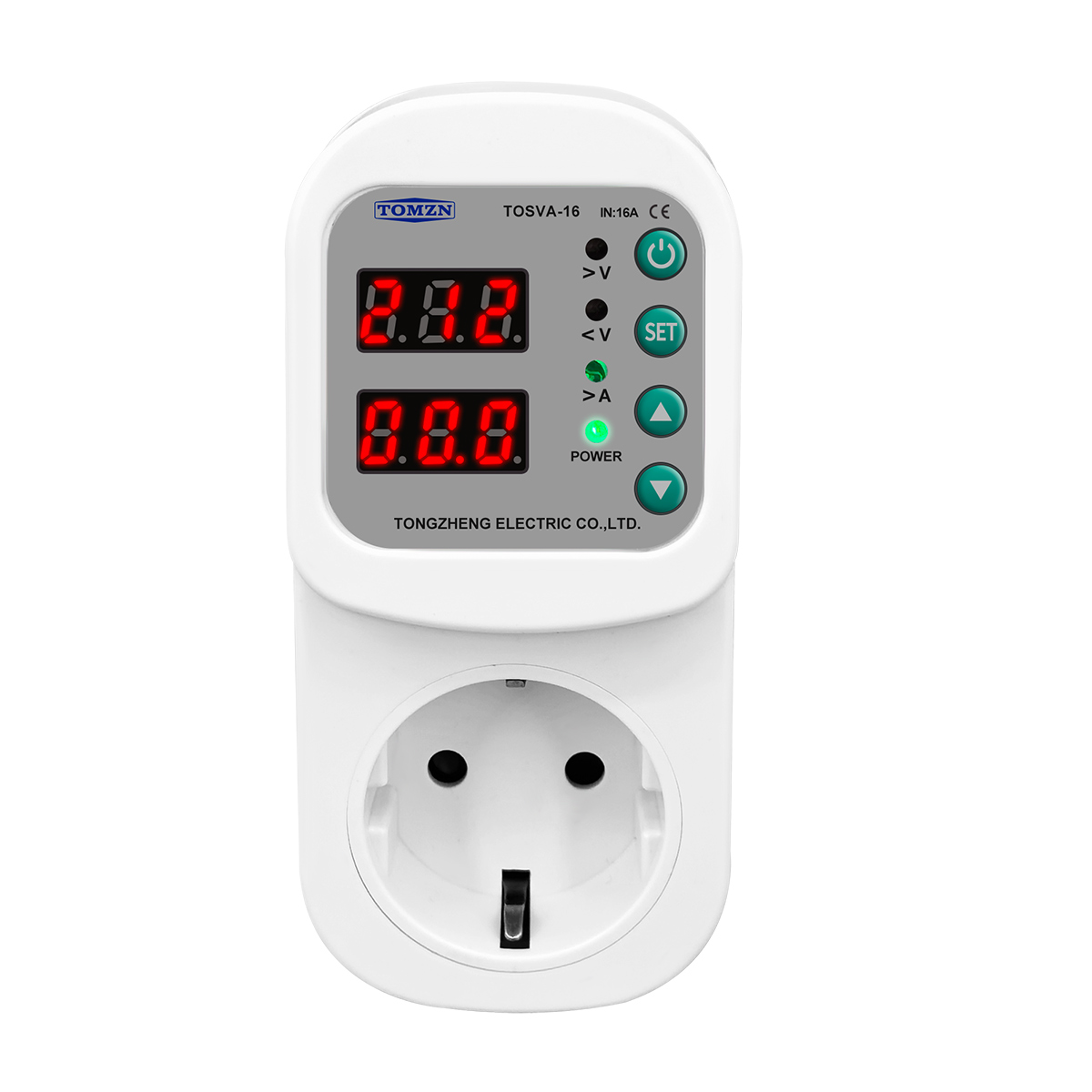
TOMZN TOSVA-16 Automatic Voltage Current Protector Socket AC 110V 220V Adjustable 16A Power Surge Protector EU Plug Socket
View Specifications →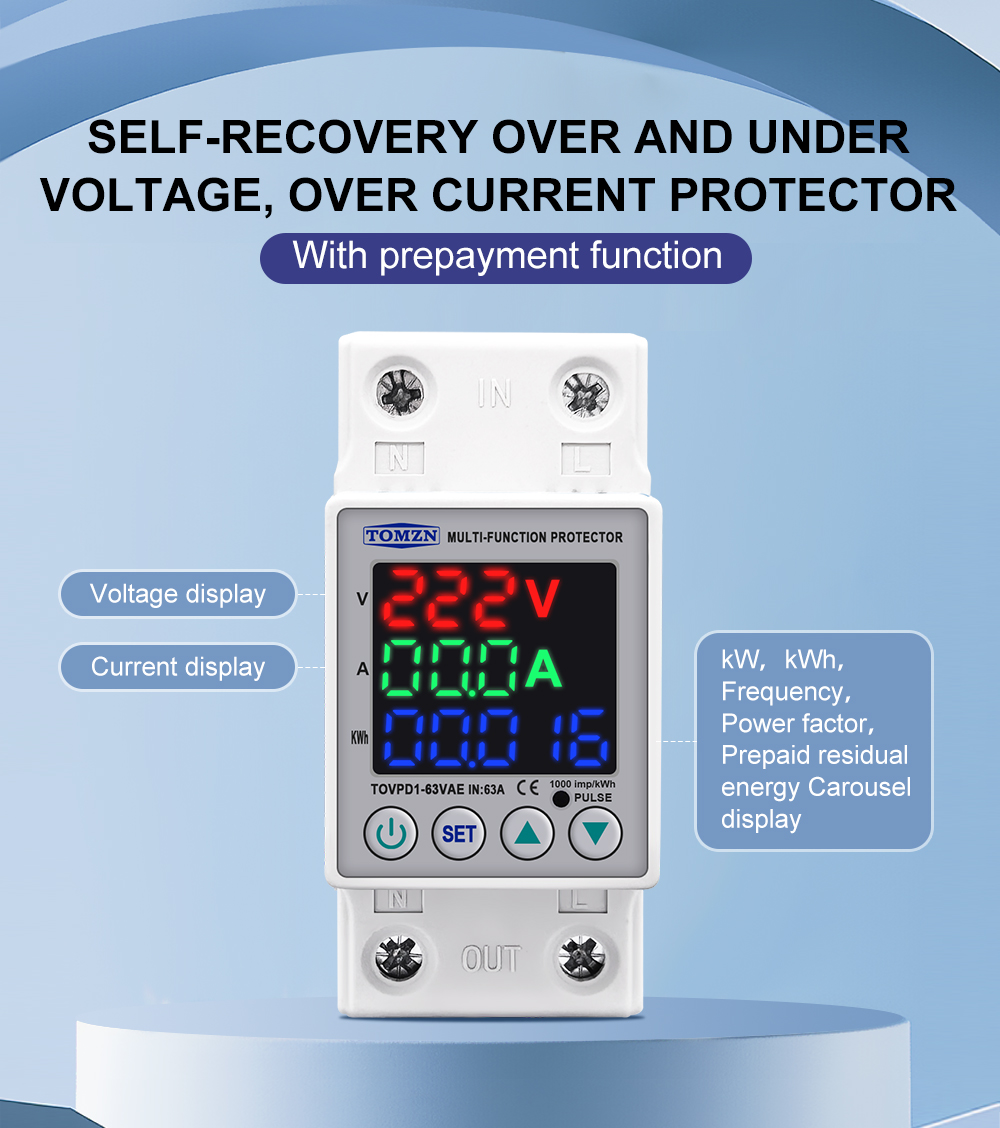
63A 230V 3IN1 Display Din Rail Adjustable Over and Under Voltage Protective Device Protector Relay With Over Current Protection
View Specifications →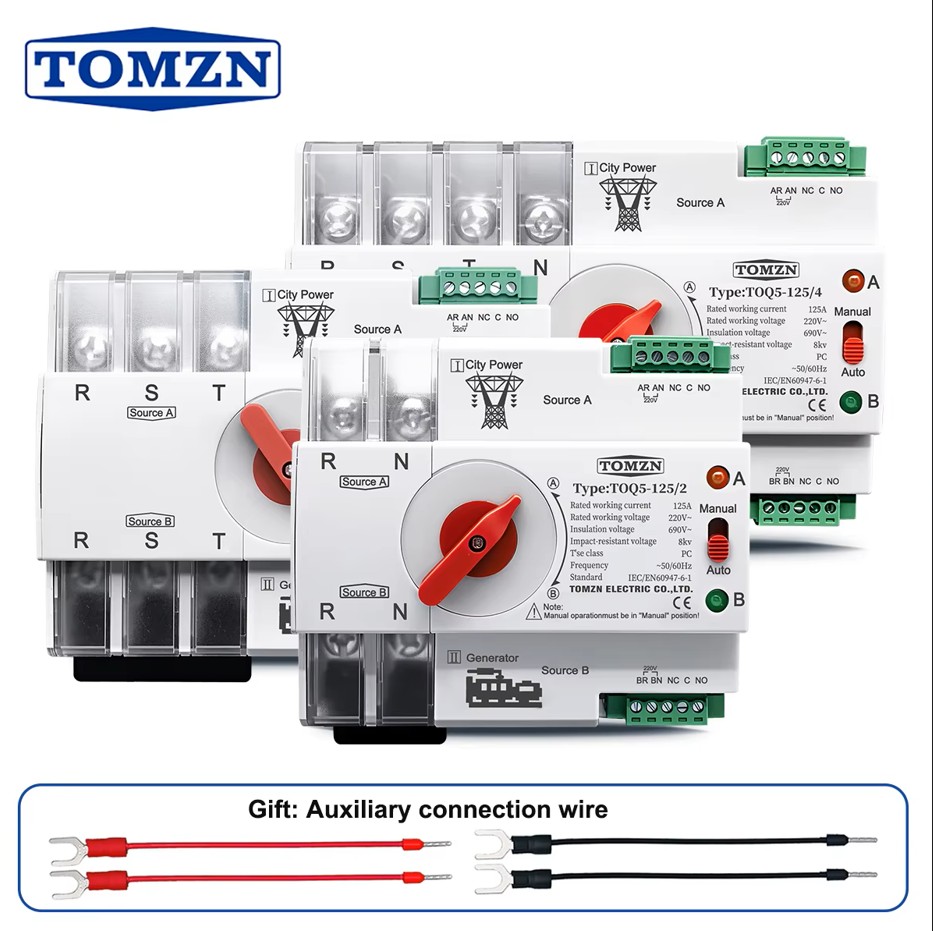
TOMZN Din Rail 2/3/4P ATS Dual Power Automatic Transfer Switch Electrical Selector Switches Uninterrupted Power 63/100/125A
View Specifications →Comprehensive Overvoltage Protection Relay Engineering Deep-Dive
A rigorous evaluation of voltage sensing topology, contactor arc-quenching mechanics, and microprocessor trip delay logic in industrial and residential electrical protection systems.
Modern electrical infrastructure operates under increasingly complex grid stress. The expansion of distributed renewable energy (such as photovoltaic back-feed), rapid industrial load switching, and fragile distribution networks in emerging markets have dramatically elevated the incidence of sustained overvoltage events, transient voltage surges, and floating neutral faults. Overvoltage Protection Relays (OVPRs)—specifically adjustable DIN-rail micro-controller units—serve as the vital primary defense mechanism safeguarding sensitive downstream electronics, industrial compressors, refrigeration systems, and smart home appliances from catastrophic dielectric breakdown and thermal runaway.
True RMS Microprocessor Sensing
Utilizes high-frequency ADC sampling (>3.2 kHz) to calculate True Root Mean Square (RMS) voltage. Eliminates false tripping triggered by harmonic distortion, non-linear inverter waveforms, and high-frequency grid noise.
Zero-Cross Switching Logic
Integrated solid-state control algorithms synchronize contact breaking exactly at the AC sinusoidal voltage zero-crossing point. Reduces electrical contact arcing by up to 85%, extending relay mechanical and electrical life.
Integrated Over-Current & Neutral Safety
Combines Overvoltage (OVP), Undervoltage (UVP), and Overcurrent (OCP) sensing with neutral line drift monitoring into a single space-saving DIN-rail enclosure (18mm to 36mm width).
Operating Topology: RMS Voltage Measurement vs. Peak-Sensing Circuits
Legacy electromechanical or primitive peak-sensing relays operate by rectifying the AC voltage wave into a DC average. When subjected to distorted AC supply lines—common in solar photovoltaic microgrids powered by pulse-width modulated (PWM) or modified sine wave inverters—peak-sensing relays experience severe calibration offset, causing premature tripping or failure to act during actual overvoltage conditions. OEM manufacturers utilize 8-bit or 32-bit high-speed microcontrollers (MCUs) that continuously sample the incoming AC sinusoidal wave across a wide spectrum (45Hz–65Hz).
By computing the mathematically rigorous True RMS value: $$V_{RMS} = \sqrt{\frac{1}{T} \int_{0}^{T} [v(t)]^2 dt}$$ the protection relay accurately measures actual effective energy delivered to the load regardless of total harmonic distortion (THD). This ensures precision threshold execution within ±1% accuracy across operating temperatures ranging from -25°C to +55°C.
Technical Whitepaper Insight: Neutral Line Disconnection & Floating Neutral Hazards
In three-phase four-wire (3P+N) distribution networks, the floating or severed neutral condition is among the most destructive electrical anomalies. When the neutral line ruptures upstream, phase voltages unbalance according to instantaneous load impedance—causing a single phase voltage to surge up to phase-to-phase potential (≈400V AC on a 230V nominal line). Custom OEM relays featuring 3P+N sensing dynamically isolate all active phases in less than 20 milliseconds upon detecting neutral voltage displacement, preventing complete burnout of connected single-phase terminal loads.
| Electrical Protection Parameter | Standard Technical Range | Custom OEM Factory Preset Options | Engineering Impact / Protection Benefit |
|---|---|---|---|
| Overvoltage Trip Threshold (OVP) | 230V AC – 300V AC (Adjustable) | Custom preset (e.g. 270V ±2V) | Prevents insulation dielectric breakdown & MOV degradation in downstream electronics. |
| Undervoltage Trip Threshold (UVP) | 140V AC – 210V AC (Adjustable) | Custom preset (e.g. 170V ±2V) | Protects AC motor compressors from over-current heating & stalled-rotor conditions. |
| Overcurrent Protection Range (OCP) | 1A – 100A (Step: 1A) | Custom shunt / CT current curve | Eliminates need for auxiliary thermal circuit breakers in space-constrained panels. |
| Action / Cut-off Delay Time | 0.1s – 30.0s (Adjustable) | Fast-trip <0.05s for critical loads | Prevents nuisance tripping during harmless transient switching spikes. |
| Power-On / Reset Delay Time | 1s – 500s (Adjustable) | 30s–180s delay for compressors | Allows grid voltage stabilization and refrigerant pressure equalization before reconnecting loads. |
| Voltage Hysteresis (Recovery Delta) | 2V – 10V AC | Custom deadband filtering | Prevents rapid relay "chattering" or oscillation around boundary threshold values. |
Technology Development Trends in Voltage Protection Relays
An analysis of emerging technological paradigms reshaping low-voltage circuit protection, smart home telemetry, and smart grid automation.
1. Convergence of IoT Telemetry & Wi-Fi/Zigbee Connectivity
The traditional standalone voltage relay is rapidly evolving into an intelligent IoT edge node. Modern custom OEM designs embed Wi-Fi (Tuya / SmartLife ecosystem), Zigbee 3.0, or RS485 Modbus-RTU communications modules directly into the DIN-rail housing. This enables real-time voltage/current graphing, remote threshold reconfiguration, cloud event logging, and predictive maintenance alerts accessible via mobile applications or central SCADA systems in industrial facility management.
2. Hybrid Magnetic Latching & Solid-State Switching
Energy efficiency and thermal dissipation are paramount inside dense electrical distribution boxes. Modern high-current relays (63A–100A continuous) utilize magnetic latching relay structures. Unlike classical electromagnetic relays that require continuous power coil energization (consuming 2W–5W per pole continuously), magnetic latching mechanisms consume zero standby power once actuated, utilizing microsecond current pulses to toggle contact states. Combined with zero-crossing solid-state timing, this dramatically reduces internal thermal stress and enclosure heat buildup.
3. Multi-Function 3-in-1 Digital Display Interfaces
End-users and facility managers demand immediate visual diagnostics. Development has shifted to 3-in-1 multi-display LED/LCD screens that simultaneously present real-time line Voltage (V), instantaneous Current (A), and cumulative Power Consumption (kWh) or Power Factor (PF). This eliminates the cost and panel space needed for separate ammeters and voltmeters.
4. Photovoltaic Microgrid & Inverter Dynamic Adaptation
With massive rooftop solar penetration, distribution transformers often experience reverse power flow, causing localized grid voltage spikes exceeding 253V AC (IEC 60038 standards). Next-generation relays incorporate dynamic adaptive hysteresis algorithms. They intelligently differentiate between brief grid voltage surges and solar inverter ramp-up overvoltages, mitigating unnecessary nuisance trips while ensuring absolute equipment safety.
Future B2B Procurement Trends for Wholesalers & Exporters
Key procurement shifts, regulatory developments, and custom manufacturing requirements shaping global low-voltage supply chains over the next decade.
Shift Toward Custom OEM Brand Customization & Modular Hardware Platforms
Global electrical distributors and regional brand owners are moving away from off-the-shelf commoditized protection relays toward custom OEM/ODM partnerships. Importers demand tailored enclosure colors, laser-etched private branding, localized multilingual packaging, and specialized firmware defaults adapted to regional grid characteristics (e.g., North American 120V/240V split-phase vs. European 230V single-phase vs. Middle Eastern/African wide-fluctuation grids).
Modular hardware platforms allow OEMs to quickly adjust internal shunts, Current Transformers (CTs), and PCB component layouts without re-engineering the base enclosure—reducing sample turnaround times from months to days.
Harmonized Regulatory Compliance & International Standards Rigor
Global market access requires strict adherence to evolving IEC, EN, and UL standards. Procurement teams are prioritizing manufacturers possessing fully documented test reports and third-party verified compliance certifications, including:
- IEC/EN 60947-2 & IEC/EN 60947-5-1: Low-voltage switchgear and controlgear specifications governing switching element reliability and insulation performance.
- EN 50550: Power frequency overvoltage protective devices for household and similar applications (POP).
- IEC 61000-4 Series: Electromagnetic Compatibility (EMC) testing standards ensuring immunity to electrostatic discharge (ESD), fast electrical transients/bursts, and high-voltage lightning surges.
- UL 94-V0: Flame-retardant housing polymer requirements guaranteeing self-extinguishing plastic properties in case of severe internal electrical fault arcs.
Supply Chain Resilience & Factory-Direct Verified Capability
Supply chain volatility has shifted buyer preferences toward established manufacturing hubs offering raw material vertical integration, automated SMD assembly, in-house plastic injection molding, and 100% full-load functional testing. Importers prefer working directly with verified manufacturing facilities in Liushi, Wenzhou—the low-voltage electrical capital of China—to bypass intermediary trading markups, secure competitive volume pricing, and guarantee stringent quality control from incoming raw materials to final export packaging.
Frequently Asked Technical & Procurement Questions
Expert engineering answers to common technical queries, installation challenges, and custom OEM ordering parameters.
What is the operational difference between an Overvoltage Relay and a Surge Protective Device (SPD)?
How does the adjustable delay timer prevent nuisance tripping in real-world installations?
Can custom OEM overvoltage relays be tailored for 110V/120V American grids as well as 230V European/Asian grids?
What internal relay contact technologies are used to handle heavy continuous currents up to 100A?
What is the Minimum Order Quantity (MOQ) and sample lead time for custom OEM brand manufacturing?
How does a 3-phase automatic phase selector relay ensure uninterrupted power to critical loads?
Why Partner with Zhejiang DVS Electric Co., Ltd.?
Over two decades of precision low-voltage manufacturing excellence in Wenzhou, China. Providing robust OEM/ODM supply chain partnerships for global electrical distributors.
Factory-Direct Custom Manufacturing Hub
Located in Liushi Town, Wenzhou—the world-renowned center for low-voltage electrical engineering—Zhejiang DVS Electric Co., Ltd. operates a modern 5,700 m² integrated production facility. Backed by 24 years of industry experience, we specialize in the custom engineering, assembly, testing, and export of high-reliability circuit protection devices, Automatic Transfer Switches (ATS), surge protective devices (SPD), and voltage protection relays.
- 24+ Years Industry Experience: Deep domain expertise in circuit breaker calibration and protection relay electronics.
- 5,700 m² Production Floorspace: Integrated SMT surface-mount lines, plastic injection molding, and assembly workshops under one roof.
- Third-Party Onsite Verified: Business operations, production line capacities, and ISO quality management systems audited onsite by independent inspectors.
- 100% Quality Assurance Routine: Every single relay undergoes automated dielectric withstand testing, trip timing verification, and load calibration prior to export packing.
- Global Market Compliance: Products carry CE marking, CB test reports, RoHS environmental compliance, and UL-compliant fire-retardant materials.

Zhejiang DVS Electric Co., Ltd. Manufacturing Facility & SMT Assembly Lines in Liushi, Wenzhou.
Request a Custom OEM Quote & Download Technical Catalog
Partner with a verified manufacturer for your wholesale or OEM overvoltage protection relay requirements. Our engineering team provides fast technical support, custom firmware configuration, and factory-direct volume pricing.
