Featured Automatic & Manual Transfer Switch Systems
Engineered in compliance with IEC 60947-6-1 standards, offering high short-circuit withstand capacity, sub-50ms transfer speeds, and smart IoT control interfaces.
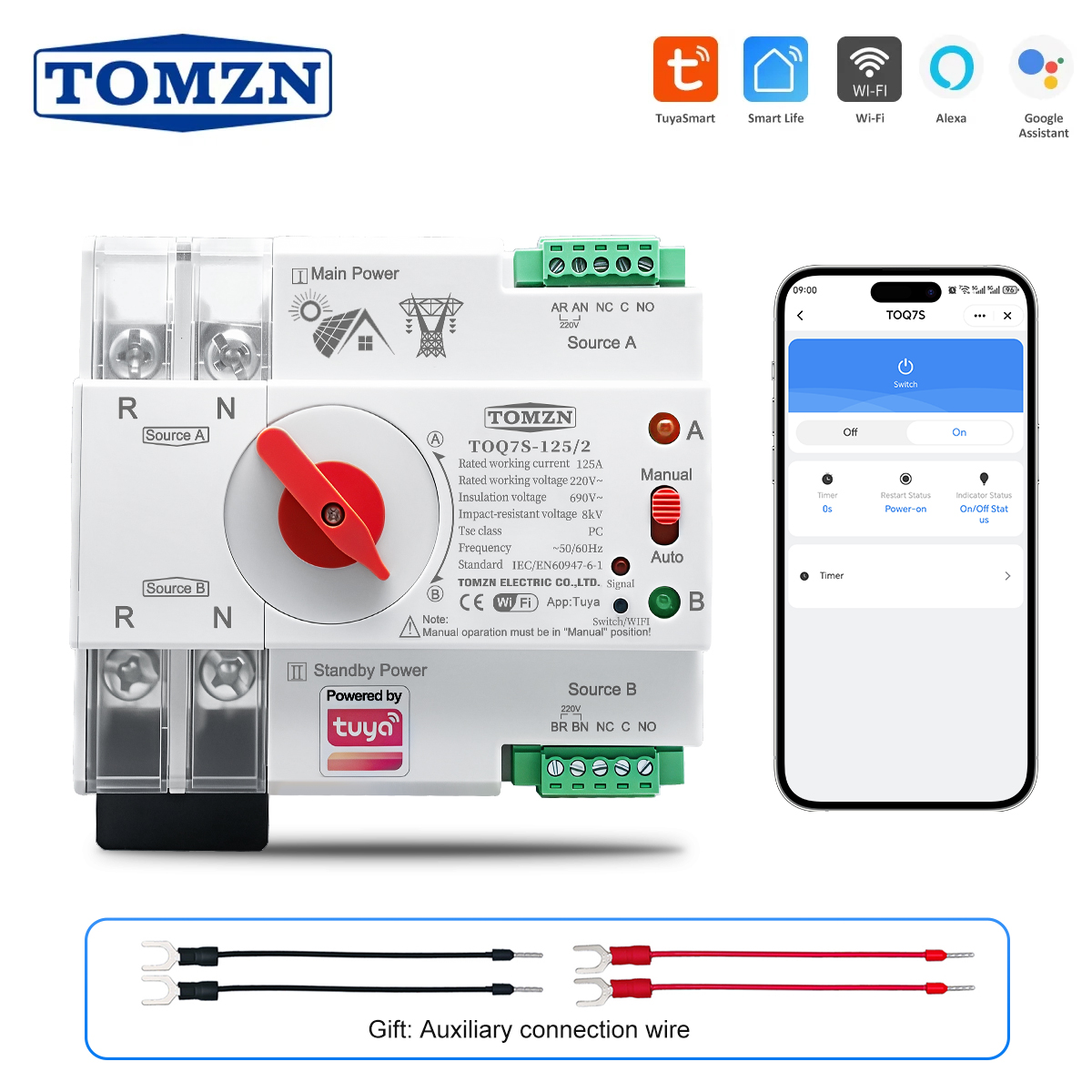
TOMZN TUYA SmartLife WIFI Smart ATS Dual Power Automatic Transfer Selector Switch Uninterrupted 2P 230V 63A 100A 125A
View Product Technical Specifications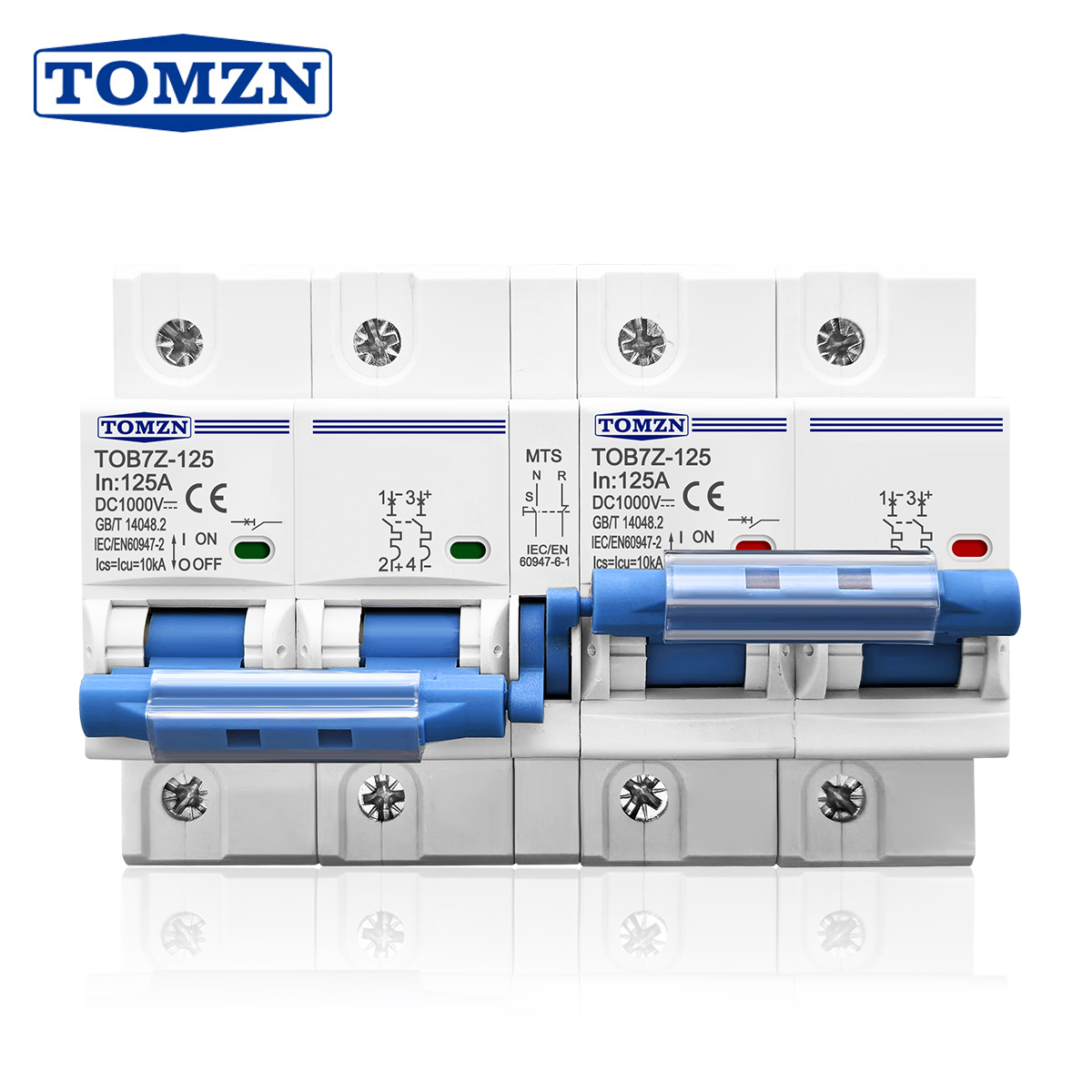
TOMZN 125A 2P Plus 2P DC MTS Dual Power Manual Transfer Switch Circuit Breaker MCB for PV System 2P+2P
View Product Technical Specifications
TOMZN NFC Passive Intelligent Padlock Keyless No Keyway Waterproof Theft-proof Thickened Body Lock/Unlock Record Nfc Lock APP
View Product Technical Specifications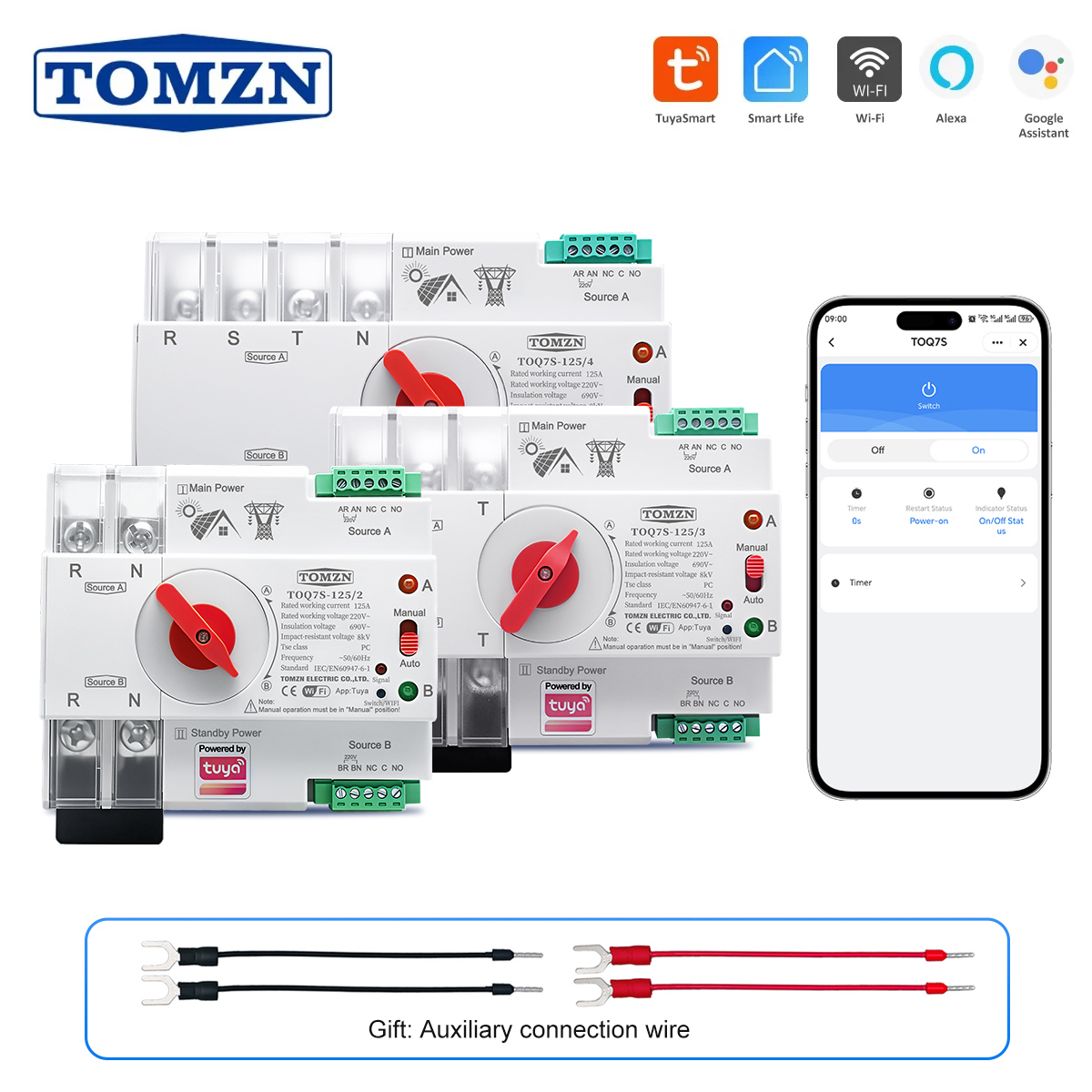
TOMZN TUYA SmartLife WIFI Smart ATS Dual Power Automatic Transfer Selector Switch Uninterrupted 2P 3P 4P 230V 63A 100A 125A
View Product Technical Specifications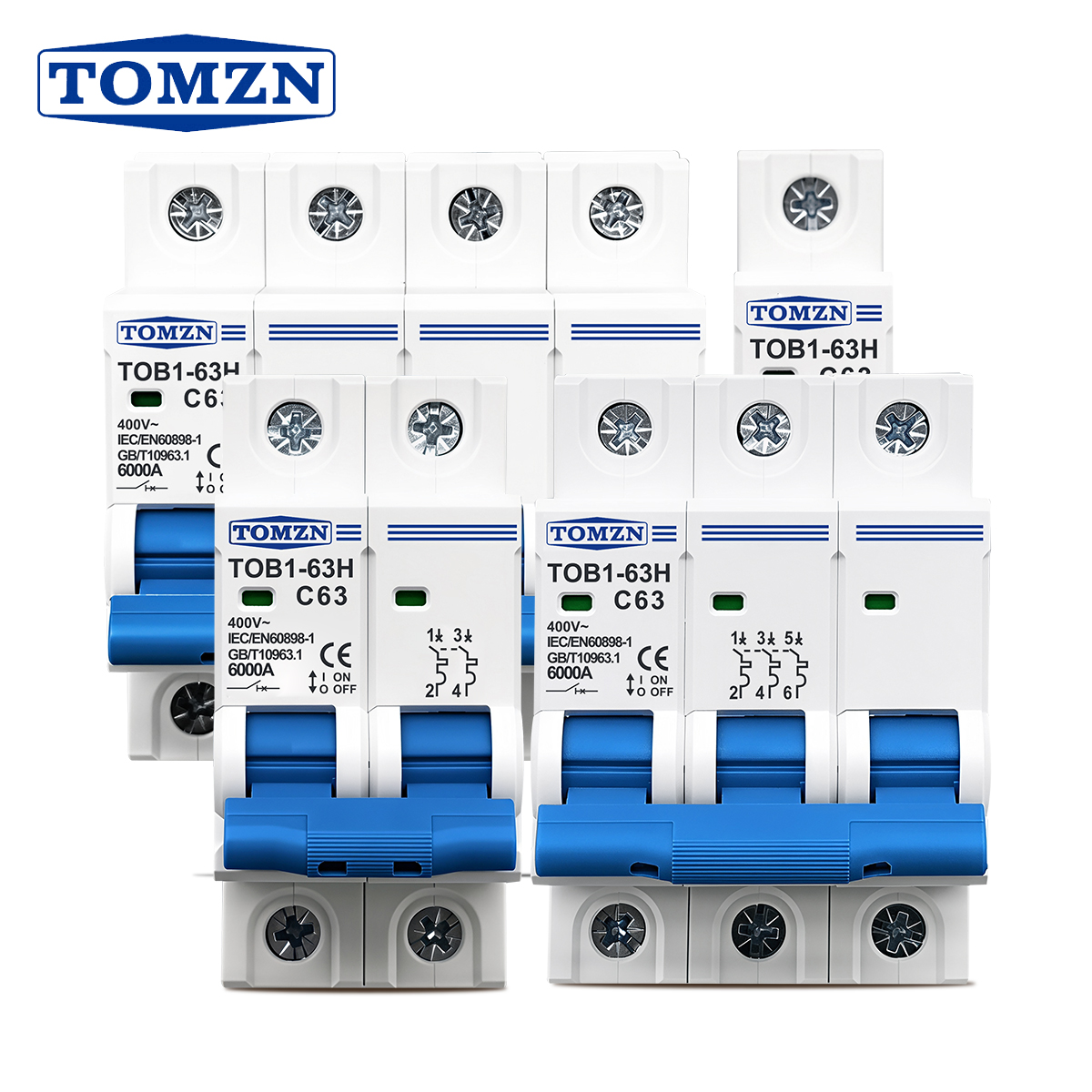
TOMZN AC MCB TOB1-63H C Curve 230/400V~ 50Hz/60Hz Mini Circuit Breaker 1P 2P 3P 4P 3A 6A 10A 16A 20A 25A 32A 40A 50A 63A
View Product Technical Specifications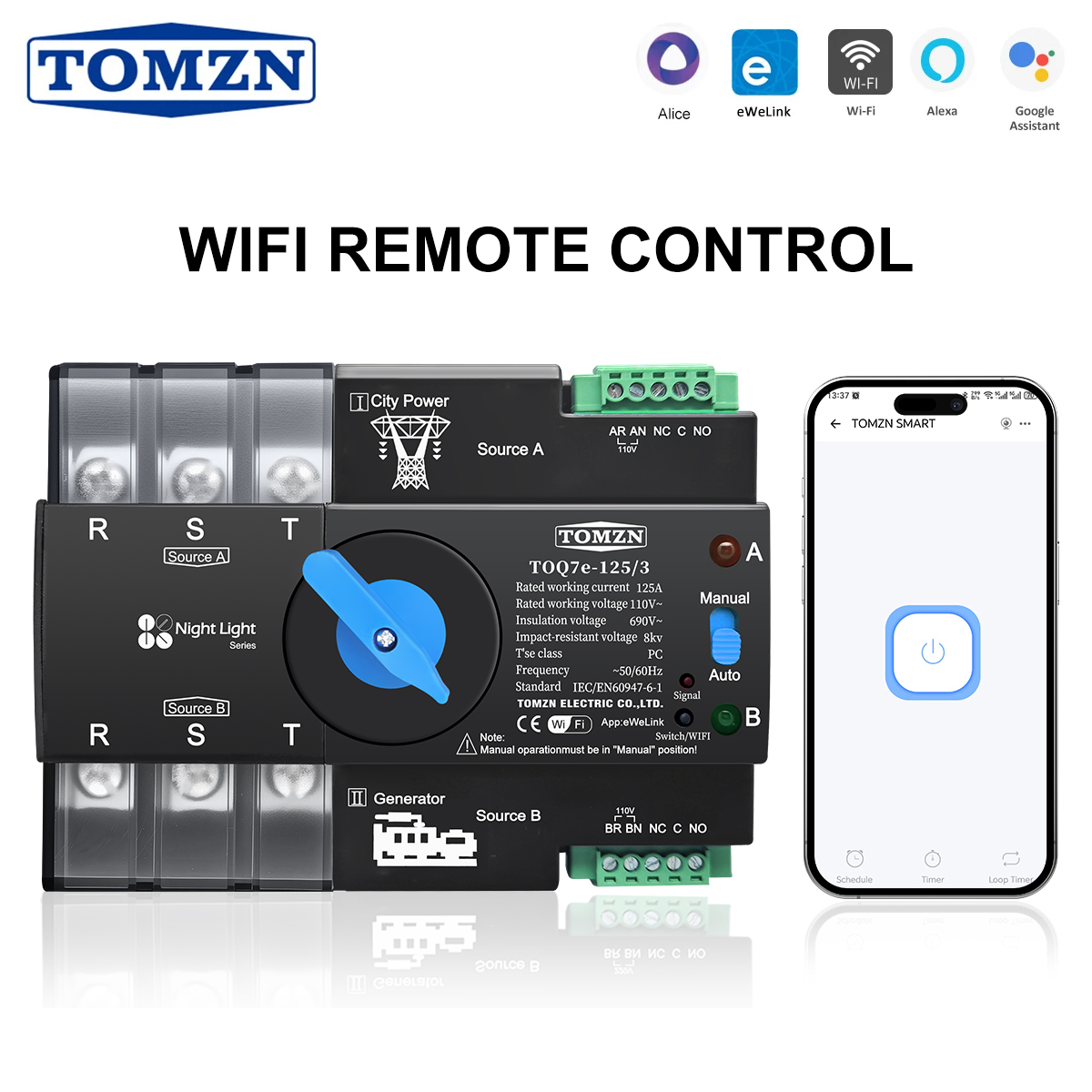
TOMZN 110V/120V Three Phase Smart ATS Dual Power Automatic Transfer Selector Switch Uninterrupted 3P 125A EWeLink Din Rail
View Product Technical Specifications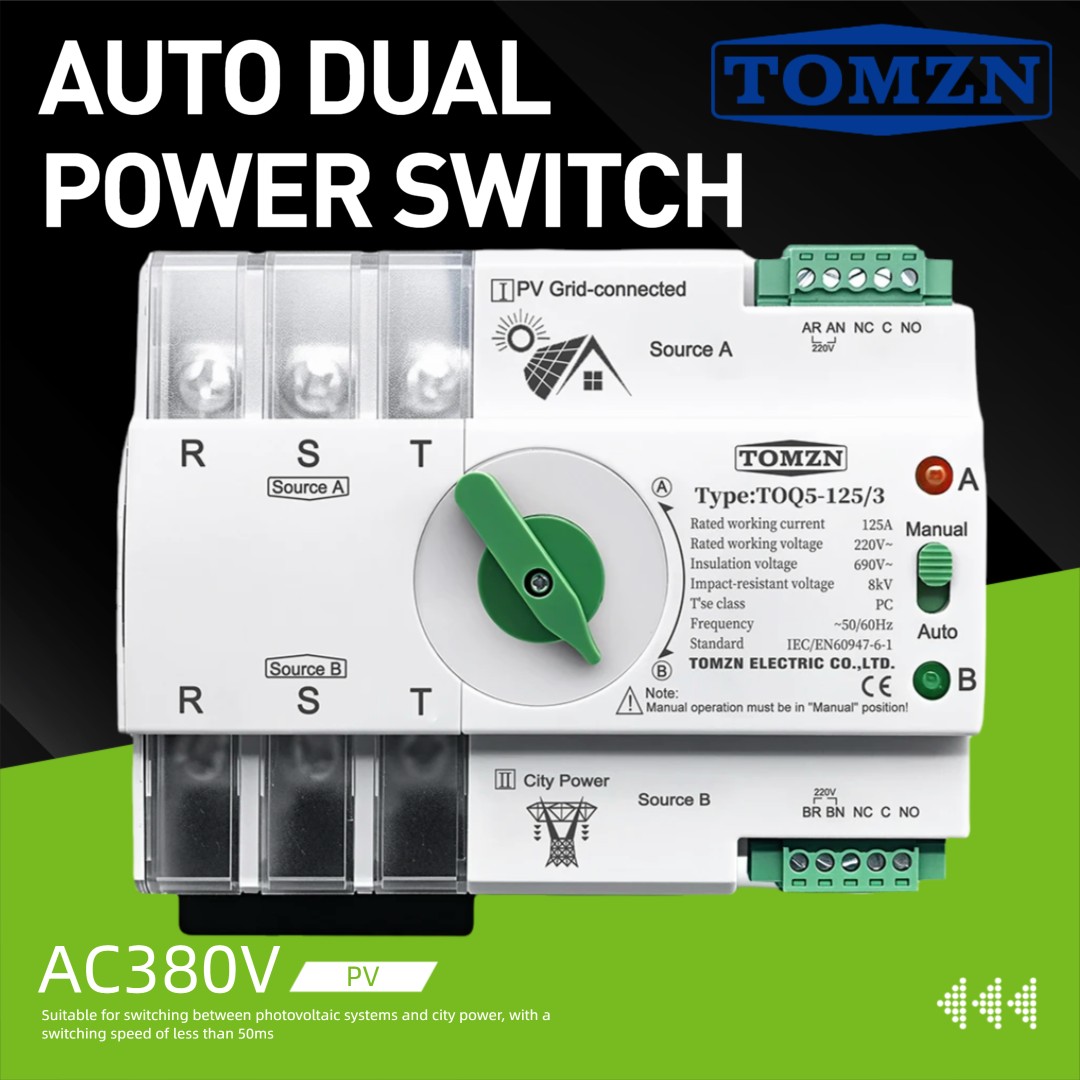
TOMZN 3 Phase DIN Rail ATS for PV Inverter Dual Power Auto Transfer Selector Switches Uninterrupted 2P 230V/380VAC 63A 100A 125A
View Product Technical Specifications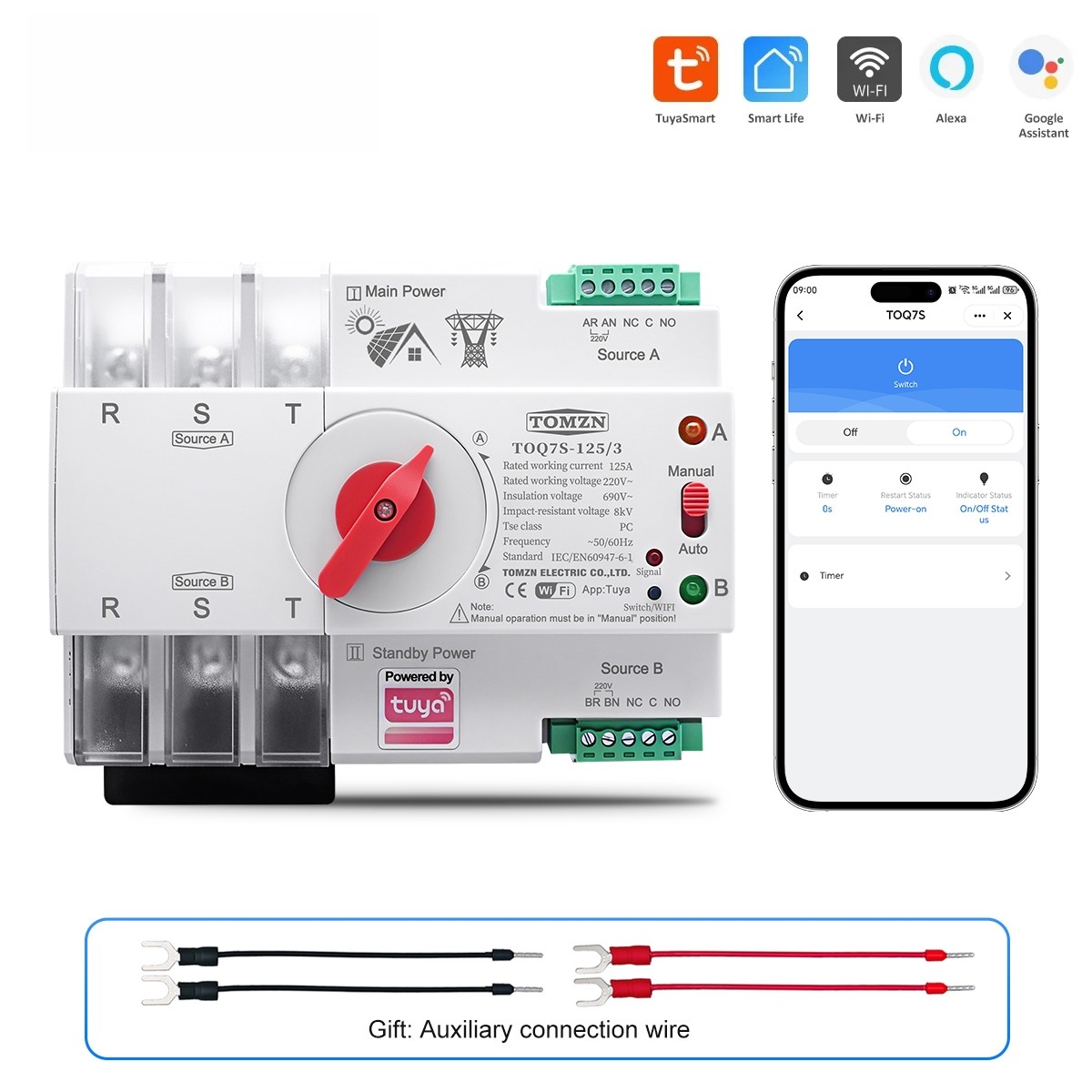
TOMZN TOQ7S 3P AC380V WIFI Smart Dual Power Automatic Transfer Switch Restart Status 50mS WIFI/AUTO/Manual Changeover Switch
View Product Technical SpecificationsTransfer Switch Engineering Architecture: Technical Principles & Sizing Fundamentals
In modern industrial, commercial, and solar energy infrastructures, maintaining continuous electrical power availability is non-negotiable. An Automatic Transfer Switch (ATS) serves as the critical node that monitors incoming power quality from primary utility sources and seamlessly transfers connected loads to secondary backup systems (such as diesel generators, energy storage systems, or solar PV inverters) upon sensing voltage degradation, total outage, or frequency instability.
Chinese low-voltage switchgear manufacturing has evolved dramatically over the past two decades. Today, tier-one manufacturers in Wenzhou—the world's capital for low-voltage power electronics—produce transfer switches that rival legacy Western brands in short-time withstand current ($I_{cw}$), arc quenching efficiency, thermal management, and digital telemetry integration.
1. Architectural Classification: PC Class vs. CB Class Transfer Switches
Electrical engineers and global procurement managers must evaluate the fundamental structural differences between PC Class and CB Class transfer switches when specifying backup power systems according to IEC 60947-6-1 standards:
| Design Parameter | PC Class Transfer Switch (e.g., TOQ3 / TOQ7 Series) | CB Class Transfer Switch (MCB / MCCB Integrated) |
|---|---|---|
| Primary Mechanism | Solvent/Motorized Drive with Mechanical Interlock | Dual Circuit Breaker Assembly with Overcurrent Trip Units |
| Overload & Short-Circuit Protection | Requires external fuses or upstream circuit breaker protection | Built-in thermal-magnetic or electronic trip units |
| Switching Time ($\Delta t$) | Ultra-Fast (< 50 ms) | Moderate (> 100 ms to 300 ms) |
| Short-Time Withstand ($I_{cw}$) | Extremely high electrical endurance & contact robustness | Limited by internal circuit breaker interruption limits |
| Mechanical Endurance | 10,000+ switching cycles without contact erosion | 5,000 to 8,000 switching cycles |
| Primary Application | Critical loads, datacenter racks, solar PV-to-grid changeover | Residential main distribution boards, commercial sub-panels |
While CB Class ATS units integrate overcurrent and short-circuit protection directly within the transfer switch chassis, PC Class ATS units excel in endurance, switching velocity, and fault withstand capability. PC Class units rely on zero-cross mechanical interlocking mechanisms, making them the preferred standard for seamless dual-power switching in PV inverter systems where millisecond-level transition prevents sensitive electronics from resetting.
2. Dual-Power Switching Topologies & Neutral Line Considerations
Selecting between 2-Pole (Single Phase), 3-Pole (Three Phase without switched neutral), and 4-Pole (Three Phase with switched neutral) transfer switches depends heavily on the grounding scheme of the installation site (TN-S, TN-C-S, or IT systems):
- 2-Pole (2P 230V ATS): Designed for single-phase residential applications, switching both Phase ($L$) and Neutral ($N$) to prevent stray return currents during generator backup operation.
- 3-Pole (3P 380V/400V ATS): Common in balanced 3-phase industrial power systems where the neutral is solidly grounded upstream at a common transformer terminal.
- 4-Pole (4P 380V/400V ATS): Crucial for emergency power supplies with isolated neutrals or dual-utility feeds, eliminating neutral loop currents and ground-fault protection misoperations.
Sub-50ms Transition
High-speed dual-solenoid driving mechanisms ensure near-instantaneous power changeover, maintaining computer equipment, medical devices, and smart appliances without power disruption.
Silver Alloy Contacts
Constructed with AgCdO / AgZnO silver-alloy contact materials offering superior anti-welding properties, low contact resistance, and prolonged electrical lifespan under AC-33B inductive load cycles.
Mechanical & Electrical Interlocking
Dual safety barrier architecture physically guarantees that Primary Source A and Secondary Backup Source B can never be cross-connected simultaneously, preventing short-circuit grid feeding.
Future Procurement Trends in Power Switching Technology (2025–2030)
How smart IoT infrastructure, solar-storage hybrid microgrids, and global eco-compliance standards are reshaping international ATS procurement strategies.
The global transfer switch market is experiencing a structural transition driven by the decentralized energy movement. International buyers, electrical contractors, and private-label distributors must align their procurement strategies with four key technological megatrends:
1. IoT Integration & Real-Time Cloud Telemetry
Traditional passive transfer switches are rapidly being superseded by smart IoT-enabled ATS devices. Products equipped with Tuya, eWeLink, and RS485 Modbus-RTU protocols allow site operators to monitor real-time phase voltage, operating current, frequency variations, and power consumption remotely via mobile apps or centralized SCADA dashboards.
Furthermore, cloud-connected ATS switches enable automated scheduling, allowing users to prioritize solar energy consumption during peak tariff hours and switch back to grid utility during low-rate off-peak periods automatically.
2. Optimization for Solar Photovoltaic & Energy Storage Systems (ESS)
With the global surge in residential and commercial solar-plus-storage installations, ATS switches must now accommodate dual directional power flows and rapid inverter synchronizations. High-spec DC Manual Transfer Switches (DC MTS) rated up to 1000V DC and hybrid AC ATS units featuring customizable transfer delay settings prevent transient voltage spikes from triggering inverter trip codes.
3. Microsecond Hybrid & Solid-State Switching
Next-generation transfer switches are incorporating solid-state power electronics alongside traditional mechanical contactors. By utilizing silicon-controlled rectifiers (SCRs) for zero-cross switching, transition times are being reduced down to single-digit milliseconds, eliminating contact arcing entirely and reducing thermal wear during frequent grid transfers in weak-grid developing regions.
4. Sustainability, RoHS, and Flame-Retardant Polymer Standards
Global environmental mandates necessitate that switchgear enclosures utilize halogen-free, VO-grade flame-retardant thermoplastics (such as polycarbonate reinforced with PBT). Leading Chinese exporters are now certifying complete product lines against RoHS 2.0 and REACH environmental standards to meet stringent European import guidelines.
Why Partner with Zhejiang DVS Electric Co., Ltd. / TOMZN
Combining 24 years of electrical production expertise with world-class OEM/ODM flexibility and rigorous quality assurance direct from Liushi, Wenzhou.
Full-Spectrum Low-Voltage Production Base
Operating a dedicated 5,700 square meter manufacturing plant in Wenzhou, China. We manage automated component stamping, silver-contact welding, coil winding, assembly, and automated testing under one ISO9001 certified roof.
Comprehensive International Certifications
Our transfer switches, MCBs, SPDs, and combiner boxes carry CE marking, compliance test reports, and third-party verified factory audits. Guaranteed safe integration for European, South American, African, and Asian markets.
OEM / ODM Private Labeling Expertise
We empower international brand owners, wholesalers, and panel builders with tailored current/voltage ratings, custom terminal configurations, private-label silk printing, localized packaging, and custom housing colorways.
Rigorous 100% On-Line Quality Testing
Every single manufactured ATS unit undergoes multi-stage automated functional testing: dielectric voltage withstand test, contact resistance measurement, switching speed calibration, and mechanical endurance verification before export shipment.
Frequently Asked Questions for B2B Importers & Engineers
Clear technical answers addressing sizing, certification standards, international procurement logistics, and installation parameters.
Q1: What is the primary operational difference between PC Class and CB Class Automatic Transfer Switches?
PC Class transfer switches utilize a dedicated solenoid or motor drive mechanism designed specifically for dual-power switching without internal overload trip units. They offer higher short-time withstand ratings ($I_{cw}$), sub-50ms transfer speeds, and longer mechanical lifespans. CB Class switches utilize two integrated circuit breakers with thermal-magnetic trip units, providing overcurrent protection but exhibiting slower transition speeds (>100ms) and lower cycle endurance.
Q2: Why is a specialized DC Manual Transfer Switch (DC MTS) required for Solar PV applications instead of a standard AC switch?
Direct Current (DC) arcs do not pass through a natural zero-voltage point like Alternating Current (AC). Therefore, breaking high-voltage DC current (up to 1000V DC from solar arrays or battery banks) generates persistent electric arcs. A specialized DC MTS (such as the TOMZN 2P+2P DC MTS) features specialized magnetic arc-chutes, wider contact gaps, and polarized conductive paths engineered specifically to extinguish DC arcs safely without contact welding.
Q3: Can TOMZN smart WiFi ATS units operate automatically if the Internet connection is lost?
Yes. The Tuya and eWeLink smart ATS units are designed with localized hardware controllers. The WiFi connectivity allows remote monitoring, telemetry logging, manual override, and app configuration. However, the automated voltage-sensing circuit operates entirely on local hardware logic. If grid voltage drops below pre-set thresholds, the internal relay triggers the transfer switch automatically regardless of internet or cloud status.
Q4: How should an engineer size the continuous current rating ($I_n$) of an ATS for motor or inductive loads?
For inductive loads (such as electric motors, HVAC compressors, or large transformers), inrush currents can reach 6 to 8 times the nominal operating current. When specifying an ATS under AC-33iB or AC-33B utilization categories, engineers should apply a minimum safety sizing factor of 1.25x to 1.5x the maximum total load current to ensure long-term contact integrity and prevent thermal degradation.
Q5: Does Zhejiang DVS Electric offer OEM private labeling, custom packaging, and custom brand printing?
Yes. As a verified custom manufacturer with over 24 years of experience, we provide complete OEM/ODM solutions for electrical wholesalers and distributors worldwide. This includes laser printing your brand logo on the product chassis, customized rating plates, customized color housings, user manual printing, and specialized export packaging boxes with low minimum order quantities (MOQs).
Q6: What international standards and certifications do your transfer switches comply with?
Our transfer switch series are manufactured according to international standards IEC 60947-6-1 (Low-voltage switchgear and controlgear - Transfer switching equipment) and IEC 60947-2. Complete product families carry CE certification, RoHS environmental compliance, and are backed by third-party factory inspection reports.
Request Factory Direct Pricing & Technical Datasheets
Partner directly with Zhejiang DVS Electric Co., Ltd. for wholesale pricing, custom OEM project quotations, and comprehensive technical datasheets. Our engineering team responds within 12 business hours.
Send an Inquiry