Featured Residual Current & Power Switching Solutions
Explore our top-tier CE certified RCCBs, automatic transfer switches, voltage protection relays, and smart monitoring modules manufactured for global distribution.
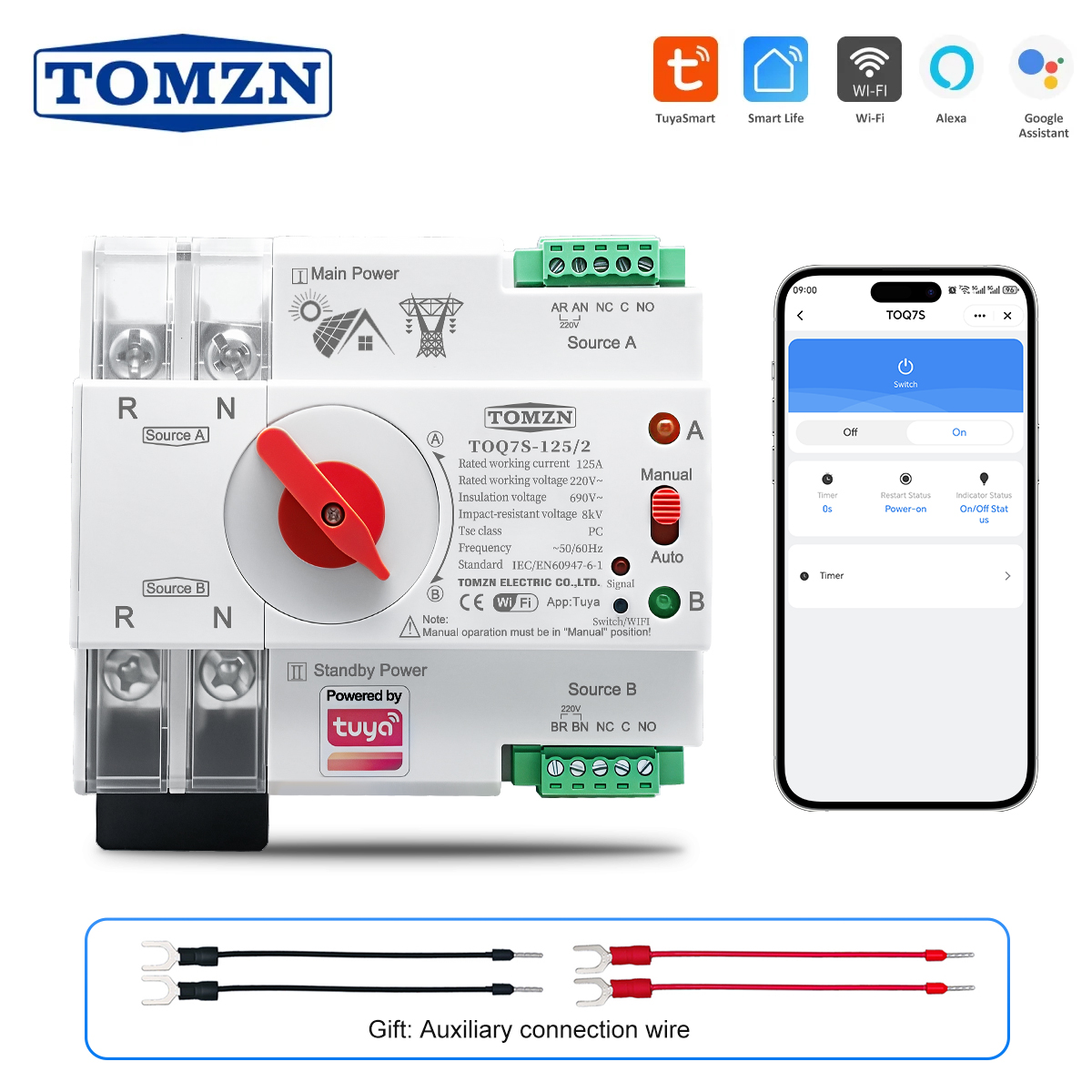
TOMZN TUYA SmartLife WIFI Smart ATS Dual Power Automatic Transfer Switch 2P 230V 63A-125A
Product Details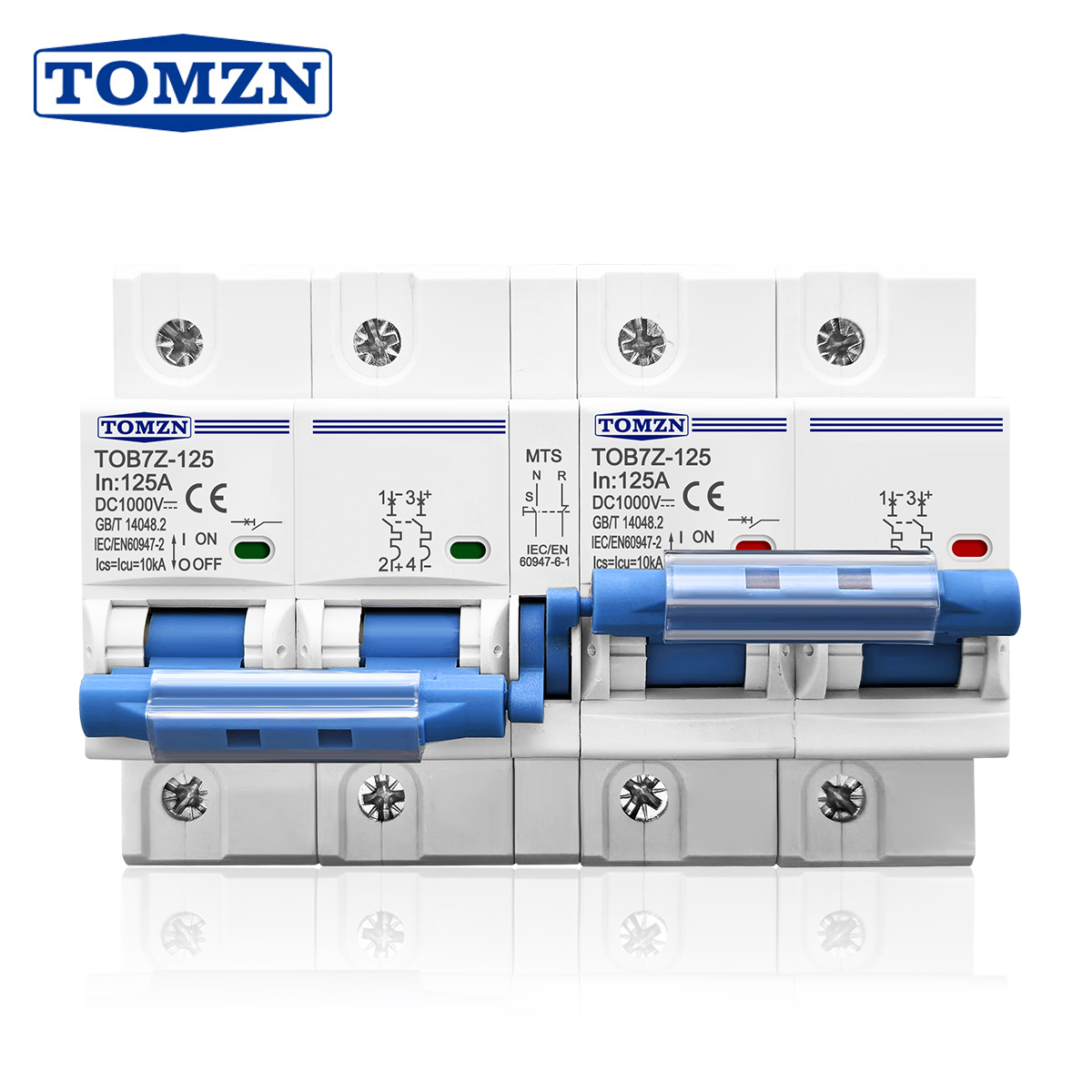
TOMZN 125A 2P+2P DC MTS Dual Power Manual Transfer Switch MCB for Solar PV Systems
Product Details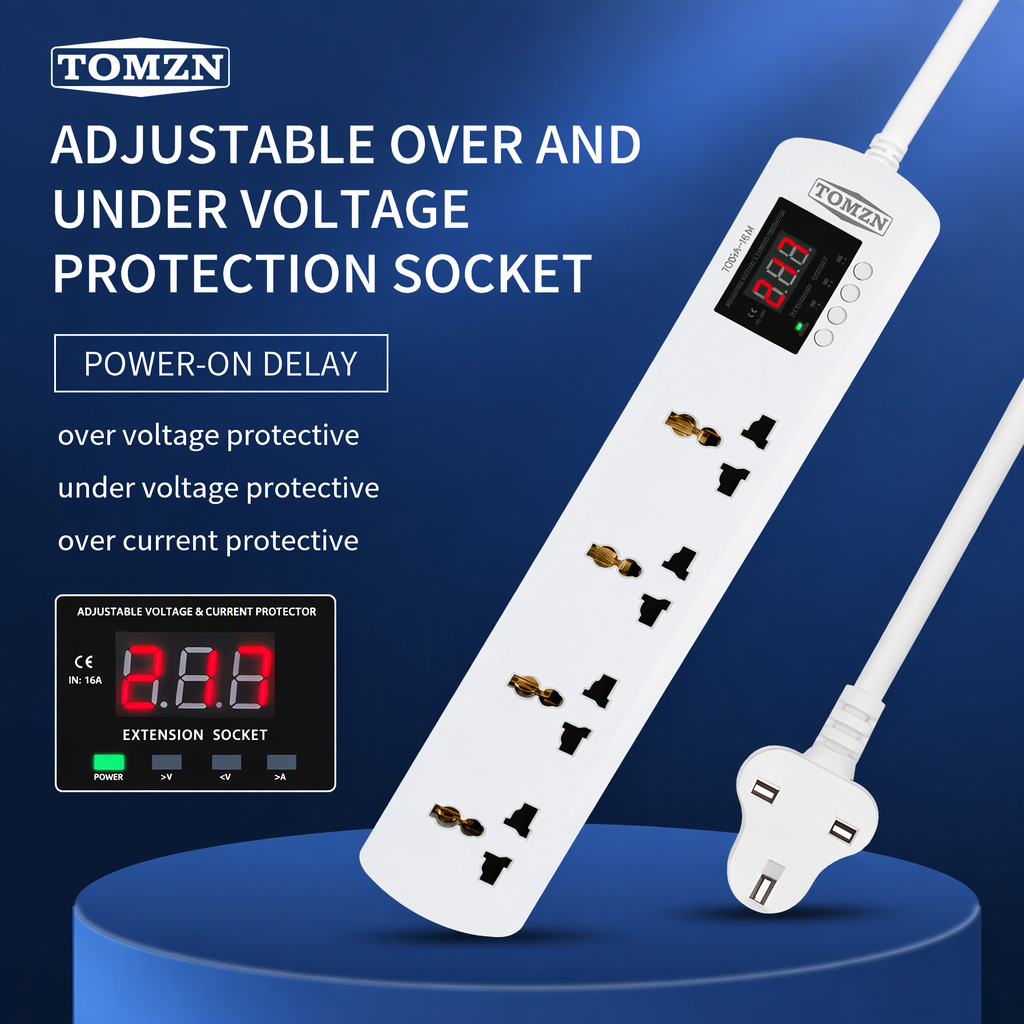
TOMZN 4 Sockets Adjustable Voltage & Current Protector Universal EU Plug AC230V 1-16A
Product Details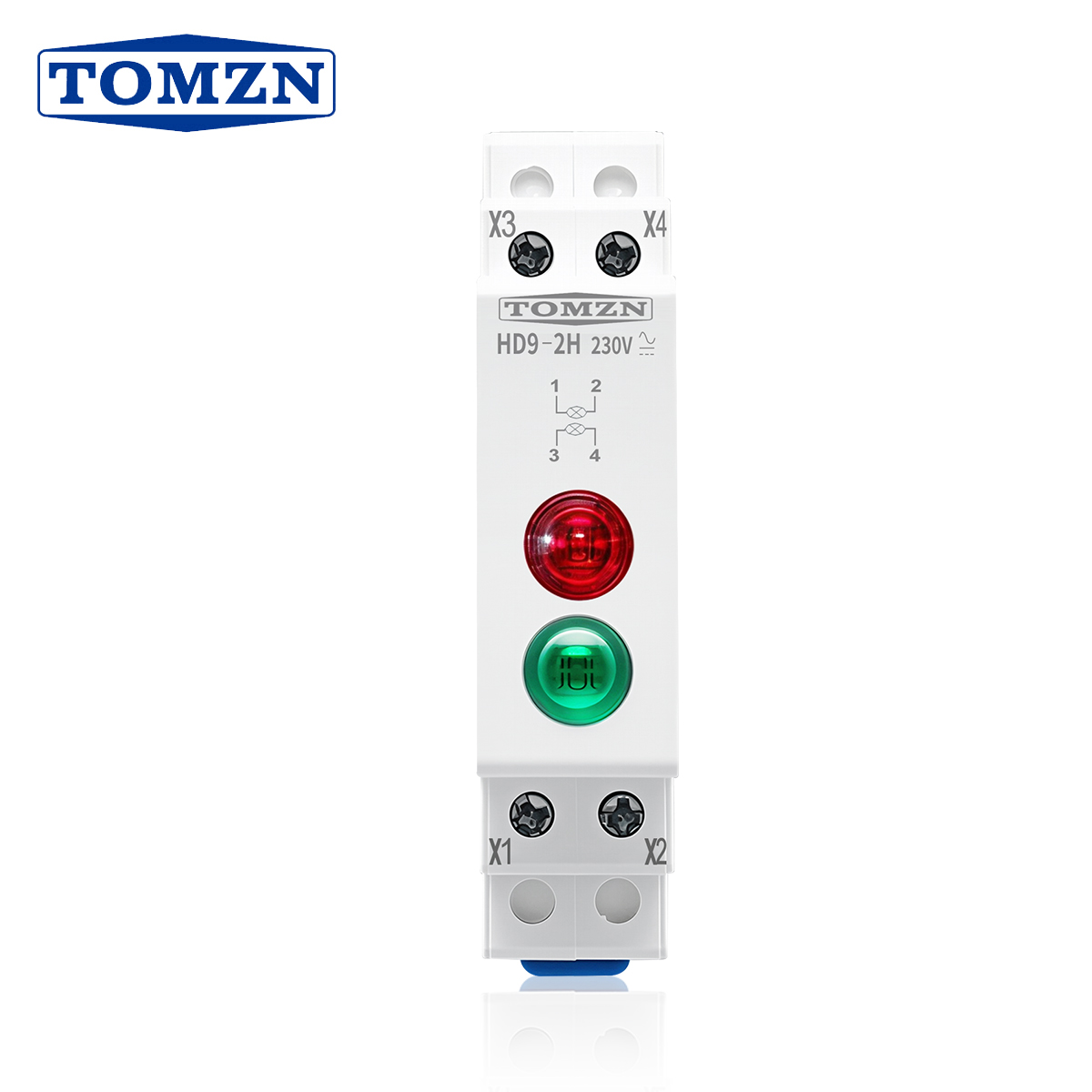
TOMZN DIN Rail HD9-2H 230V AC/DC LED 1P 18mm Signal Indicator Light Red & Green
Product Details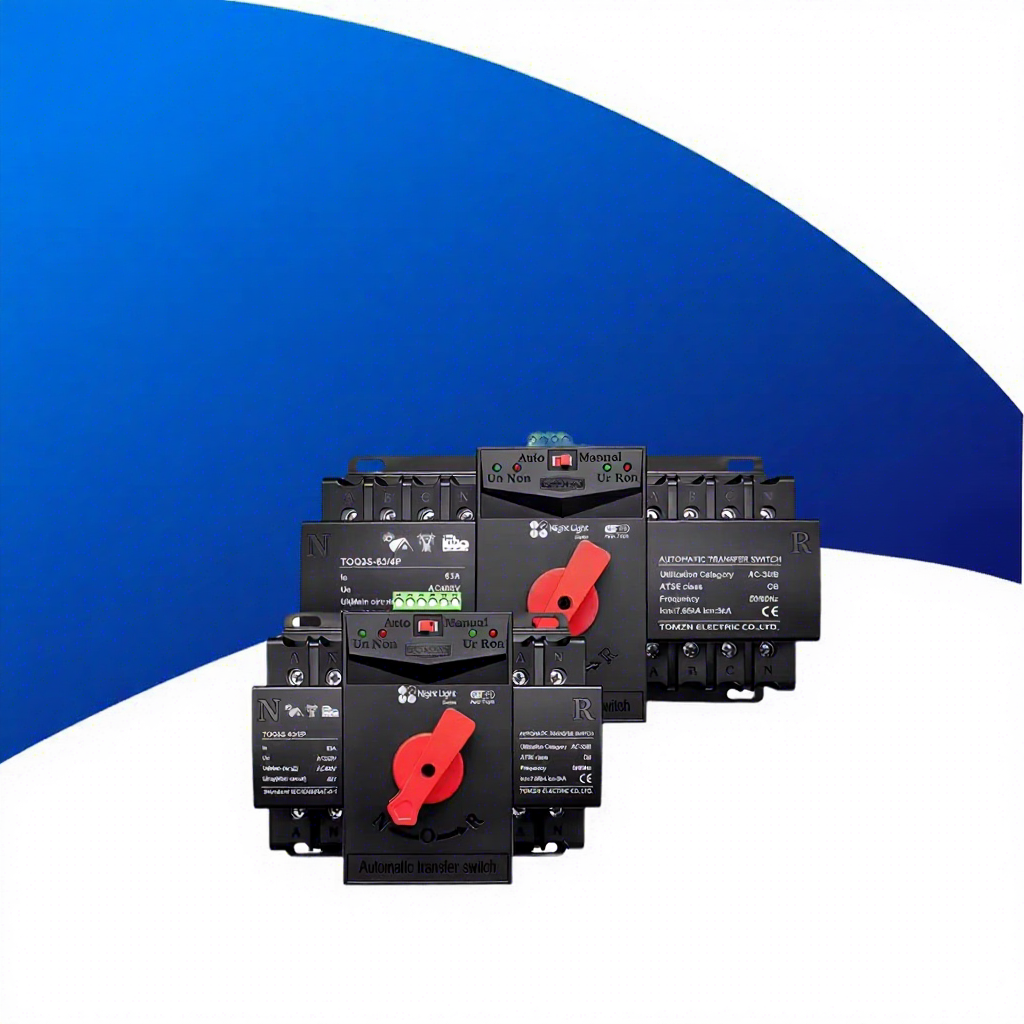
TOMZN SmartLife WiFi Smart ATS 2P/4P 63A Dual Power Auto Transfer Switch AC220V/230V
Product Details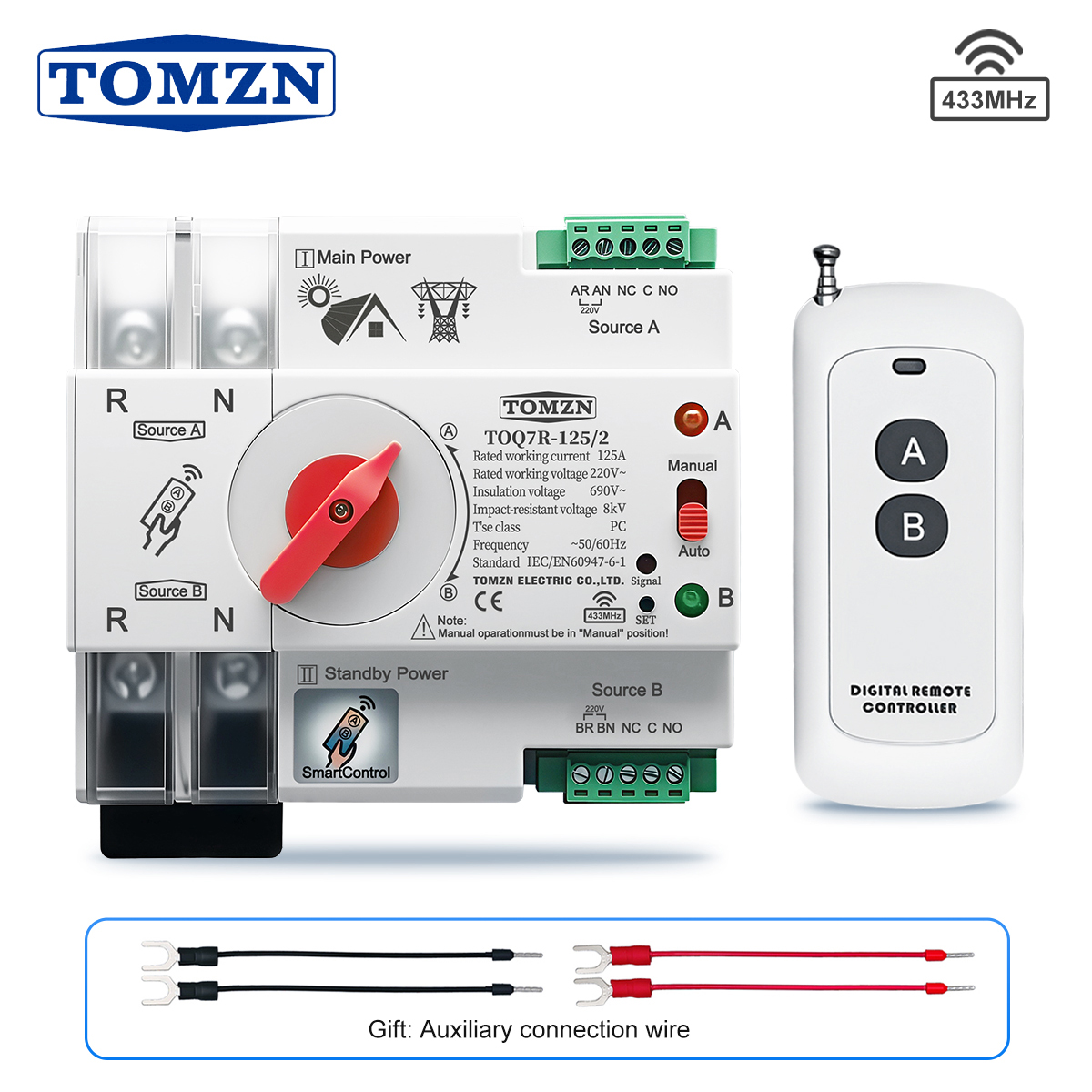
TOMZN 2P Remote Control ATS Wireless 433MHz Dual Power Automatic Transfer Switch
Product Details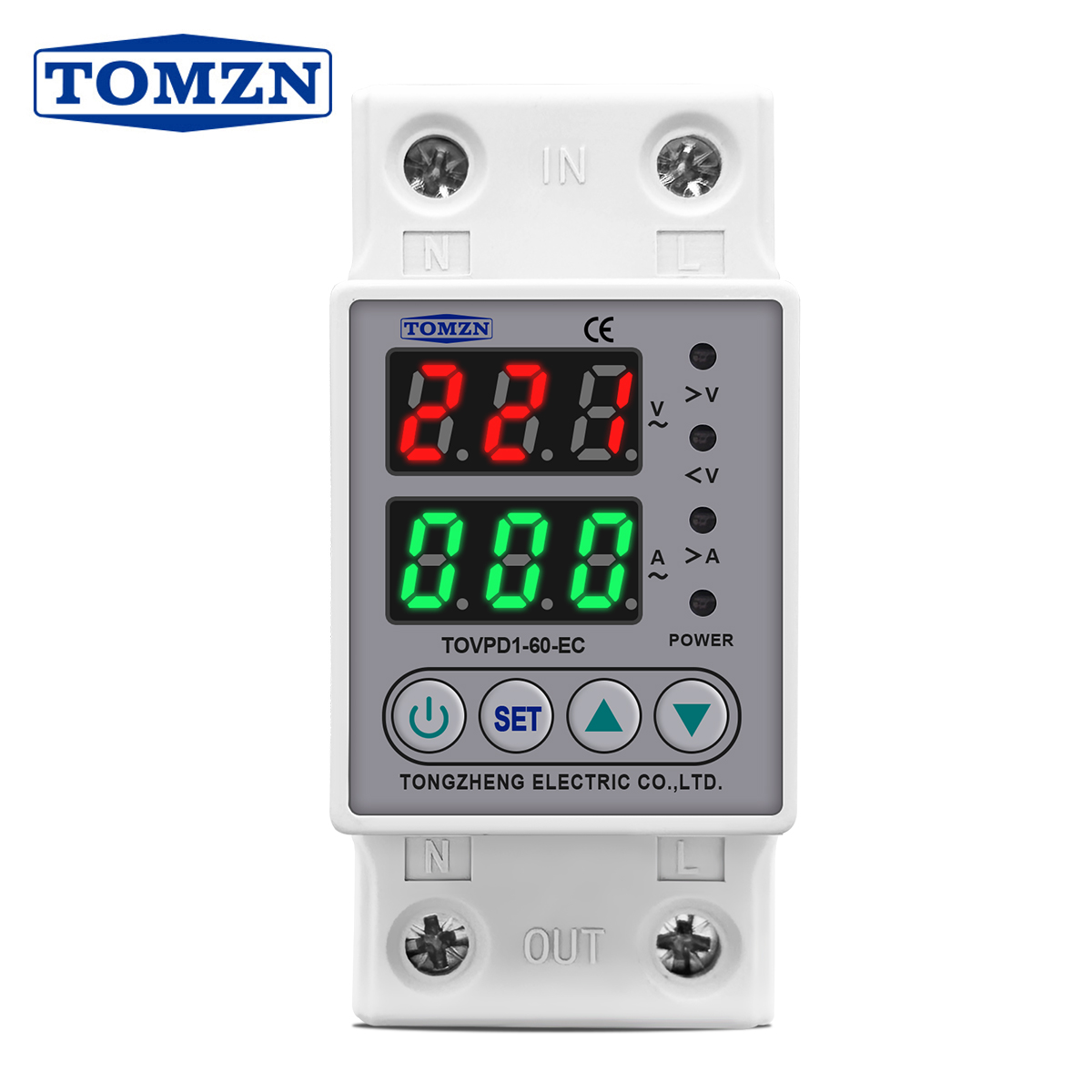
TOMZN DIN Rail 230V Adjustable Over & Under Voltage Protection Relay Monitor 63A
Product Details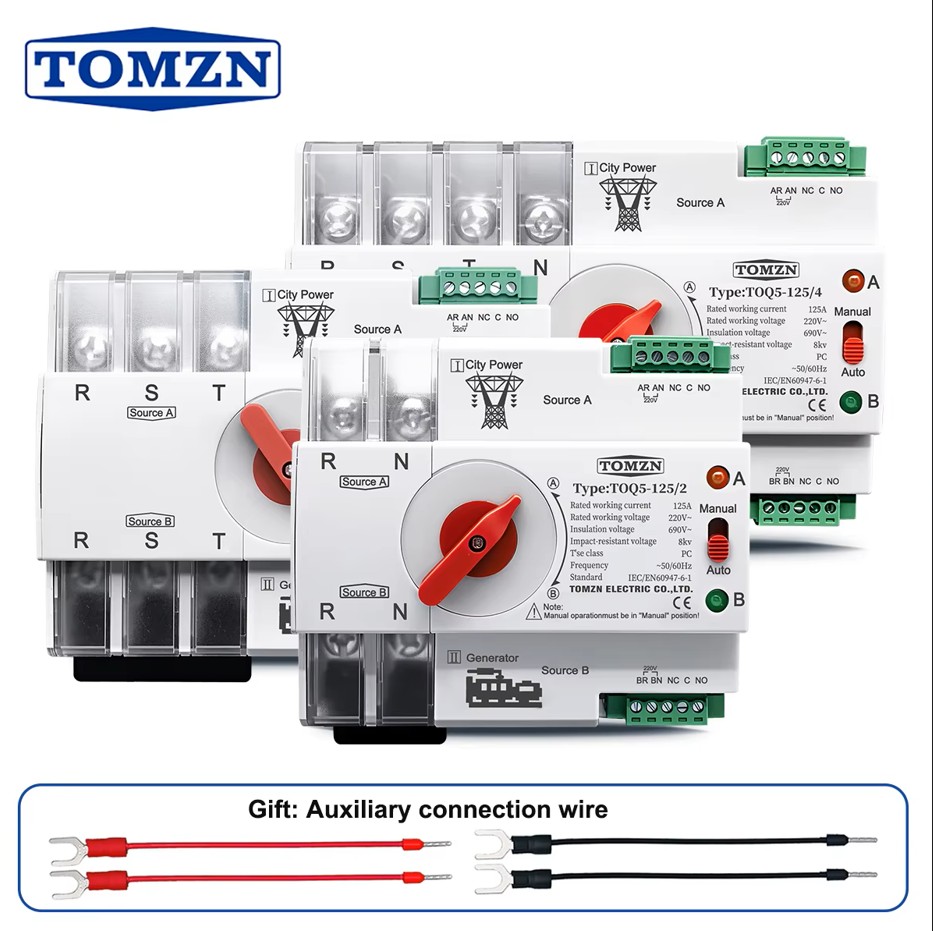
TOMZN DIN Rail 2P/3P/4P ATS Dual Power Automatic Transfer Switch 63A/100A/125A
Product DetailsUnderstanding Residual Current Circuit Breakers (RCCB) Engineering & Sourcing Standards
In modern low-voltage electrical distribution systems, Residual Current Circuit Breakers (RCCBs)—frequently categorized under the broader umbrella of Residual Current Devices (RCDs)—serve as the foundational safety line against electric shock, insulation breakdown, and earth leakage-induced fires. Unlike standard Miniature Circuit Breakers (MCBs) that exclusively respond to thermal overloads and magnetic short circuits, an RCCB continuously measures the vector sum of current flowing through active conductors (Phase and Neutral). Under normal operating conditions, Kirchhoff's Current Law dictates that the vector sum equals zero. However, when an insulation fault occurs, or a human operator accidentally touches a energized live part, a portion of the current leaks to earth, creating a current imbalance ($\Delta I$). Once this residual leakage reaches a predetermined threshold ($I_{\Delta n}$), the electromagnetic tripping coil activates, opening the mechanical contacts within milliseconds.
Core Sourcing Directive for Electrical Engineers & Buyers: Procuring CE-certified RCCBs requires evaluating not only basic nominal voltage ($U_n$) and continuous current ($I_n$), but specifically analyzing the breaking mechanism type (Type AC, Type A, Type F, or Type B), residual short-circuit withstand rating ($I_{nc}$), and mechanical contact endurance across transient impulse conditions in strict compliance with IEC/EN 61008-1 and IEC/EN 61009-1 standards.
1. Technical Classification of RCCBs: Choosing the Right Protection Mechanism
Electrical loads in commercial, industrial, and smart residential installations have evolved from pure linear resistive circuits to highly complex non-linear power electronic setups involving switch-mode power supplies (SMPS), variable frequency drives (VFDs), solar photovoltaic (PV) inverters, and Electric Vehicle (EV) chargers. As a consequence, selecting the correct RCCB type is vital to prevent nuisance tripping or blind spots during DC-leakage events:
| RCCB Class / Type | Detectable Current Waveforms | Primary Application Environment | Standard Compliance |
|---|---|---|---|
| Type AC | Sinusoidal Alternating AC residual currents only. | Standard resistive lighting, heating, and legacy building circuits. | IEC/EN 61008-1 |
| Type A | Sinusoidal AC + Pulsating Direct Current (DC) residual currents. | Single-phase appliances with rectifiers, induction hobs, washing machines. | IEC/EN 61008-1 |
| Type F | Type A requirements + High-frequency residual currents (up to 1 kHz). | Single-phase heat pumps, inverter-driven air conditioners, variable speed drives. | IEC/EN 62423 |
| Type B | Type F requirements + Pure Smooth DC residual currents up to 2000 Hz. | Three-phase PV inverters, EV charging stations (IEC 61851), UPS systems, MRI scanners. | IEC/EN 62423 / IEC 60755 |
2. Electromagnetic vs. Electronic Tripping Mechanisms in Factory Sourcing
When auditing an RCCB manufacturing facility in China (such as Zhejiang DVS Electric Co., Ltd. located in Wenzhou/Liushi), procurement teams must differentiate between Voltage-Independent (Electromagnetic) and Voltage-Dependent (Electronic) RCCB architectures:
- Electromagnetic (Voltage-Independent) RCCBs: Utilize a high-permeability toroidal Mumetal core transformer coupled directly to a highly sensitive polarized permanent magnet trip relay. The operating energy is harvested directly from the residual fault current itself. Thus, even if the main supply voltage drops significantly (e.g., neutral line disconnection or brownout), the RCCB will reliably trip upon detecting an earth fault. This represents the premium standard required by European electrical installation codes (such as DIN VDE 0100 in Germany and BS 7671 in the UK).
- Electronic (Voltage-Dependent) RCCBs: Rely on an internal printed circuit board (PCB) amplifier powered by the grid mains to energize the trip coil. While offering compact physical footprints and cost efficiency for regional distribution in certain overseas markets, voltage-dependent designs require auxiliary surge protection and robust undervoltage resilience to avoid non-tripping during supply voltage collapse.
3. Essential Electrical Parameters for B2B Quotations
To obtain accurate OEM/ODM factory quotations, buyers must specify six primary engineering variables:
- Rated Operational Voltage ($U_n$): Typically 230V AC for 2-Pole (Single Phase) and 400V AC for 4-Pole (Three Phase + Neutral) systems at 50/60Hz.
- Rated Current ($I_n$): Standard values include 16A, 25A, 40A, 63A, 80A, 100A, and 125A continuous thermal rating.
- Rated Residual Operating Current ($I_{\Delta n}$):
- 10mA & 30mA (High Sensitivity): Required for direct personal shock protection and damp environments (bathrooms, outdoor sockets).
- 100mA, 300mA & 500mA (Medium Sensitivity): Applied as fire prevention protection against insulation faults in industrial distribution boards.
- Residual Short-Circuit Withstand Capability ($I_{nc}$): Rated breaking capacity (typically 6kA or 10kA) when protected by an upstream backup fuse or MCB.
- Tripping Speed Characteristics: Instantaneous tripping (< 40ms at $1\times I_{\Delta n}$) vs. Selective/Time-Delayed (Type S) tripping (> 130ms delay) used for cascading protection selectivity.
- Enclosure & Terminal Protection: V-0 self-extinguishing flame-retardant polyamide PA66 housing with IP20 or IP40 ingress rating and anti-corrosion silver-alloy contacts.
Future Sourcing & Product Development Trends (2025–2030)
Strategic insights for low-voltage electrical distributors, EPC contractors, and private-label brand managers navigating technology shifts and regulatory updates.
1. Surging Demand for Type B & DC-Sensitive Protection
With the global expansion of distributed photovoltaic (PV) solar systems, battery energy storage systems (BESS), and EV fast-charging infrastructure, DC earth leakage has become a primary technical concern. Future global procurement will see a 28% CAGR shift from basic Type AC/A units toward advanced Type B RCCBs and integrated 6mA DC residual detection modules (RDC-DD according to IEC 62955).
2. Smart IoT Telemetry & Remote Reclosing RCCBs
Industrial automation and unmanned infrastructure (5G telecom base stations, smart street lighting, remote solar farms) require smart RCCBs equipped with RS485 Modbus, Tuya/SmartLife WiFi, or Matter connectivity. Sourcing directors are prioritizing breaker platforms that provide real-time insulation resistance tracking, remote trip resets, and predictive leakage alarm thresholds via cloud platforms.
3. Hybrid RCBO Compact Modularization (1P+N in 18mm)
Panels are growing increasingly congested. The market is shifting from standard 2-module (36mm width) RCCBs toward high-density 1-module (18mm width) combined RCBOs (Residual Current Circuit Breaker with Overcurrent Protection). Manufacturing factories with high-precision micro-arc quenching chambers and compact toroidal CT designs gain a distinct competitive edge.
4. Strict Environmental & Eco-Design Compliance
European and North American regulatory bodies are enforcing rigid RoHS 3.0, REACH, and halogen-free thermoplastic materials requirements. Leading manufacturers are adopting recycled polyamides, eco-certified packaging, and lead-free silver-tin-oxide ($AgSnO_2$) electrical contact rivets to eliminate hazardous heavy metals entirely.
5. Supply Chain Consolidation & Turnkey OEM Solutions
Global importers are reducing vendor friction by consolidating their low-voltage supply chains. Rather than sourcing breakers, transfer switches (ATS), and surge protectors (SPD) from disparate vendors, buyers prefer turnkey original equipment manufacturers capable of delivering custom laser-engraved branding, private-label box packaging, and multi-series CE certification portfolios under one roof.
Zhejiang DVS Electric Co., Ltd. — 24 Years of Precision Manufacturing
Direct from Liushi Town, Wenzhou—China's Low-Voltage Electrical Capital—we combine advanced engineering, third-party audited quality control, and global trade capabilities.
Audited Production Facilities & Capacity
Operating across a modern 5,700 m² automated manufacturing plant, Zhejiang DVS Electric houses dedicated assembly lines for circuit breakers, dual-power automatic transfer switches (ATS), over/under voltage relays, and PV combiner boxes. Our facilities undergo annual onsite verification by world-leading independent inspection authorities to validate operational workflow, production throughput, and worker safety conditions.
Rigorous 100% Quality Calibration Routine
Quality assurance is embedded at every manufacturing node. Every individual RCCB unit undergoes automated tripping calibration testing at $0.5\times I_{\Delta n}$, $1\times I_{\Delta n}$, and $5\times I_{\Delta n}$ thresholds on calibrated test benches. Furthermore, 100% of finished products pass high-voltage dielectric insulation withstand tests (2000V AC for 1 minute) and contact resistance verification prior to final export packaging.
CE Certification & International Compliance
Our full spectrum of low-voltage distribution devices carries authentic CE marking, backed by third-party laboratory test reports. We assist brand owners and regional agents with specialized market access requirements, custom labeling, localized datasheet creation, and customs declaration documentation for seamless importation.
OEM / ODM Customization Capabilities
We provide complete private-label engineering services. From custom housing plastic colors and specialized current-rating curves (B, C, D) to custom printed silk-screen branding, custom laser etching, barcode packaging, and bespoke packaging artwork, our engineering team transforms your specifications into market-ready products.
Partner with a Certified Low-Voltage Circuit Breaker Factory
Request custom factory quotations, engineering datasheets, or product samples directly from our technical sales team.
Inquire NowFrequently Asked Questions for Importers & Engineers
Clear answers to critical technical, manufacturing, and shipping questions when sourcing RCCBs and protection gear from China.
1. What is the key functional difference between an RCCB and an RCBO?
2. How do I determine whether my project requires a Type AC, Type A, or Type B RCCB?
- Select Type AC for standard linear AC circuits (resistive heating, basic incandescent lighting).
- Select Type A for standard residential and commercial circuits containing electronics, computers, washing machines, or single-phase rectifiers.
- Select Type B for three-phase frequency converters, photovoltaic (PV) solar inverters, battery storage plants, and Electric Vehicle (EV) charging stations where smooth direct current (DC) ground leakage could blind standard transformers.
3. What is the difference between electromagnetic and electronic RCCB designs?
4. Are your products CE marked and compliant with international standards?
5. What customization options (OEM/ODM) are available for wholesale orders?
6. What is your Minimum Order Quantity (MOQ) and sample lead time?
7. Why is a specialized DC circuit breaker required instead of an AC breaker in solar PV systems?
8. How does an over and under voltage protector relay safeguard electrical loads?
Ready to Elevate Your Low-Voltage Product Supply Chain?
Contact our expert engineering team today to receive comprehensive product catalogues, wholesale price lists, and technical datasheets for CE-certified RCCBs and switching components.
