A reliable Dual Power Transfer Switch keeps essential loads connected when the normal supply fails. In a factory, that may mean preserving a control panel while a generator starts. In a commercial building, it may protect pumps, lighting, or server equipment. The right choice depends on the load, switching method, installation conditions, and maintenance plan—not just the rated current.
The stakes are measurable. Uptime Institute’s 2024 Global Data Center Survey found that 54% of respondents said their most recent significant outage cost more than $100,000. A transfer switch cannot prevent every outage, but a properly selected and tested unit can support a controlled changeover between power sources. Check applicable product standards, including IEC 60947-6-1, and confirm that the manufacturer provides clear ratings, wiring diagrams, and service support. Details matter.
For buyers in China, compare suppliers on verified test records, component quality, customization, delivery, and after-sales service. Ask how the switch behaves during source failure, voltage instability, and return to normal power. Then confirm those answers against the actual load and site conditions. A low price can look convincing on a quotation; it tells little about performance under stress.
Andy Lawrence, Uptime Institute’s executive director of research, is a relevant authority on outage risk. However, no verifiable, topic-specific quotation from him was available for this introduction. Rather than invent one, this guide uses published survey findings and practical selection questions to help buyers make a defensible decision.
Understanding How a Dual Power Transfer Switch Works
How to Choose the Best Dual Power Transfer Switch in China?
Understanding How a Dual Power Transfer Switch Works
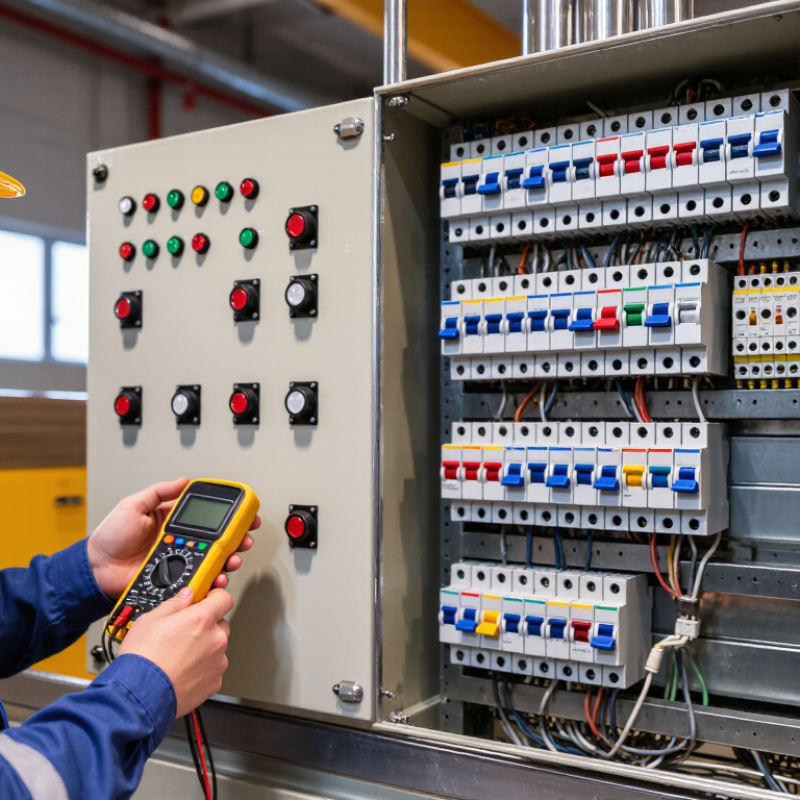
A dual power transfer switch connects a load to one of two power sources, such as utility supply and a generator. It monitors the active source and transfers the load when voltage or frequency moves outside set limits. Many switches use a break-before-make sequence: the first source disconnects before the second connects. That pause matters. It helps prevent the sources from feeding into each other. Transfer time and sensing settings vary by equipment, so check the load’s requirements and the switch’s technical documentation. A control panel may show source status and fault alarms, but those indicators still need proper commissioning.
Tips: Confirm the rated current, voltage, pole configuration, and short-circuit withstand rating. Ask a qualified electrician to verify wiring and test both normal and backup operation. Small details matter.
Choosing a switch is not only about its rating. Consider how quickly critical equipment can tolerate an interruption, and whether the installation needs manual or automatic transfer. Neutral switching depends on the power-system design; it should not be guessed from a product photo. During testing, record transfer behavior and alarm response. I would also review maintenance access before purchase, since a switch that is difficult to inspect can be overlooked over time. A careful site assessment is more useful than relying on a short specification sheet alone.
| Selection Dimension | What to Check | Practical Guidance | Why It Matters |
|---|---|---|---|
| How the switch works | Two power sources, a controller, and a switching mechanism | The controller monitors the preferred source. If it detects an unacceptable condition, it can command the load to transfer to the alternate source. When the preferred source returns and meets configured conditions, the switch may transfer back. | Understanding the operating sequence helps confirm that the equipment suits the application and restoration requirements. |
| System voltage and frequency | Rated operational voltage, frequency, and system configuration | Common Chinese low-voltage systems use 50 Hz and nominal supplies such as 230 V single-phase or 400 V three-phase. Confirm the actual site supply, earthing arrangement, and equipment ratings rather than relying on nominal values alone. | A mismatch can prevent correct monitoring or switching and may create unsafe operating conditions. |
| Rated current | Rated current of the switch and expected load current | Select a rating that accommodates the load and applicable design conditions. Consider ambient temperature, enclosure, installation method, duty cycle, and any required derating. | The switch must carry the load safely during normal operation on either source. |
| Number of poles | Number of conductors that must be switched | Common configurations include 2-pole units for single-phase circuits and 3-pole or 4-pole units for three-phase systems. Whether the neutral should be switched depends on the system earthing and installation design. | Incorrect pole selection can affect isolation, neutral continuity, and protection coordination. |
| Transition type | Open transition or closed transition | Open-transition equipment disconnects one source before connecting the other, so a brief interruption is expected. Closed transition briefly parallels sources and is suitable only when the sources, protection, and operating permissions allow it. | Open transition is widely used where source paralleling is not permitted. Closed transition requires careful engineering and utility or site approval where applicable. |
| Transfer time | Detection delay, mechanism operating time, and load ride-through | Check the manufacturer’s documented timing for the complete transfer sequence under specified conditions. Include monitoring delays and generator start-up time; these are distinct from the mechanical switching time. | Loads such as computers, controls, and process equipment may need a UPS or other ride-through solution if a transfer interruption is not acceptable. |
| Source monitoring | Voltage, frequency, phase loss, phase sequence, and configurable thresholds | Verify which abnormal conditions are monitored and whether pickup, dropout, and time-delay settings can be adjusted for the installation. | Appropriate monitoring reduces unnecessary transfers and helps prevent a load from being connected to an unsuitable source. |
| Control mode | Automatic, manual, or automatic/manual operation | For unattended standby systems, automatic operation is commonly required. Confirm that local manual operation and safe isolation procedures are available when needed. | Control options affect day-to-day operation, maintenance, and response during controller or source faults. |
| Source combination | Utility-to-utility, utility-to-generator, or other approved source pair | Confirm compatibility with both sources. For generator applications, check start/stop contacts, start delay, warm-up and cool-down sequencing, and any required signal interface. | Correct coordination helps avoid transferring the load before the alternate source is ready or stopping a generator prematurely. |
| Electrical withstand and protection | Short-circuit withstand or conditional short-circuit rating and upstream protective device | Coordinate the transfer switch with the available fault current and the specified upstream fuse or circuit breaker. Use ratings and coordination data documented for the exact configuration. | A current rating alone does not establish that the assembly can safely withstand or interrupt a short circuit. |
| Standards and documentation | Applicable product standards, test reports, drawings, and installation instructions | For low-voltage transfer switching equipment, check the applicable edition and scope of GB/T 14048.11 and, where relevant, IEC 60947-6-1. Request documentation matching the offered model and configuration. | Standards compliance and traceable technical documents support verification, installation, and inspection. |
| Installation environment | Enclosure protection, ambient temperature, humidity, altitude, and mounting location | Choose an enclosure and environmental rating appropriate to the site. Confirm ventilation, clearances, cable entry, and any derating requirements in the installation instructions. | Environmental conditions can affect service life, switching performance, and the usable current rating. |
| Maintenance and testing | Inspection access, status indication, event records, and test procedure | Check whether the device provides clear source and position indication, and follow the documented inspection and functional-test schedule. | Routine testing can identify control, wiring, or mechanical issues before an actual source failure occurs. |
| Final selection check | Load study, protection coordination, and site requirements | Have a qualified electrical professional verify the source arrangement, load characteristics, switching sequence, short-circuit data, and local project requirements before purchase and installation. | The appropriate transfer switch depends on the complete electrical system, not on a single rating or feature. |
FAQS
It connects a load to one of two power sources, such as utility power or a standby generator. It monitors the active source and transfers the load when conditions move outside set limits.
The first source disconnects before the second connects. That pause helps prevent the sources from feeding into each other.
Confirm rated current, voltage, pole configuration, and short-circuit withstand rating. Check these against the installation, not just a product photo.
It depends on how the system operates and how quickly the load needs backup power. Check whether critical equipment can tolerate a brief interruption.
List each load and mark essential circuits separately. Include starting current from pumps, compressors, and air conditioners, not only their running current. A first estimate can be wrong.
Yes. It depends on the power-system design, so have a qualified electrical professional assess it. Do not guess from appearance alone.
Dust, humidity, temperature, and ventilation can affect enclosure and maintenance needs. Leave clear access for inspection. Small details count.
Have a qualified electrician verify wiring and test normal and backup operation. Record transfer behavior and alarm response; those notes can reveal issues later. I might overlook this on a rushed visit.
Conclusion
Choosing the best Dual Power Transfer Switch in China starts with understanding how it detects a loss or failure of the main supply and transfers a load to a backup source. First, identify both power sources, the connected equipment’s load and starting demands, and the operating conditions, such as switching frequency and environment. These details help determine the appropriate switch type and electrical ratings.
Compare available options for switching performance, protection features, and compatibility with the installation. Check that the product meets applicable Chinese standards and has clear, verifiable certification and manufacturer documentation. Finally, consider the full service life: installation space and wiring, commissioning tests, routine inspections, and the availability of maintenance support. A careful assessment of these factors can help ensure dependable power transfer and reduce the risk of selecting equipment that is unsuitable for the application.